

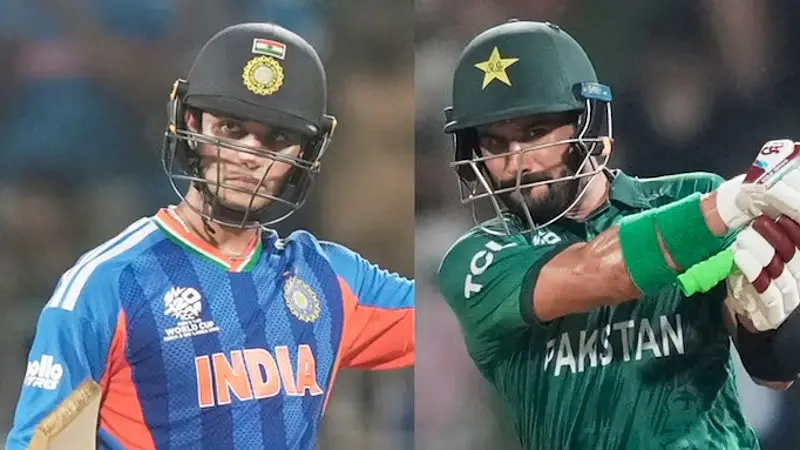

Abhishek’s 229 was the better series, even though Sahibzada Farhan‘s 238 owns the record. The Pakistan opener scored more across three Rawalpindi matches, but the India opener did his damage faster, against a deeper attack, and finished with a clean sweep. Raw totals reward volume, while quality asks what those runs did to the match. Farhan was the steadier of the two, yet Abhishek’s three innings bent more games his way. Munro and Warner have been pushed down the list by both of them.
Reading the Two Run Tallies
Farhan collected 238 runs from 144 balls against Sri Lanka in Rawalpindi, a strike rate of 165.28. He passed fifty in all three games, scoring 89, 73 and 76. Abhishek reached 229 from only 85 balls against Afghanistan in Delhi, which works out to 269.41 per hundred. His scores were 82, 39 and 108, and even the 39 arrived in just 19 deliveries.
Farhan needed 59 more balls to finish nine runs ahead. Those extra deliveries amount to almost ten overs of batting time, so Abhishek bought his runs far cheaper. That economy left the rest of the India lineup room to swing freely, and it explains why the sweep never felt in doubt once the opening overs passed.
Sahibzada Farhan vs Abhishek Sharma T20I series record
The list ranks batters by runs scored in a men’s T20I series of exactly three matches, contested by two Full Member nations. Farhan now leads it on 238, with Abhishek second on 229. Munro sits third on 223, ahead of Warner on 217 and Zazai on 204, both from 2019. Two batters pushed two older names down the table in barely four weeks.
Farhan’s lead is only nine runs, so a single extra boundary from either man would have flipped the order. A handful of runs separates two campaigns that looked nothing alike, and that closeness is what makes the debate worth having.
Batter | Runs | Balls | Strike Rate | Series Result |
|---|---|---|---|---|
Farhan | 238 | 144 | 165.28 | Pakistan won 2-1 |
Abhishek | 229 | 85 | 269.41 | India won 3-0 |
Quality of the Bowling Attacks
Farhan met a Sri Lankan group built around Malinga, Shanaka and Thushara, with Fernando bowling a short spell in one game. Malinga returned 2/33 and 2/38, while Shanaka took 3/31 and 3/21. Those are respectable figures, yet no bowler in the attack ever stopped Farhan from reaching fifty. Neither group was weak, so the comparison is fair.
Abhishek faced Rashid Khan, who took 3/36 in the second match. Omarzai, Farooqi, Noor Ahmad and Mujeeb also bowled at him, and Nabi finished with 2/28. Hitting 108 off 34 balls against an attack stocked with spin is the toughest feat in either series. That is why the Delhi series reads as the harder examination, even before strike rates enter.
Matches Decided by the Runs
Abhishek’s innings produced wins every single time. India chased 157 and 160 with seven wickets in hand, then defended 221/7 by 127 runs, sealing a 3-0 result. In each game, his start gave the side a platform that the rest simply had to finish. Each of those wins left India firmly in command of the series.
Farhan’s 89 drove a four-wicket chase of 183, and his 73 anchored an 82-run win after Pakistan posted 215/3. His 76 in the finale came in a total of 168/8 that Sri Lanka hunted down inside 17.1 overs. Kusal Mendis hit 87 not out off 47 balls with nine fours and four sixes to take the Player of the Match award. By then Pakistan already held the series, so the defeat dented only the scoreline.
Final Verdict Between the Rivals
Count the records, and Farhan wins by nine runs. Count the match impact, and Abhishek wins comfortably, with fewer balls, tougher spin, a century and a sweep. Farhan’s three straight fifties show a steadiness that his rival never needed to prove in his own series, and that deserves real credit.
Arguments over the Sahibzada Farhan vs Abhishek Sharma T20I series record will keep running until a third batter gets close, and Munro’s 223 shows how quickly such marks fall. Farhan owns the number, yet Abhishek owns the best innings in the pair. That is why his 229 deserves the higher ranking. Seen together, the pair reset what a strong three-game series looks like.
Does volume of runs or speed of scoring decide which series was greater? Drop your pick in the comments.
Frequently Asked Questions (FAQs)
Who has scored the most runs in a three-match T20I series?
Farhan holds the mark with 238 runs against Sri Lanka in Rawalpindi. He made 89, 73 and 76 across the three matches, collecting a fifty in each.
How many runs did Abhishek Sharma score against Afghanistan?
Abhishek scored 229 runs across the three-match series in Delhi. His innings of 82, 39 and 108 came off only 85 balls, a strike rate of 269.41.
Who won the Pakistan vs Sri Lanka T20I series?
Pakistan won the series 2-1 in Rawalpindi. Sri Lanka took only the third match, winning by 8 wickets as Kusal Mendis made 87 not out in a chase completed in 17.1 overs.
Which batter had the higher strike rate in this series?
Abhishek scored faster, at 269.41 against Farhan’s 165.28. His 108 off 34 balls in the finale carried a strike rate of 317.65, the highest single-innings figure of either series.
Who ranks third on the three-match T20I series runs list?
Munro is third with 223 runs. Warner follows on 217 and Zazai on 204, both of whom set their totals in 2019, so the top five features two series from this autumn.