

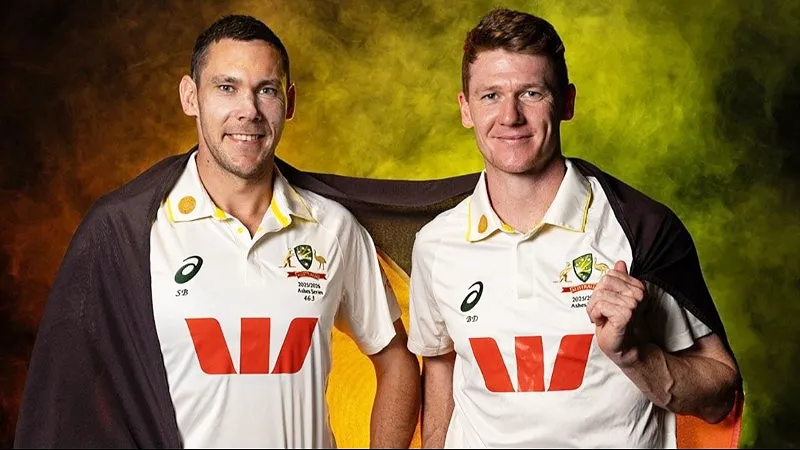

Scott Boland, Michael Neser and Brendan Doggett stand behind Pat Cummins and Josh Hazlewood as Australia enters an unprecedented year of cricket. Cummins is 33, Hazlewood 35, Starc 36 and Boland 37, and all four carry serious injury histories. Twenty Tests in twelve months, against Bangladesh, South Africa, New Zealand and India, will test that quartet harder than almost any stretch in recent memory. Both senior quicks used the IPL as a fitness test this year, and it worked, but the door behind them is already opening.
Cummins And Hazlewood’s Injury Concerns Mount
Cummins, Hazlewood and Lyon played just three Tests between them during the Ashes, exposing how thin the medical margins have become. Cummins turned 32 during a lumbar stress injury that limited him to one international match in the following year. Hazlewood’s hamstring and Achilles issues are the latest in a file stretching back to teenage stress fractures.
Both bowlers used IPL 2026 to rebuild match fitness before Test cricket resumed. Australia’s four frontline quicks have not taken the field together since the West Indies tour a year earlier. That gap shows how rare full strength has become.
The Weight Of Twenty Matches In Twelve Months
The year ahead has been called tougher than the brutal 2023 calendar, which already crammed in India, a World Test Championship final, an Ashes series and an ODI World Cup. Every member of the pace attack is four years older now. Australia face 20 Tests over the next 12 months, a figure that could climb to 21 with a WTC final.
Chief selector George Bailey has signalled rotation is coming, noting the volume of cricket ahead is likely to open chances for players outside the first-choice attack. That is selector language for absences, plural. Fans should expect a senior name missing from most squads this season.
Australia Test summer 2026 fast bowling depth
The depth chart behind Cummins and Hazlewood has never been clearer than heading into the Bangladesh series. Boland has spent recent seasons as the fall guy whenever the senior trio was fit, yet his form this year has forced selectors to reconsider that label. Neser missed the Bangladesh squad only because Hazlewood’s return pushed him down the order.
Bowler (Age) | Bangladesh Status | Recent Form | Injury History |
|---|---|---|---|
Pat Cummins (33) | Returned to squad | 1 match in 12 months, IPL return | Lumbar stress injury at 32, back trouble for 6 years |
Josh Hazlewood (35) | Returned to squad | Hamstring, Achilles issues, IPL return | Teenage stress fractures, recent Achilles and hamstring trouble |
Mitchell Starc (36) | Available, continuous | Full 2025-26 season, most durable of trio | Back, shin and foot stress fractures |
Scott Boland (37) | In squad, likely backup | Strong Shield form, mounting a case | Knee and foot issues, no stress fractures |
Michael Neser (36) | Not in squad, training with Test group | Consistent Shield form, omitted for Hazlewood | Minimal injury history, minor strains |
Doggett has been training with the Test squad in Brisbane, a signal he sits next in line if injury strikes again. Cameron Green and Beau Webster add further pace cover from the all-rounder slots, giving the XI options beyond a like-for-like replacement search.
Boland And Neser Head The Queue
Boland is the first name selectors reach for, and remarkably he has never suffered a stress fracture despite bowling into his late thirties. His durability, paired with strong Shield form, has pushed him close to first-choice status rather than emergency cover. Neser sits directly behind him.
Doggett remains third in the training group, close to the squad without forcing his way into the XI. The bigger concern sits further down the pipeline, where no young quick has matched the impact Cummins or Hazlewood made as 21-year-olds in 2014-15.
The IPL Workload Management Gamble
Sending Cummins and Hazlewood to the IPL while carrying serious injury histories was always a calculated risk. A fresh injury in April or May would have ruled both out of the entire twelve-month stretch beginning in August, removing Australia’s two most important bowlers before a ball was bowled at home. This time it paid off.
That outcome will not repeat itself automatically. Every selection call now depends on how well the medical staff manages minutes across the calendar, because Australia’s Test summer 2026 fast bowling depth will only hold up if the workload plan keeps working as smoothly as it has so far.
Which of Boland, Neser or Doggett do you trust most if Cummins or Hazlewood breaks down again this summer?
Frequently Asked Questions (FAQs)
Why are Pat Cummins and Josh Hazlewood managing their workload so carefully?
Both are protecting long-term injury histories that nearly cost Australia its pace attack. Hazlewood has battled hamstring, Achilles and stress-fracture issues, while Cummins’ lumbar injury limited him to one match in twelve months.
Who is next in line if Cummins or Hazlewood breaks down again?
Scott Boland is first choice, with Michael Neser and Brendan Doggett close behind. Boland, at 37, has never suffered a stress fracture and now sits close to first-choice status.
How many Tests will Australia play across the 2026-27 season?
Australia are scheduled to play 20 Tests, a figure that could rise to 21. The calendar includes two Tests against Bangladesh, three against South Africa, four against New Zealand and five against India.
Is Mitchell Starc being rested like Cummins and Hazlewood?
No, Starc played the entire Ashes campaign without being rested or managed. He remains the most durable of the senior trio heading into the 2025-26 season.
How strong is Australia’s pace bowling cover behind its senior quicks?
The cover looks solid for short-term absences but thinner for a long-term crisis. Boland and Neser provide immediate depth, yet no young quick has matched Cummins or Hazlewood’s early-career impact.