

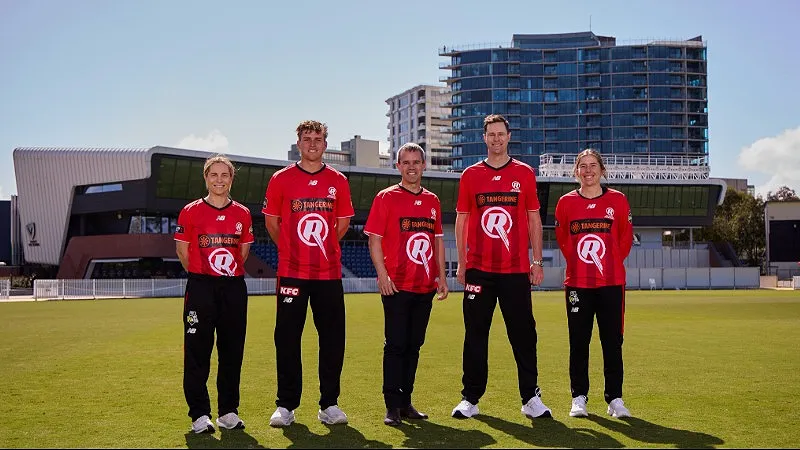

It could open the door for up to seven more clubs to follow the same path. Cricket Australia’s approval of a full sale process for the Melbourne Renegades on 8 September is the first concrete test of a model it hopes will eventually reshape ownership across the competition. Three other franchises have already signalled interest in private buyers, while four have ruled it out entirely for now. The price the Renegades fetch will likely set the benchmark for every deal that follows.
Cricket Australia’s Case For Change
The financial case has been building for years. An earlier proposal floated in 2026 targeted a windfall of up to A$600 million from selling 49 percent stakes in most clubs and full stakes in franchises from states hosting two sides, Victoria and New South Wales. Cricket NSW and Queensland Cricket blocked that plan in April, before the deadline, forcing a rethink toward the current opt-in model.
CA Chair Mike Baird described the announcement as a deliberate step to secure the game’s future and keep funding community cricket. Chief executive Todd Greenberg had already warned that waiting too long risked missing the global wave of franchise investment. The board keeps control of international scheduling, player availability, salary caps, and media rights, plus the right to veto any incoming buyer.
Big Bash League private investment other teams
The Hundred provides the clearest comparison point. English cricket’s board sold a 49 percent stake in all eight franchises there in 2025 for more than 550 million pounds, roughly 1.07 billion Australian dollars, far beyond initial expectations. Buyers included IPL-linked groups such as Reliance Industries and GMR, with the Sun Group the only party to take a full stake in a single club.
Australia’s version differs in one key way. The Renegades are being shopped as a complete sale rather than a minority stake, though the governing body has been explicit that international player availability stays under its control regardless of who buys in, mirroring the arrangement English cricket settled on.
The Hundred’s Sale As Blueprint
Under that English model, the board kept 51 percent within host counties, sold the remaining 49 percent to outside buyers, and retained authority over which players could turn out for international duty. The table below lays out how the two structures compare.
League | Investment Raised | Ownership Model | Player Availability Control |
|---|---|---|---|
The Hundred (ECB) | £550m+ (~A$1.07bn) | 49% private, 51% host county | ECB retains control |
BBL (Cricket Australia) | Target: up to A$600m | Up to 100% private, opt-in by state | CA retains control |
The most obvious contrast sits in that ownership column. Renegade suitors are being offered the whole club, where Hundred investors topped out at just under half, a gap that could make this process both quicker to complete and harder to value fairly.
Clubs Lining Up For Change
Not every state is moving at the same speed. Hobart Hurricanes, Melbourne Stars, and Perth Scorchers have all been reported as open to outside buyers, with Washington Freedom and Welsh Fire co-owner Sanjay Govil already expressing firm interest in the Hurricanes. The GMR Group, part-owner of Delhi Capitals and a stakeholder in Southern Brave through the Hundred sale, has also been named as an interested party by Cricket Tasmania’s chief executive.
Sydney Sixers, Sydney Thunder, Brisbane Heat, and Adelaide Strikers are not pursuing outside buyers at all, an opposition that’s as much structural as commercial. Cricket NSW has called it disappointing that the process is moving ahead without alignment, setting up a competition that could end up split between privately run and state-run clubs for years.
Player Concerns Still Unresolved
The players’ body hasn’t opposed the idea outright, but it has made clear the current push can’t legally go ahead without its sign-off. Talks on a new agreement remain far apart, and the sticking point is financial. The existing deal entitles players to 27.5 percent of national cricket revenue plus a possible performance pool, and the union wants sale proceeds counted inside that figure, something the board resists.
The union has also pushed for the ongoing player share to rise to 33 percent under any new arrangement, with top franchises now valued at around A$200 million apiece. Whatever gets resolved there will shape how far Big Bash League private investment other teams actually spreads beyond this first sale.
Should more Big Bash clubs sell to outside owners, or does state ownership still matter in Australian cricket? Share your view below.
Frequently Asked Questions (FAQs)
Why is Cricket Australia selling Big Bash League teams?
Cricket Australia wants to secure long-term financial stability and lift player pay. Its original plan targeted raising up to A$600 million to fund community and pathway cricket.
How much money did the Hundred raise from its franchise sale?
The Hundred generated more than 550 million pounds from selling stakes in 2025. That converts to roughly A$1.07 billion, far above what the ECB initially expected.
Which Big Bash League team is being sold first?
The Melbourne Renegades are the first club formally offered for sale. Cricket Australia is running the franchise as caretaker until new owners take over for 2027-28.
What does the players’ union think about the sale process?
The union supports the idea in principle but disputes how revenue gets shared. It wants sale proceeds counted toward the 27.5 percent cut players are guaranteed.
Will every Big Bash League club eventually be sold to private owners?
Not necessarily, since each state association can set its own timeline. Four clubs, including the Sydney Sixers and Sydney Thunder, are not pursuing a sale at all.