


The T20 World Cups are usually portrayed as 120-ball chaos with yorker after yorker, switch-hit after switch hit, and dramatic final overs. Every so often, the format gives way to two batters dismantling a bowling attack quietly. At those times, partnerships cease to be merely statistical records and become statements.
Across nine tournaments so far, only a small number of batting partnerships have exceeded the psychologically important 150-run mark. These partnerships did not merely add to the scoreboard but also changed the course of a match, shifted the narrative of a tournament, and sometimes the mental state of an opponent. This is the top 5 highest partnerships in men’s T20 World Cup history, and what made each of these partnerships significant.
Alex Hales & Jos Buttler: 170 (England vs India, Adelaide 2022)
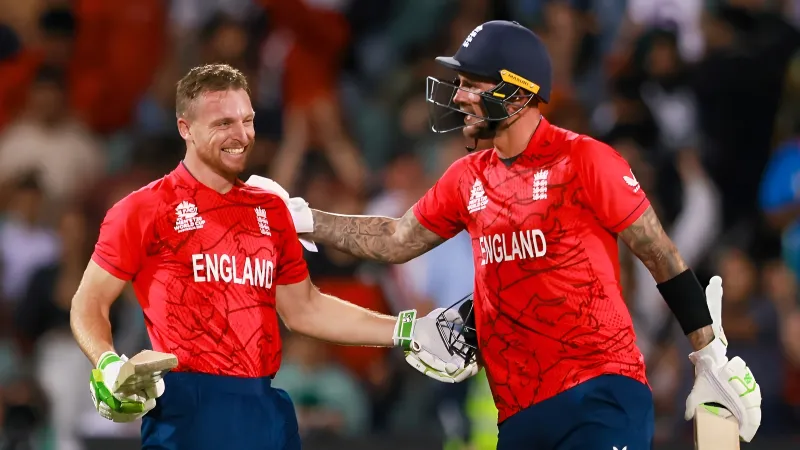 Alex Hales & Jos Buttler
It was not a chase, but rather an examination of the structural difference in how power play bowlers are used to attack the modern opening strategy for batting. England’s 170-run partnership without loss in the 2022 World Cup semifinals knocked India out of contention for the championship and further revealed the gap in how powerplay bowling is implemented versus modern-day opening philosophies. The chase of 169 was completed by Buttler and Hales in 16 overs with no loss of wickets.
Beginning with Buttler’s 80* off 49, which was a display of controlled force and, in contrast, Hales’ 86* off 47 was unadulterated power. England never allowed India to come up with a backup plan because they were able to suffocate their primary game plan from start to finish.
Quinton de Kock & Rilee Rossouw: 168 (South Africa vs Bangladesh, Sydney 2022)
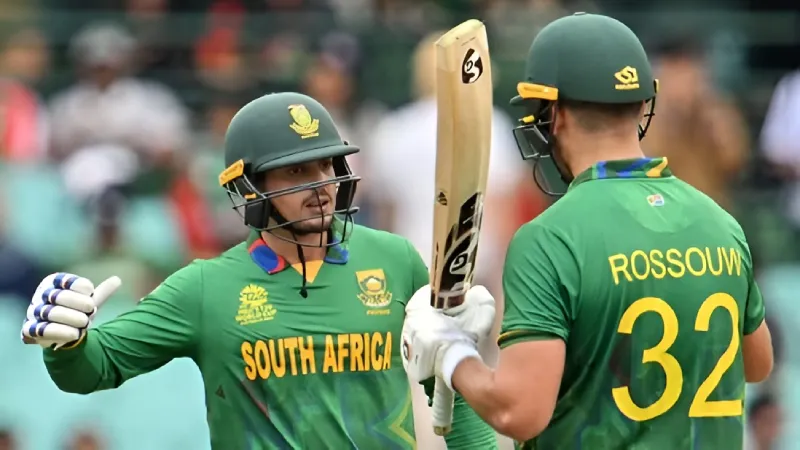 Quinton de Kock & Rilee Rossouw
If England’s stand was efficiency, South Africa’s was escalation. After losing Temba Bavuma for 2, De Kock and Rossouw didn’t rebuild; they detonated. Rossouw’s 109 off 56 remains one of the most brutal World Cup hundreds, while De Kock’s 63 off 38 provided the pacing engine.
The partnership showed another typical example of an imbalance between the two batsmen in terms of the left and right sides of the wicket (on Sydney’s real surface). Bangladesh could never recover and folded for 101, while Anrich Nortje’s 4–10 made the stand become a match-ending event rather than just a large score.
Kumar Sangakkara & Mahela Jayawardene: 166 (Sri Lanka vs West Indies, Bridgetown 2010)
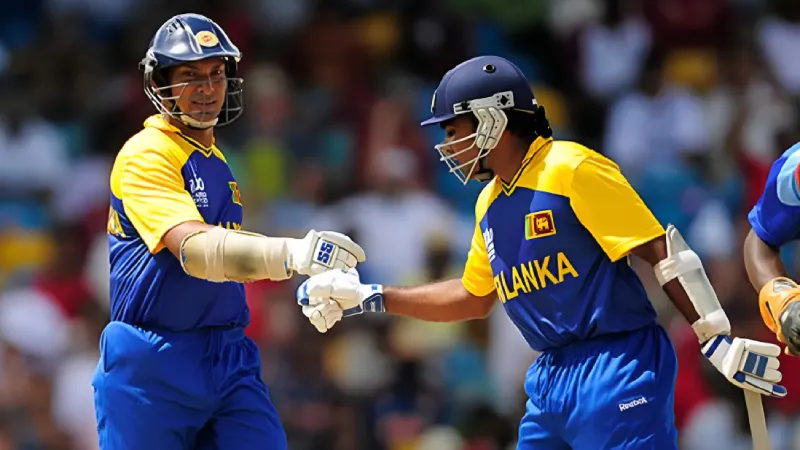 Kumar Sangakkara & Mahela Jayawardene
The timing of the formation of their partnership was a major factor in the success of Jayawardene and Sangakkara before “strike rate” became a popular topic of interest at the beginning of 2010. After the loss of three top-order batsmen, including Sanath Jayasuriya (for one run), they went on to build a partnership that seemed to be built with precision, building 166 runs for the second wicket and converting a precarious position of 1-19 into a very strong position of 195-3.
Jayawardene’s 98* off 56 balls were elegant under pressure, while Sangakkara’s 68* off 49 balls were controlled with intent. The pair represented a traditional (older) T20 philosophy of batting deep to create scoring opportunities through gap selection and punishing poor bowling selections, and this approach worked perfectly for them in securing a comfortable win for Sri Lanka and showed that T20 smarts matter just as much as brute power.
Rahmanullah Gurbaz & Ibrahim Zadran: 154 (Afghanistan vs Uganda, Guyana 2024)
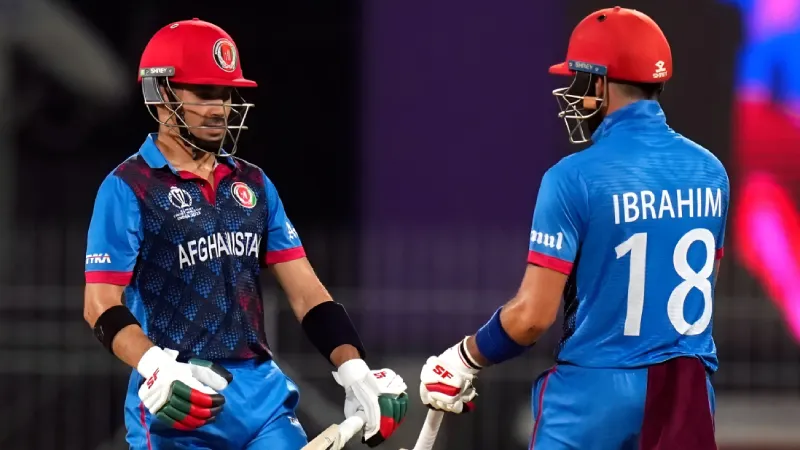 Rahmanullah Gurbaz & Ibrahim Zadran
It wasn’t so much the level of opposition as it was their presence that defined this partnership; Afghanistan’s opening stand of 154 in the 2024 Cricket World Cup showed that the country has moved on from being an “also-ran” batting unit to one with real depth. Gurbaz scored 76 off 45 balls to give Afghanistan some momentum after the first few overs, and when he fell (for his 76th ball), he was replaced by a very steady and calm 70 from Ibrahim Zadran off 46 balls.
Afghanistan won the match 183-58 over Uganda. The Uganda batting lineup was destroyed by Fazalhaq Farooqui’s five wicket for nine run performance. A great opening and number three batting performance helped Afghanistan control the game with the bat in the first inning. This will be very helpful for Afghanistan in competing with the world’s best teams internationally.
Babar Azam & Mohammad Rizwan: 152 (Pakistan vs India, Dubai 2021)
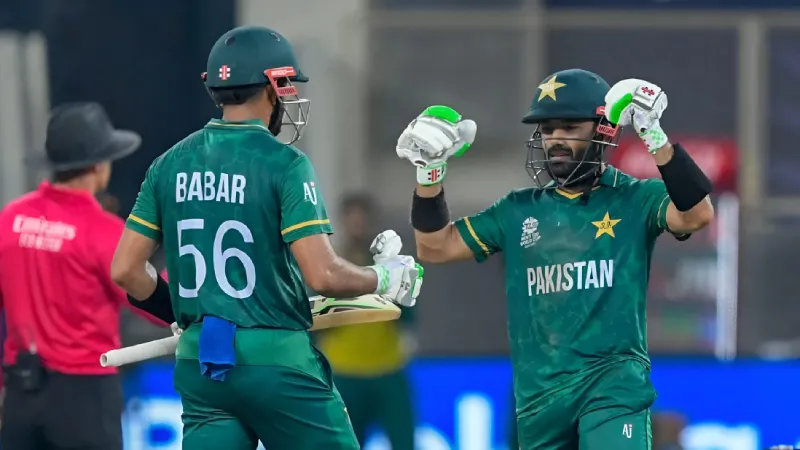 Babar Azam & Mohammad Rizwan
Some partnerships rewrite history. This one erased a curse. Chasing 152 against India, Pakistan’s openers produced the country’s first-ever World Cup win over their rivals without losing a wicket. Rizwan’s 79* and Babar’s 68* weren’t flashy; they were suffocating.
What made this stand special was its emotional gravity. Against India. In a World Cup. Under decades of pressure. Pakistan didn’t chase fast; they chased flawlessly, finishing in 17.5 overs. It remains one of the most psychologically dominant partnerships the tournament has ever seen.
Top 5 Highest Partnerships: Men’s T20 World Cup
Batters | Runs | Wicket | Team | Opposition | Venue | Year |
A. Hales & J. Buttler | 170* | 1st | England | India | Adelaide | 2022 |
R. Rossouw & Q. de Kock | 168 | 2nd | South Africa | Bangladesh | Sydney | 2022 |
K. Sangakkara & M. Jayawardene | 166 | 2nd | Sri Lanka | West Indies | Bridgetown | 2010 |
R. Gurbaz & I. Zadran | 154 | 1st | Afghanistan | Uganda | Providence | 2024 |
B. Azam & M. Rizwan | 152* | 1st | Pakistan | India | Dubai | 2021 |
The Top 5 Highest Partnerships in Men’s T20 World Cup history aren’t just statistical landmarks; they are snapshots of how the format has evolved. From classical accumulation to unapologetic domination, each stand reflects its era’s tactical priorities.
Key Takeaway
Great T20 teams don’t chase totals; they build inevitability, two batters at a time.
FAQs
1. What are the top 5 highest partnerships in Men’s T20 World Cup history?
They range from England’s 170* in 2022 to Pakistan’s 152* against India in 2021.
2. Why are partnerships so important in T20 World Cups?
They reduce risk, control tempo, and deny bowling sides recovery opportunities.
3. How can teams replicate these partnerships in 2026?
By prioritizing role clarity, left-right balance, and powerplay stability over solo aggression.
Disclaimer: This blog post reflects the author’s personal insights and analysis. Readers are encouraged to consider the perspectives shared and draw their own conclusions.
Step into the world of cricket with JeetBuzz News—where expert opinions, trending Blogs, and behind-the-scenes insights meet all your favorite topics. Stay informed, stay entertained, and never miss the stories shaping the cricketing world—only on JeetBuzz News!