

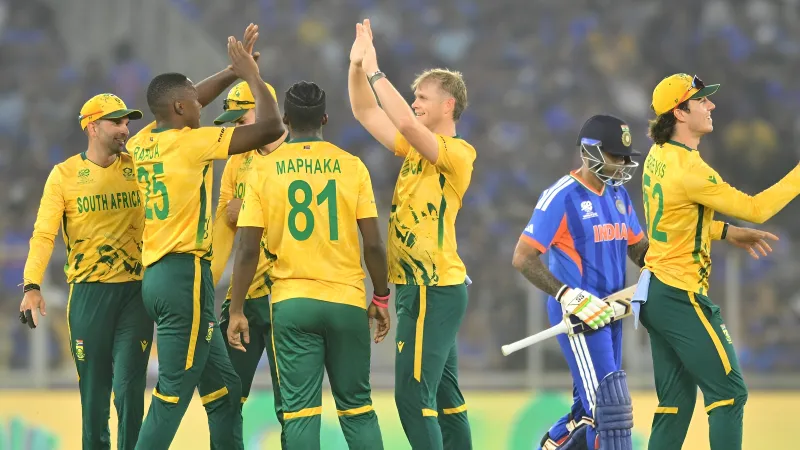

India’s worst defeats in T20WC history point to a clear pattern: high-pressure games where early wickets, powerplay damage, and chasing anxiety derail the Indian Cricket Team. From the T20WC 2026 loss to South Africa to collapses against Pakistan and England, India’s heaviest defeats often come when conditions amplify scoreboard pressure and opposition plans hit early. This analysis examines why these losses happened using context from South Africa Cricket, Pakistan Cricket, and the England Cricket Team, and what they reveal about India’s recurring vulnerabilities in global T20 events.
IND vs NZ 2016 – Nagpur Collapse
India restricted New Zealand to a modest total on a spin-friendly Nagpur surface, which initially appeared well within reach. The bowling unit executed its plans effectively, applying pressure through tight lines and disciplined lengths. However, the chase exposed a fragile batting approach against spin. Early wickets forced India into a shell, with batters opting for survival rather than rotation. The lack of proactive strokeplay, particularly the absence of sweep and reverse-sweep options, allowed New Zealand’s spinners to dictate terms. The innings unraveled quickly, resulting in a dramatic collapse for under 80 and highlighting India’s long-standing issues against quality spin under pressure.
IND vs AUS 2012 – Colombo Mismatch
After struggling to build momentum and posting a middling first-innings total, India entered the contest already behind the curve. While the pitch initially offered grip, evening dew in Colombo significantly eased batting conditions during Australia’s chase. India’s bowlers failed to adapt their lengths or vary pace effectively, allowing Australian batters to settle early. Once the powerplay passed without breakthroughs, the contest became one-sided. The chase was completed comfortably with plenty of overs to spare, underlining India’s inability to defend average totals when conditions shift mid-match.
IND vs SA T20 World Cup 2026 – Ahmedabad Hammering
India started strongly by denting South Africa’s top order early, briefly swinging momentum in their favor. However, a composed middle-overs recovery pushed South Africa to a total that exceeded par expectations on a flat Ahmedabad surface. During the chase, India’s top order collapsed inside the powerplay, immediately creating scoreboard pressure. With required rates climbing and limited boundary options available, panic set in. The batting unit failed to stitch partnerships, leading to a comprehensive defeat by a large margin.
IND vs ENG 2022 – Adelaide Semifinal
In a high-stakes knockout match, India’s total proved competitive on paper but lacked the extra cushion needed in a semifinal. England’s openers executed a near-flawless chase, neutralizing swing with positive intent and precise shot selection. India’s bowlers struggled to find movement or disrupt rhythm, while reactive field placements offered little resistance. As boundaries flowed early, pressure shifted entirely onto India, which had no tactical counter once England seized power-play dominance. The match ended without England losing a wicket, emphasizing the gulf in execution on the day.
IND vs PAK 2021 – Dubai Shock
India’s total, while respectable, lacked acceleration at the death, leaving Pakistan with a clearly defined chase. From the outset, Pakistan’s openers controlled tempo, rotating strike efficiently before targeting loose deliveries. India failed to generate early breakthroughs or apply sustained pressure, allowing the chase to progress smoothly. As the partnership grew, belief drained from the Indian side, turning the contest into a formality well before the final overs. The ten-wicket loss was not just historic, but symbolic of India’s struggles when early momentum slips away.
India’s worst defeats aren’t isolated mishaps; they reflect a repeating pattern shaped by powerplay volatility, conditions favoring chases, and opposition clarity. When India loses early wickets or fails to control the first six overs, recovery becomes improbable against elite sides.
Key Takeaway
India’s heaviest T20 World Cup losses consistently stem from powerplay failures amplified by conditions and opponent clarity.
FAQs
What are India’s biggest losses in T20 World Cup history?
Heavy-margin defeats against Pakistan (2021), England (2022), South Africa (2026), Australia (2012), and New Zealand (2016) rank among the worst.
Why does India struggle in high-pressure T20 matches?
Early wickets or powerplay leakage quickly cede control, making recovery difficult against top teams.
How did the England Cricket Team dominate India in 2022?
Clear chasing plans, powerplay control, and minimal risk after the first six overs.
Can India avoid such defeats in future ICC events?
Yes, by improving powerplay adaptability, batting depth usage, and bowling variations early.
Disclaimer: This blog post reflects the author’s personal insights and analysis. Readers are encouraged to consider the perspectives shared and draw their own conclusions.