

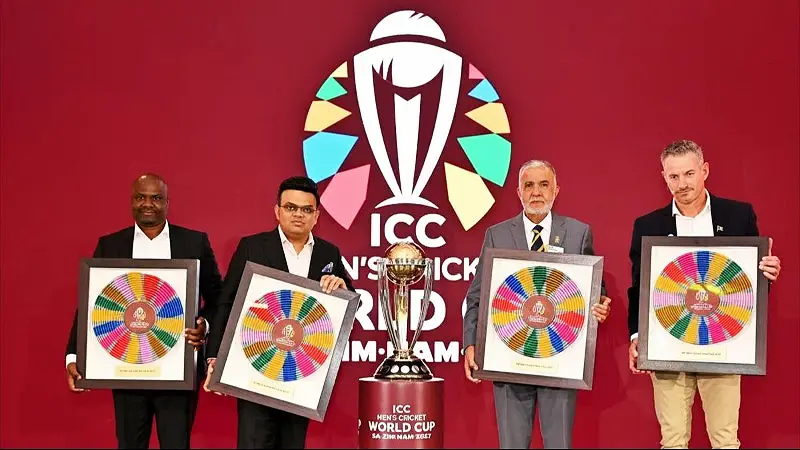

It should reduce dead rubbers, not remove them. The ICC has approved a 14-team 2027 ODI World Cup with two new stages, the Super Series and the Super 7, designed to put a semi-final race behind most matches. More teams advancing keeps mid-table games alive, but each side still plays only five group games. The plan is untested, so one-sided results between top and bottom seeds remain possible. Success will depend on how many close games the new stages produce.
Dead Rubbers Hurt 50-Over Cricket
The 2023 World Cup played 48 matches, and only nine of them were close games. In 2019, 21 of 45 league matches were between teams ranked more than three places apart. Those numbers show how often a World Cup match has been decided before it starts. That is the problem the ICC set out to fix.
The ICC’s redesign responds to concerns about empty stands and non-competitive matches. It also guards against the risk that adding teams would create even more dead rubbers. The aim is fewer meaningless matches, though the plan is untested. Fewer dead rubbers means fewer empty seats and more reason to watch every match.
2027 ODI World Cup Super 7 Format
The tournament runs from 4 October to 21 November 2027 across South Africa, Zimbabwe and Namibia, with 57 matches in total. That spreads the event across nearly seven weeks and three countries. After the group stage, seven teams reach the Super 7: the top three from each group plus the best fourth-placed side.
Stage | Teams | How Teams Advance | Why It Matters |
|---|---|---|---|
2023 league stage | 10 | Round-robin of 45 matches; top four reach the semi-finals | Only nine of 48 matches were close |
2027 Super Series | 3 lowest-ranked | Round-robin; winner advances | Two sides are out after two matches |
2027 group stage | 12 | Two groups of six, 30 matches; top three each plus best fourth advance | Seven of 12 survive, keeping mid-table games alive |
2027 Super 7 | 7 | Round-robin of 21 matches; top four reach the semi-finals | Every match involves a semi-final race |
The seven teams play a single round-robin of 21 matches, and the top four go to the semi-finals, first against fourth and second against third. In 2023, four of ten teams advanced from a 45-match league. In 2027, seven of twelve advance from the groups. The Super 7 is shorter than the old league, with 21 matches against 45.
The Opening Round for Bottom Seeds
The three lowest-ranked qualified teams, seeded 12 to 14, play a round-robin in which each side meets the other two once. Only the winner advances to the group stage, and the other two are eliminated. Every result in the mini-league matters.
The ICC said it wants matches in the early rounds to carry higher consequences while giving emerging teams a real chance to compete. That is a trade-off, since two sides leave the event after only two matches. For the weakest qualifiers, though, every game now matters from the first ball. Fans of smaller sides get a meaningful match instead of heavy defeats.
Qualification Path for All 14 Teams
Ten teams have qualified: hosts South Africa and Zimbabwe, plus the top eight ODI-ranked sides, India, Australia, England, New Zealand, Pakistan, Sri Lanka, Bangladesh and Afghanistan. That settles most of the field early, with only a handful of places still open.
Four places remain, decided at the World Cup Qualifier from 22 February to 23 March 2027, where Ireland and West Indies are among the ten teams. Co-host Namibia does not qualify automatically and must use the standard pathway. Both will see the Qualifier as their route into the main draw.
The Verdict on Fewer Meaningless Games
It should reduce the problem, not remove it. That is progress, not a cure. More teams advancing keeps more group games alive, and the Super 7 puts every match in a semi-final race.
But each team plays only five group games, and one-sided results between top and bottom seeds remain possible. The redesign deserves credit for trying, but credit is not the same as proof. It is also unclear whether group points carry into the Super 7, which will decide how much early results matter. The test for the 2027 ODI World Cup Super 7 format is whether close games rise above the nine counted in 2023.
Will the Super 7 make 50-over cricket must-watch again? Tell us in the comments.
Frequently Asked Questions (FAQs)
How many teams play in the 2027 ODI World Cup?
Fourteen teams, up from ten in 2023. The tournament has 57 matches in total, spread across three host countries: South Africa, Zimbabwe and Namibia, from October to November.
What is the Super 7 stage in the ODI World Cup?
Seven teams play a single round-robin of 21 matches. The top four reach the semi-finals, with first facing fourth and second facing third in the last four.
Which teams have qualified for the 2027 ODI World Cup?
South Africa, Zimbabwe, India, Australia, England, New Zealand, Pakistan, Sri Lanka, Bangladesh and Afghanistan. Four places remain, decided at the World Cup Qualifier from 22 February to 23 March 2027.
Where is the 2027 ODI World Cup being held?
In South Africa, Zimbabwe and Namibia, from 4 October to 21 November 2027. Namibia is a co-host but does not qualify automatically and must use the standard pathway.
Is ODI cricket dying?
Not yet, and the ICC’s expansion to 14 teams and 57 matches suggests it still values the format. One-sided matches remain the main concern, especially between top and bottom seeds in the group stage.