

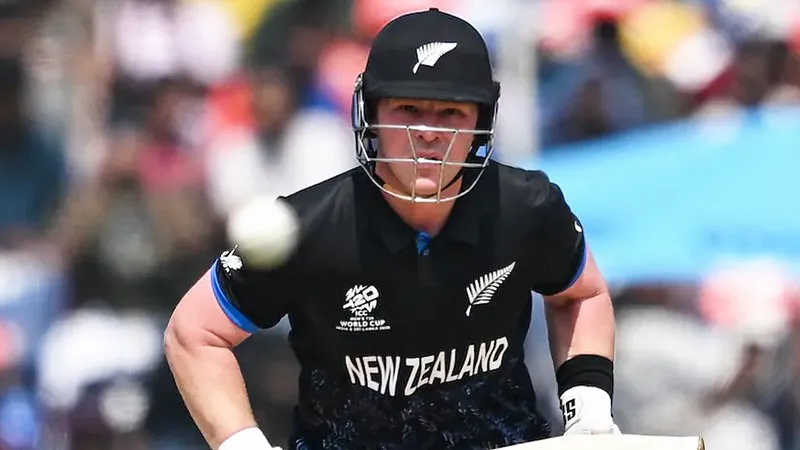

Seifert’s T20 batting evolution is defined by one clear change: he moved from a one-dimensional, high-risk hitter to a complete and more adaptable top-order batter. Earlier in his career, his Super Over failure moments and visible death overs weakness limited trust in pressure situations. Since his 2023 comeback, improved shot selection, better risk management, and clear strike rate improvement have reshaped his value as a WC opener options discussions. This evolution explains why Seifert is no longer viewed as a gamble but as a tactical solution in the ongoing New Zealand T20 World Cup squad debate.
Tim Seifert’s Early Career Technical Limitation
Seifert’s beginning successes were largely based on unorthodox methods to hit the ball, particularly when hitting over the back wall of the wicket. This led to Seifert being viewed as a 360-degree batsman; however, it also produced consistency that bowlers could capitalize upon. As such, bowlers began to set the field very early, emphasizing limiting Seifert’s shot options and putting pressure on him to make low-percentage shots. His struggles were at their most apparent during the times he was under the most pressure. At these times, he was limited in his ability to adjust to different types of bowling, relying solely on ramps and scoops rather than expanding his options.
Super Over Pressure Exposure
The Super Over was a “magnifying glass” for the shortcomings of Seifert under extreme pressure, which caused him to limit his shot distance, whereas when he had time to react, he would normally widen it. The bowlers took advantage of this as they bowled wide yorkers and protected fine leg. This is how the failure in the Super Over created the narrative that he could not be counted on in knockout games or major international tournaments.
New Zealand T20 World Cup squad Statistical Shift
In addition to the apparent increase in post-2023 averages for Tim Seifert in T20I cricket, Seifert’s strike rate also increased, to over 150, indicating that he has had real increases in his ability to hit the ball well as opposed to an increase in his ability to time balls in specific situations. This is even more significant because his dismissal patterns are becoming much less predictable, which may indicate he is making better decisions on the field, in addition to being able to hit the ball more effectively.
Improved Death Overs Decision-Making
Previously, Seifert’s weakness stemmed from forcing innovation too early. After his comeback, he showed a greater willingness to rotate strike, target straight boundaries, and delay high-risk shots. This tactical maturity reduced dismissal frequency and allowed him to finish innings instead of flashing starts.
Fit Among New Zealand Openers
With New Zealand’s recent opening instability, Seifert’s evolution directly impacts selection logic. Compared to pure power options, his balanced approach offers flexibility across conditions, strengthening his case in the New Zealand T20 opener options pool without forcing tactical compromises.
He has evolved as a T20 batsman from being a highlight hitter who was always under pressure with his shot selection into a reliable number three or four who can be relied upon to get the team to a position of strength at the end of the innings. He has removed some of the predictability of his pressure shots that were sometimes played for effect rather than necessity, and made better decisions when under pressure. In competitions where the margin is determined by the ability to adapt, then Seifert’s transformation may be more than just an effective decorative feature.
Key Takeaway
Tim Seifert’s value now lies in controlled adaptability, not just creative strokeplay.
FAQs
What caused him Super Over struggles?
Over-reliance on behind-the-wicket shots made his options predictable under pressure.
How did Seifert improve his strike rate without extra risk?
Better shot selection and timing replaced forced innovation.
Is Tim Seifert still considered a 360-degree batter?
Yes, but now with stronger conventional shot foundations.
Why is he important in New Zealand’s T20 opener options?
He provides balance between aggression and reliability.
Can he solve New Zealand’s opening issues in the T20 WC?
His evolved approach makes him a strong tactical fit across conditions.