

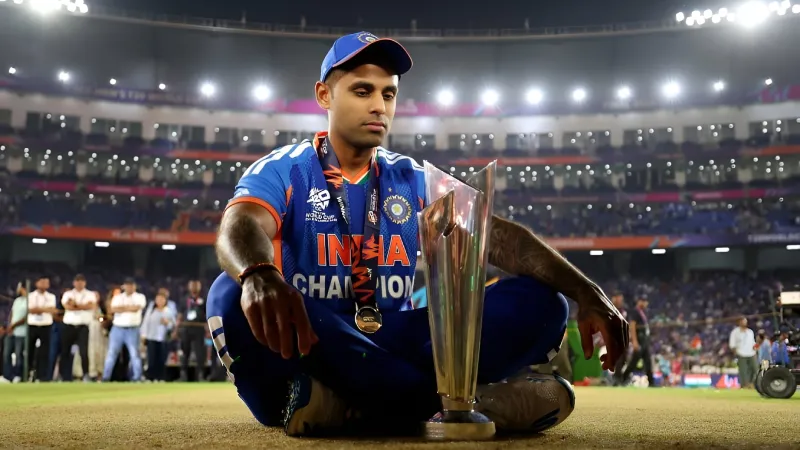

Sanju Samson scored 321 runs across five innings, the highest tally by an Indian batter in a single T20 World Cup campaign. His 97 not out against the West Indies turned a dangerous knockout moment into a platform for the title run. Abhishek Sharma endured a difficult early tournament before rediscovering his form at exactly the right moment in the knockout stage. Both recoveries happened because Suryakumar Yadav made the same captaincy decision twice: back your player, hold your nerve, and trust the form to return. India won the T20WC 2026 not because every selection was correct from the start, but because the captain knew when to stop changing things.
Why Captaincy Without Personal Form Is the Hardest Test
SKY’s own batting through the tournament was inconsistent, a reality he acknowledged publicly rather than deflecting. In T20 cricket, a captain who is scoring heavily carries natural authority into every tactical decision. A captain navigating mixed personal form must rely entirely on leadership quality rather than the credibility that runs on the board automatically.
What India’s campaign confirmed was that SKY’s captaincy quality was independent of his batting output. The team’s composure in pressure situations, particularly the semifinal against England, where India defended 253 from a position of vulnerability in the first ten overs of England’s chase, reflected a dressing room that trusted its leader’s decisions regardless of whether he had personally contributed with the bat in that match.
How the Samson Decision Changed the Tournament
Sanju Samson’s inclusion as an opener was not the original plan; he entered the XI as a replacement option before his 97 not out against West Indies made any subsequent selection discussion irrelevant. The captain’s decision to persist with him at the top despite early uncertainty was the single most consequential tactical call India made across nine matches.
321 runs at a strike rate close to 200 across five innings, including the 97 not out, an 89 in the semifinal, and an 89 in the final, confirmed that the original uncertainty was circumstantial rather than technical. SKY backed Samson at the moment; the selection was genuinely debatable. The results vindicated the backing rather than the debate.
Why the T20 World Cup 2026 Proved Captaincy Matters More Than Personal Form
The T20 World Cup 2026 tournament pattern confirmed a specific leadership principle that elite captains demonstrate and average ones struggle with: players perform better when they know their place in the team is secure, regardless of one or two poor innings. Abhishek Sharma’s difficult early tournament could have ended his participation if the captain had responded to public and media pressure to make changes. Instead, Abhishek found his form in the knockout stage and contributed directly to India’s final victory.
That patience is not passive captaincy. It requires active communication, telling a player who has just been dropped from the public narrative that his captain still believes in him, and tactical confidence that the current combination is correct despite the external noise.
What the Title Means for SKY’s Leadership Legacy
SKY’s captaincy legacy from this tournament is defined by three outcomes: a title, two players whose careers were directly advanced by his backing at critical moments, and a knockout stage where India’s composure was visibly stronger than any opponent they faced. His own batting form across the tournament will be a footnote. The results will be the headline.
- Do you think Suryakumar Yadav’s captaincy style, backing players through poor form rather than reacting to pressure, is the right approach for Indian cricket going forward? Drop your view in the comments and follow for cricket coverage.
FAQs
What did Ricky Ponting say about Suryakumar Yadav’s captaincy?
Ricky Ponting praised Surya’s ability to manage players and maintain team confidence despite his own inconsistent batting during the tournament.
Why was Sanju Samson important in the ICC Men’s T20WC 2026?
Sanju Samson played several decisive innings in knockout matches, turning India’s trust in him into major match-winning performances.
How did India manage pressure in the 2026 T20 World Cup knockout games?
India relied on balanced batting contributions and disciplined bowling phases to stay in control during high-pressure matches.
Which players benefited most from Surya’s leadership?
Players such as Abhishek Sharma and Sanju Samson gained confidence through consistent backing from the captain and team management.
Is Suryakumar Yadav likely to remain India’s T20 captain after the tournament?
The success of the campaign strengthens his leadership case, but long-term decisions will depend on team management strategy and future series results.
Disclaimer: This blog post reflects the author’s personal insights and analysis. Readers are encouraged to consider the perspectives shared and draw their own conclusions.