

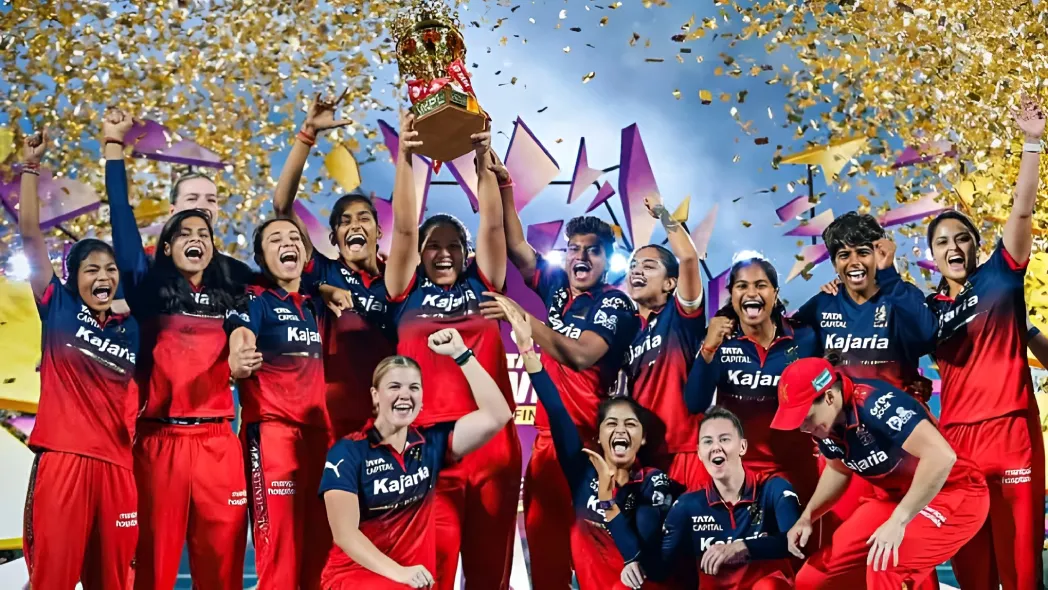

RCB Women’s title win analysis shows that Bengaluru’s championship was not an accident of form but the result of deliberate planning, auction discipline, and role clarity. RCB entered the season with a limited purse, yet their RCB auction strategy, Smriti Mandhana’s captaincy, and tactical backing from Malolan Rangarajan, RCB coaching, combined to build a balanced, pressure-proof squad. By prioritising bowling depth, all-rounders, and adaptable batters, RCB created a team capable of surviving collapses and chasing historic targets, a formula that ultimately delivered their WPL 2026 crown.
Auction Strategy Under Constraints
Before RCB played their first match of the season, their season was already shaped by who would not be there (Ellyse Perry) and how much they could spend at the auction (a lower amount). RCB, therefore, had to alter their auction approach from using big-name batsmen to using budget-friendly all-rounders and high-impact bowling talent. The focus was now on players such as Nadine de Klerk, Lauren Bell, and Indian bowling depth in the seam department rather than on signing other foreign players that would provide more batting options. This has provided more stability for the team regarding where matches are being held and what weather conditions will be encountered.
Bowling Unit Defined Match Control in WPL 2026
The title run’s mainstay was bowling. Lauren Bell’s bowling impact provided significant powerplay control and dot-ball pressure that gave RCB early momentum every game. Bell’s aggressive batting with the new ball created an environment for spinners and seamers to bowl with a field set up in their favor. The RCB bowling unit didn’t frequently go after wickets without caution; rather, they compressed scoring areas, which was a major factor in successfully defending totals and setting up successful chases.
Mandhana’s Leadership and Role Clarity
Clarity defined Smriti Mandhana’s leadership as opposed to constantly changing her lineup. She allowed players to understand their responsibilities in the first game, whether it be absorbing pressure or attempting to score at the end of an innings. She continued to back up her players when they were not producing results, was resistant to making impulsive changes based on the result of a single game, and made sure the on-field decisions were consistent with what she planned for the season before the start of the season. Her leadership instilled faith in the collapse of the batting order, particularly in the chase of high totals, which helped foster an overall team-wide belief that there is no total too big to chase.
Radha Yadav’s Batting Transformation
Radha Yadav’s development as an improved batter was one of RCB’s most significant strategic decisions during the season. Traditionally, she was viewed as a left-arm spinner. RCB had worked on developing her as a middle-order hitter with a focus on using scenario-based training to develop her skills as a counter-puncher that could rebuild innings when the top order collapsed. Through this skill set, RCB were able to maintain their aggressive intent while still having a level of stability in their batting line-up, which is something that very few teams achieved during this year’s season.
Allrounders As Pressure Multipliers
Nadine de Klerk’s performance demonstrated how RCB used their “all-rounder” role to play a multifaceted player role. Using the all-rounder role for both batting and bowling provided RCB flexibility in their use of all-rounders. All-rounders were not just being used to fill gaps but instead were being used to be game-changers (pressure multipliers). The emphasis on the all-rounder as a game-changer allowed RCB to have a solution if their “Plan A” did not work.
RCB was able to create a winning culture by creating a cohesive vision for their team by linking their auction process with the way they lead, coach, and tactically adapt. By having a strong belief system created from Smriti Mandhana’s captaincy and by Malolan Rangarajan being the coach, and having people such as Radha Yadav and Nadine De Klerk provide the right balance, RCB has positioned itself to be successful over time rather than a one-time success.
Key Takeaway
RCB won the title by building a system where preparation, balance, and belief mattered more than star power.
FAQs
How did RCB win the WPL title despite a limited auction budget?
By prioritising role-based signings, all-rounders, and bowling depth instead of marquee names.
Why was Smriti Mandhana’s captaincy crucial?
Her leadership ensured role clarity, trust in players, and calm decision-making under pressure.
What impact did Nadine de Klerk have on RCB?
She delivered match-defining performances with both bat and ball, stabilising key moments.
How did Radha Yadav improve her batting in this tournament?
RCB invested in scenario-based training to develop her as a middle-order contributor.
Disclaimer: This blog post reflects the author’s personal insights and analysis. Readers are encouraged to consider the perspectives shared and draw their own conclusions.