

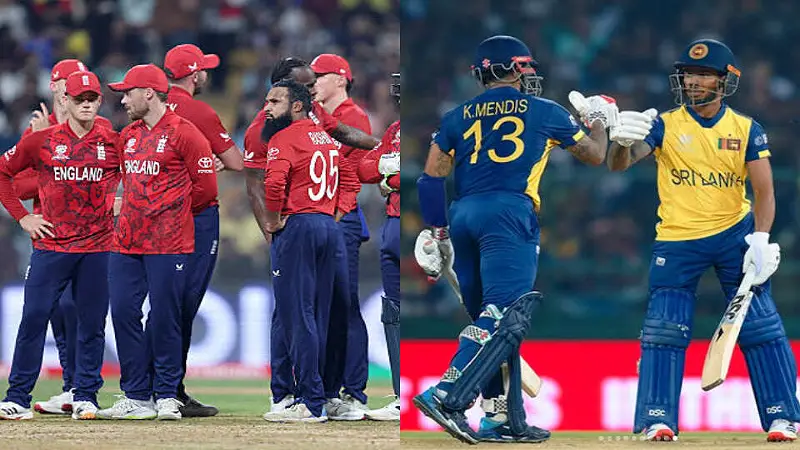

The England vs Sri Lanka match shows a game decided not by brilliance, but by decision-making under pressure. England’s disciplined bowling and tactical control exposed a Sri Lanka batting collapse vs England, especially after Pathum Nissanka’s early wicket impact destabilised the chase. While England again won without Jos Buttler’s runs, the result strengthens their analysis of World Cup form, highlighting a team learning to win in tough conditions. This was not an upset by chance; it was a failure of approach, clarity, and adaptability from Sri Lanka while chasing a modest total.
Powerplay Decisions Cost Sri Lanka
Sri Lanka’s chase unravelled inside the powerplay, where intent replaced judgment. Losing early wickets while chasing a low target is survivable, but only if risk is recalibrated quickly. Instead, aggressive shots continued despite scoreboard comfort. On a slow surface, England’s bowlers dragged batters into mistimed strokes rather than forcing errors through pace. This section alone explains much of the Sri Lanka chase failure, explaining the narrative of poor powerplay risk management on a wicket that demanded patience.
Nissanka Dependency Exposed Again T20WC Super 8s
The Pathum Nissanka early wicket impact was decisive. Sri Lanka’s batting order is structured around his stability at the top, allowing others to play with freedom. When he fell cheaply, strike rotation slowed, panic set in, and shot selection deteriorated. This match reinforced a recurring theme: without Nissanka anchoring the innings, Sri Lanka struggled to adapt their tempo, particularly in pressure chases during major tournaments.
England’s Control Over Conditions
England’s bowlers understood the conditions better than the hosts. Using cutters, hard lengths, and defensive fields, they denied easy boundaries during the middle overs. Although England’s batting did not dominate, the bowlers ensured the target felt larger than it was. This balance of modest batting combined with tactical bowling is central to this England World Cup form analysis, showing growth beyond reliance on explosive totals.
Winning Without Buttler Still Matters
England’sT20WC Super 8s win without runs from Jos Buttler is another indicator that they are a dangerous opponent. Teams usually hit their peak in the knockout stages of tournaments when they have gotten through the group stage without significant production from some or all of their veterans. Given the number of pressure games England’s middle order and their bowling unit have now had the opportunity to experience, the impact of Buttler’s first significant contribution should see tremendous growth in their overall capabilities. From the standpoint of analytics, the additional success of this victory has provided even more evidence that England poses a threat in the latter stages of the tournament.
The England vs Sri Lanka match analysis confirms this result was less about shock and more about structure. Sri Lanka misread conditions, failed to adjust after early setbacks, and leaned too heavily on one batter. England, despite batting inconsistencies, controlled tempo, exploited tactical moments, and reinforced their growing resilience. Looking ahead, England’s ability to keep winning without peak performances suggests a dangerous upward curve, while Sri Lanka must urgently diversify their batting plans if they are to survive the Super 8s. This match may prove a hinge moment for both campaigns.
Key Takeaway
England won through discipline and adaptability, while Sri Lanka lost through tactical rigidity and over-reliance on one batter.
FAQs
Why did Sri Lanka collapse while chasing a low total?
Poor powerplay shot selection and failure to adjust risk after early wickets triggered the collapse.
How important is Pathum Nissanka to Sri Lanka’s batting?
He provides stability and tempo control; without him, the lineup struggles to reset its approach.
Can England win the World Cup without Jos Buttler scoring big runs?
They can progress, but England becomes significantly more dangerous once Buttler finds form.
What does this result mean for England’s Super 8s campaign?
It strengthens confidence and positions them well for knockout momentum.
Is this a familiar pattern for England in ICC tournaments?
Yes, England have often grown into tournaments after uneven early performances.