

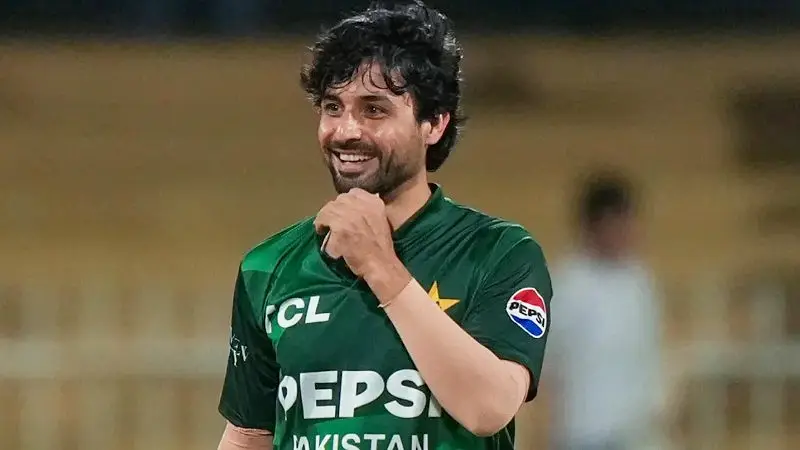

Pakistan’s spin bowling problem in white ball cricket used to be the same every series: predictable, readable, expensive after over ten. Then he arrived with a googly that doesn’t look like a googly, a carrom ball that does something different every time, and the composure to bowl both deliveries in the 19th over of a high-pressure match without flinching. He’s not the finished product yet. He doesn’t need to be. Right now, he’s the most difficult spinner Pakistan has fielded in white-ball cricket for years, and the story of how he got here is more interesting than the arrival itself.
Nobody Reads Him Off the Hand
The specific quality that makes Abrar dangerous in formats where batters dominate is the same quality that makes mystery spinners rare; you cannot tell what’s coming from the hand. His googly and carrom ball share a similar release point. His pace variation disguises itself behind a consistent action. Batters who face him across multiple overs don’t accumulate the read-rate they develop against conventional spinners because the information isn’t reliable. On flat pitches where traditional off-spinners get targeted through the powerplay, Abrar’s unpredictability changes the calculation.
Early Failures Built What Matters Now
Sixteen wickets in five red-ball matches at nearly 50 is the number everyone uses to question whether Abrar belongs in longer formats. It’s also the number that explains why he’s so effective in shorter ones. That red ball phase exposed every technical weakness simultaneously: length control, line consistency, and the ability to maintain intensity across long spells without leaking boundaries. It was uncomfortable. He fixed it. The discipline he developed, bowling tight lines across Test innings, is directly visible in his white-ball economy rates now. Bowlers who get hammered in Tests and don’t learn from it stay expensive across all formats. Abrar got hammered, learned, and came back with a cleaner action and a clearer plan.
Abrar Ahmed Shines When Pressure Builds
The Super Eight clash against England confirmed what Pakistan’s selectors suspected: Abrar Ahmed in high-pressure situations is a different proposition from him in comfortable ones. When Pakistan experimented with other spin options in that match, the contrast in control was visible within two overs. Other spinners leaked. Abrar’s economy rate held in comparable pressure situations. In matches where totals exceed 180 and conventional containment bowling gets attacked, a spinner who can maintain an economy rate below eight while threatening wickets in the middle overs is genuinely rare. Pakistan noticed. The selection has since reflected it.
Flat Pitches Don’t Stop Him Either
The conventional wisdom about mystery spinners is that they need assistance from the surface to be effective: some grip, some turn, something to exaggerate the variations. Abrar disproves this regularly. On subcontinental flat pitches where the ball doesn’t turn and experienced batters read conventional spinners within three deliveries, his effectiveness comes from something the pitch can’t remove: the inability to predict what the ball is doing before it lands. Subcontinental batters who grew up playing traditional leg spin and off spin have less reference experience for carrom balls, and googlies bowled from the same hand position. The unfamiliarity does the work the pitch refuses to.
- Can Abrar carry Pakistan’s white-ball spin attack alone, or does he need a quality partner to make the combination complete? Drop your take and follow for cricket updates.
FAQs
What makes Abrar effective in white-ball cricket?
His mystery spin variations and ability to maintain a low economy rate under pressure make him highly effective.
Why did he struggle in red-ball cricket early on?
He initially lacked consistency in line and length, reflected in stats like 16 wickets in five matches at almost 50.
Can he become Pakistan’s lead spinner in all formats?
He is already crucial in white-ball cricket, but needs more consistency to dominate in Tests.
How does Abrar Ahmed compare to other mystery spinners?
He shares similarities with Sunil Narine and Ajantha Mendis but operates in a more data-driven, batter-dominant era.