

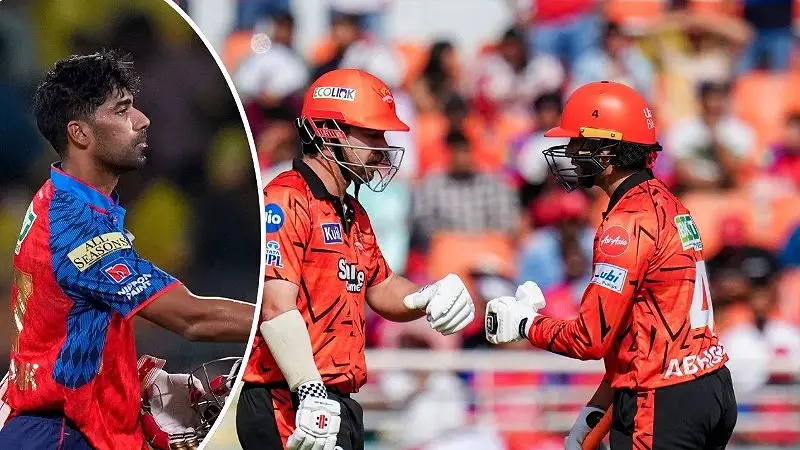

Sunrisers Hyderabad had raced past 100 without losing a wicket. Travis Head and Abhishek Sharma were in full flow on a surface offering nothing to conventional pace bowling. The match was heading toward 250-plus, a total that would have stretched even PBKS’s exceptional chasing ability beyond its reliable range. Shashank Singh came on to bowl. Not at 140 kilometres per hour. At 120. On a surface where pace bowlers were getting punished, and the batting team had calibrated their timing to full pace.
120 kilometres per hour, arriving at bat height without seam movement created a completely different timing problem than the one the batting plan had been designed around. Travis Head was dismissed. Abhishek Sharma was dismissed. The total ended somewhere PBKS could chase. The 20-kilometre-per-hour differential won the match.
120 kmph Against 145 kmph Batters
The specific tactical logic behind Shashank Singh’s effectiveness against SRH’s batting unit is what pace reduction does to batters who have calibrated their trigger movements and bat swing for 140 to 145 kilometres per hour deliveries. Timing in T20 batting is calibrated to a specific pace range; the weight transfer, the backswing, and the front foot movement all happen in response to the body’s read of the delivery’s pace. A batter who has been timing 145 for six overs and receives 120 from the same end is timing a delivery that arrives significantly later than the body’s calibration expected.
Angles That Removed Head’s Hitting Arc
The specific bowling angle that Shashank used against Travis Head, bowling across the left-hander’s body rather than into his natural hitting zones, removed the scoring options that Head had been accessing throughout the powerplay from the equation. Head’s most reliable boundary-producing shots against conventional right-arm pace come through the leg side, the pull through square leg, the flick through mid-wicket, and the drive through mid-on.
Bowling across his body from a wider angle pushes the delivery away from the leg side and into the off side, territory where Head’s shot options are more limited and where PBKS’s field placements were specifically protected. The combination of wide angle, reduced pace, and field coverage of the offside left Head with a narrower range of scoring options against a bowling type he hadn’t needed to solve for six overs of full pace.
Shashank Singh made the difference in IPL 2026
The specific match context that makes Shashank Singh’s spell genuinely significant rather than situationally fortunate is what the total trajectory was before he bowled and what it became after. SRH at 100 without loss after the powerplay on a batting-friendly surface is tracking toward 240 to 260 minimum, a total that their batting depth typically extends beyond through the middle overs. The spell that removes Head and Sharma from that trajectory doesn’t just take two wickets. It removes the two batters whose presence was specifically enabling the middle-overs acceleration that the 250-plus total required
Slower Bowlers Win When Conditions Allow
The broader IPL 2026 lesson from Shashank Singh’s spell against SRH is the specific surface-reading that makes slower bowlers strategically valuable rather than just novelty options. On pitches where the ball doesn’t seam, swing, or turn, conventional pace bowling relies entirely on the pace itself being difficult to handle, which is true when batters are cold and unsettled, and significantly less true when batters have been timing the ball for six overs and have fully calibrated to the pitch’s pace. Introducing a significantly reduced pace after six overs of calibrated timing is the specific disruption that slower bowlers provide on flat surfaces, not variation within their own speed range, but variation from the speed range the batting team has been timing successfully.
- Does Shashank Singh’s successful slower-ball spell against SRH expand his bowling role within PBKS’s attack, or was it a situationally specific contribution that won’t be replicated as opposition teams prepare specifically for the reduced-pace approach? Drop your take and follow for IPL updates.
FAQs
What made Shashank Singh effective against SRH batters?
His slower pace and disciplined angles forced batters out of their natural hitting zones, leading to mistimed shots.
Why did PBKS use Shashank Singh in the middle overs?
The move disrupted set batters and broke scoring momentum during a crucial phase.
How does this spell impact the PBKS vs SRH match analysis?
It explains the shift from a potential 250+ total to a manageable score.
Can slower bowlers consistently succeed in the IPL?
Yes, especially when conditions favor cutters and batters rely heavily on pace.
Is this a turning point for Shashank Singh’s bowling role?
It could expand his role as a tactical option in pressure situations for the Punjab Kings.