

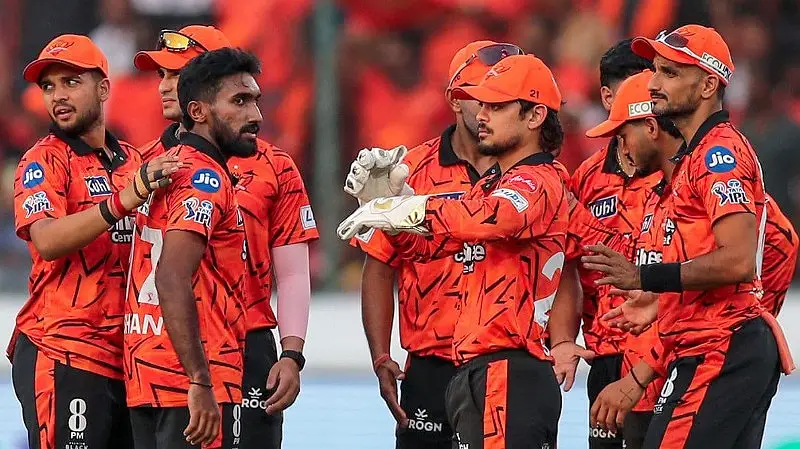

Sunrisers Hyderabad’s bowling attack in this campaign has been reduced to a single functioning threat supported by multiple bowling options that batting teams are treating as scoring opportunities rather than genuine problems to solve. Shivang Kumar has delivered impactful spells and taken wickets at important moments. The rest of the unit has consistently failed to support those contributions with equivalent pressure from the other end. When opposition batting lineups know which bowler to play cautiously and which bowlers to target aggressively, they arrive at the crease with a plan rather than a problem. SRH’s bowling unit is currently providing batting lineups with that exact clarity, and until that changes, the results will keep reflecting it.
Passive Bowling Gets Punished Every Time
The specific execution problem that defines SRH’s bowling struggles is the absence of attacking intent in the lengths their bowlers are choosing. A bowling attack that delivers into predictable corridors on batting-friendly surfaces, full enough to drive, short enough to pull, not short enough to trouble the batter, and not full enough to threaten the stumps, gives the batting team the one thing T20 batters most want: deliveries they’ve seen before arriving where they expected them. The batter’s shot selection on predictable deliveries happens before the ball is released rather than in response to it. Pre-committed shot selection against known lengths produces clean contact and boundaries.
Reactive Plans Cannot Read the Match
The tactical structure behind SRH’s bowling failures is the specific decision-making framework that is producing reactive rather than proactive bowling plans. Field changes that arrive after the boundary has been hit, rather than before the delivery that invites it. Bowling adjustments that respond to an expensive over rather than preventing it. A bowling unit that executes pre-set instructions without the autonomy to adjust angles, pace, or length based on what the batter is showing them in real time. Successful T20 bowling attacks are built around bowlers who read the specific batter in front of them and adjust their plan within an over, not between overs in response to the captain’s field change. SRH’s bowlers are executing plans rather than reading matches.
IPL 2026 Shivang Carries SRH’s Bowling Alone
Shivang Kumar’s performances, taking wickets at important moments, delivering impactful spells that change match dynamics, are the specific evidence that SRH’s bowling problem isn’t a quality problem throughout the unit. One bowler producing a genuine threat while the rest of the unit fails to support it reveals a structural depth issue rather than a general skill deficiency. Opposition captains have identified this imbalance and planned around it. Play Shivang cautiously, rotate strike against him, and attack every other over. When the bowling attack has one legitimate threat and multiple scoring-opportunity overs, the batting team’s strategy writes itself.
Conditions Always Read Wrong by SRH
The additional layer of SRH’s bowling problem beyond execution and depth is the consistent misreading of surface conditions that prevents any bowler from using the available assistance correctly. On slower tracks where pace-off deliveries grip and turn, SRH bowlers continue bowling their stock deliveries at full pace, removing the surface advantage that variation would have provided. On flat surfaces where pushing batters back with short balls changes the scoring zones available to them, SRH bowlers continue bowling full and into the batter’s preferred hitting zones, inviting the front-foot attacking shots that flat surfaces make easiest. The same bowlers operating with better surface awareness would produce different outcomes from the same deliveries.
Does SRH find the second and third bowling threats that would make Shivang Kumar’s quality produce more wickets from the pressure their combined attacks generate, or does the structural depth problem continue defining their campaign regardless of what Shivang produces individually? Drop your take and follow for IPL updates.
FAQs
Why is SRH’s bowling struggling in IPL 2026?
Their bowling lacks intent, adaptability, and consistent execution across all phases.
How important is Shivang Kumar to SRH’s bowling attack?
He has been the primary wicket-taking threat, highlighting the lack of support from others.
What is the biggest weakness in the SRH’s weak bowling lineup analysis?
The reactive strategy and inability to adjust to match situations stand out as major flaws.
Can SRH fix their bowling issues this season?
Yes, but only if they improve tactical flexibility and distribute responsibility across the unit.
Which phase is SRH weakest in during matches?
They struggle most in death overs, where execution errors lead to heavy run leakage.