

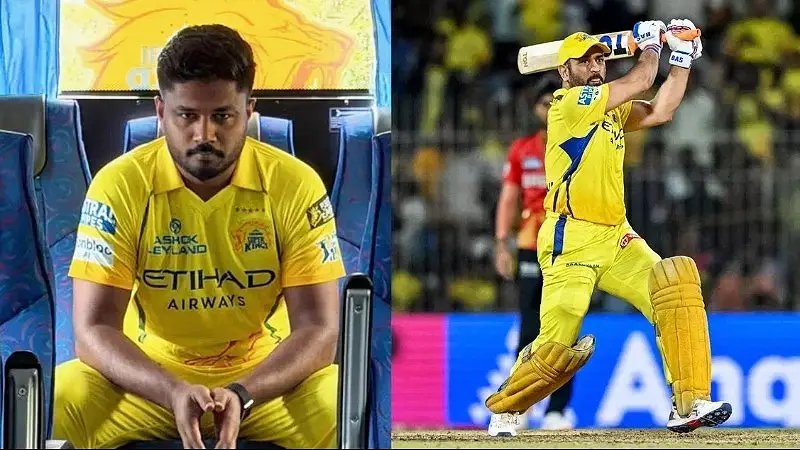

Dhoni is coming back. That’s the news CSK fans wanted. The tactical headache that comes with it is what the team management is quietly wrestling with right now. His return as wicketkeeper doesn’t just add a player to the XI. It locks a slot, removes substitution flexibility, and forces a decision about Sanju Samson that has no clean answer. This isn’t a straightforward good news story. It’s a genuine structural problem that CSK must solve before the toss.
Dhoni as Keeper Kills Sub Flexibility
The Impact Player rule works best when teams can swap roles mid-game based on the match situation. A bowling side batting second can introduce an extra batter. A team chasing a huge total can bring in a power hitter at a critical moment. That flexibility disappears the moment Dhoni is named wicketkeeper in the starting XI.
He can’t be rotated out. He can’t be held back and introduced as an Impact substitute because the gloves tie him to the field for the entire innings. CSK must plan their XI rigidly around his presence and find their Impact Player from another role entirely. Against the Mumbai Indians, where match situations shift quickly, that rigidity is a real competitive disadvantage compared to sides that retain full substitution freedom.
Samson Needs Stability, Not Cameos
Sanju Samson’s record across his IPL career tells a consistent story: he performs when given a defined role and a fixed position in the batting order. Sporadic Impact Sub entries, arriving mid-innings with a specific target and limited time, don’t suit his game. He builds innings. He needs deliveries to settle.
If CSK pushes him into the Impact Sub role to compensate for Dhoni’s wicketkeeping lock, they’re using him in the one format that historically gets the least from his talent. He becomes a reactionary option rather than a core batting asset. That’s a waste of a batter who, when given stability, consistently delivers match-changing innings.
Mhatre’s Absence Exposes a Real Gap
Before his injury, Ayush Mhatre was solving CSK’s powerplay problem quietly and effectively. Six matches, 201 runs, a strike rate of 177.87, and an average of 33.50. He gave CSK the high-tempo start their middle order needed to function properly.
Without him, CSK’s power play has slowed considerably. Dhoni’s return doesn’t fix that. He has never been a powerplay batter, and his value has always sat in the final four overs of an innings. The gap Mhatre left at the top and the finishing strength Dhoni brings at the bottom are separate problems requiring separate solutions, and right now CSK only has one answer for two questions.
IPL 2026 Forces CSK to Choose
IPL 2026 has consistently punished teams that sacrifice tactical adaptability for sentiment or stability. The teams performing most consistently this season are the ones rotating Impact Player options fluidly based on match context, not the ones locked into fixed combinations from ball one.
CSK face a straight choice. Start Dhoni, gain finishing certainty and leadership, and lose Impact Sub freedom entirely. Or find a way to structure the XI that protects Samson’s role, compensates for Mhatre’s absence at the top, and still uses the Impact Player rule as a genuine weapon rather than an afterthought. The second option is harder to build. It’s also the one that gives CSK the better chance of winning close matches consistently.
Factor | With Dhoni in XI | Without Dhoni |
Finishing strength | High | Uncertain |
Impact Sub flexibility | Removed | Retained |
Samson’s role | Disrupted | Stable |
Powerplay aggression | Unchanged | Unchanged |
- Does Dhoni’s finishing ability outweigh the tactical flexibility CSK loses by locking him in the starting XI, or is the Impact Sub freedom more valuable against MI at Wankhede? Drop your pick in the comments and follow for IPL updates.
Q: Can Dhoni play as an Impact Sub instead of starting?
Unlikely. His wicketkeeping role requires him in the starting XI, making the Impact Sub slot unavailable to him.
Q: How does Dhoni’s return affect Sanju Samson’s position?
It pushes Samson toward a disruptive Impact Sub role that doesn’t suit his game, reducing his overall value to CSK.
Q: Why is Mhatre’s injury such a problem for CSK right now?
He scored 201 runs at a strike rate of 177.87 in six matches, providing powerplay aggression that CSK currently has no direct replacement for.
Q: Does Dhoni’s experience outweigh the tactical limitations he brings?
In high-pressure chase situations, yes, but across a full match, the loss of Impact Sub flexibility is a genuine competitive disadvantage.
Q: What must CSK solve before MI vs CSK at Wankhede?
They need a powerplay aggressor to replace Mhatre and a clear plan for Samson’s role that doesn’t depend on Impact Sub cameos.