

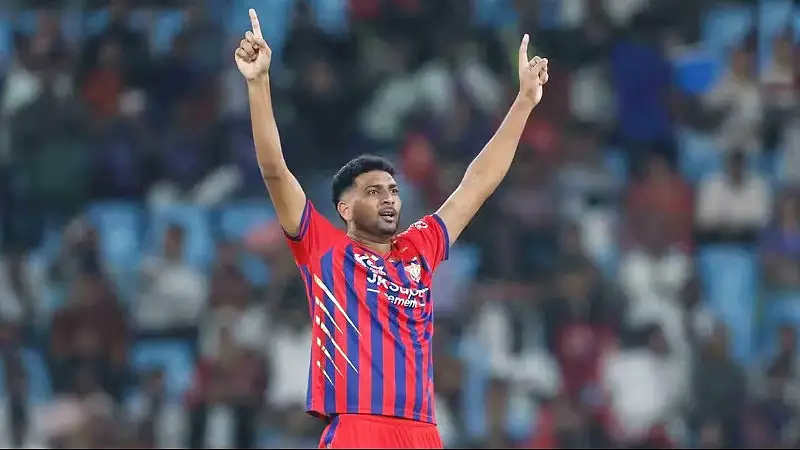

Mohsin Khan took five wickets for 23 runs against the Kolkata Knight Riders for Lucknow Super Giants, and the performance stood out for a reason that goes beyond the match result. India has a left-arm pace gap in white-ball cricket that recent ICC tournaments have repeatedly exposed. Mohsin’s spell didn’t just dismantle KKR’s innings. It demonstrated the specific skillset that fills that gap: hard length discipline, bounce extraction, and the ability to take wickets across phases rather than in a single concentrated burst. If selectors were watching, they saw something India currently doesn’t have reliably available.
Powerplay Control Set the Match’s Tone
Mohsin Khan attacked the stumps from the first over and maintained a hard length that immediately created problems for KKR’s top-order batters. The extra bounce he extracted from the surface wasn’t incidental. It was the product of a bowling approach built around hitting the same spot repeatedly until the batter has no reliable response to it.
Taking wickets before any partnership is established is worth more than containing effectively in the powerplay. Mohsin did both simultaneously. He created discomfort through his length and extracted mistakes through his consistency. Lucknow Super Giants used him aggressively upfront, and he responded by breaking partnerships before they settled, which is exactly the role a left-arm pace option is supposed to perform.
Hard Length Was the Core Weapon
The reason Mohsin’s spell was so difficult to counter was the discipline of his hard length. He didn’t over-pitch to invite drives or bowl short to invite pulls. He hit the uncomfortable zone between both and repeated it across his powerplay and middle-over spells.
On a surface offering slight assistance, that repetition forced KKR’s batters into back-foot play that reduced their scoring options without requiring a bad shot from them. The wickets came from disciplined bowling rather than from batter errors under risk. Batters at the international level have better technique, but a bowler who is more disciplined than they are consistent can still extract errors.
Middle-Over Return Sealed KKR’s Collapse
Lucknow Super Giants brought Mohsin back in the middle overs at the exact moment KKR were attempting to rebuild after early losses. Rather than bowling to contain, he attacked. He picked up wickets that prevented consolidation rather than wickets that came after consolidation had already happened.
When successive middle-order batters are dismissed before settling, the bowling side gains momentum that requires something exceptional to reverse. Mohsin’s burst created exactly that pressure window and held it while the match balance shifted. His final figures of 5 for 23 reflect not just wickets but the timing of those wickets against a batting lineup trying to rescue a collapsing innings.
This IPL 2026 Return Means More
Mohsin Khan’s career has not been a straight line. Injuries disrupted genuine momentum in previous seasons and raised questions about whether he could sustain performances that had first attracted attention. This five-wicket spell answers those questions with evidence rather than projection.
The return from injury is harder than a debut because expectations exist, and the pressure to justify selection is immediate. Mohsin’s 5 for 23 against KKR wasn’t a debut surprise. It was a fully developed bowling performance from a left-arm seamer who evolved his method during the time he was away. That evolution is what makes the IPL 2026 selector conversation genuinely relevant rather than premature.
Bowlers who combine bounce, discipline, and cross-phase effectiveness make the transition to international cricket more successfully than those who dominate one phase only. If he stays fit and maintains this level, it becomes increasingly difficult for selectors to overlook him.
- Does Mohsin Khan’s 5 for 23 against KKR make him India’s most compelling left-arm pace selection case right now, or does fitness history mean selectors will wait for more matches before committing? Drop your pick in the comments and follow for cricket updates.
FAQs
Q: What were Mohsin Khan’s figures against KKR for LSG?
He took five wickets for 23 runs, picking up dismissals across the powerplay and middle overs.
Q: Why is Mohsin Khan significant for India’s national team selectors?
He addresses India’s left-arm pace gap by combining powerplay control, hard-length discipline, and cross-phase wicket-taking.
Q: What makes Mohsin Khan’s hard-length approach effective against top-order batters?
It forces back-foot play that limits scoring options and creates wickets through discipline rather than batter mistakes under risk.
Q: Why does India need a left-arm seamer?
Left-arm pace provides different angles and bounce that are difficult to plan for alongside a right-arm-dominated attack.