


Because the points table rewards whoever draws the friendlier schedule, and that distortion decides finals. The sport’s governing body appears ready to leave the World Test Championship with its current nine members through 2031, and the loudest complaint concerns the sides shut out. The quieter flaw sits inside the table itself: one side can top the standings after six matches while another has played 16, because boards agree series lengths between themselves. Exclusion is a grievance, but uneven length corrupts the ranking.
The Format as It Stands Today
Every side completes six series per cycle, half at home and half abroad, and the pair with the highest percentages contest the final. Victory brings 12 points, a tie brings six and a draw four. Standings are then ranked by the share of available points a side has collected, which is why matches played matters so much.
Boards agree the fixtures between themselves, so the length of each series is a bilateral matter. The 2025-27 cycle contains 27 series and 71 Tests. Two-match series dominate with 17, six series run to three matches, three reach five matches, and only one stretches to four.
Series Length Skews the Standings
Every Test carries 12 points regardless of its series, so a five-match rubber offers 60 while a two-match one offers only 24. That repaired an older flaw. In 2019-21 each series was worth 120 points, so a win counted for 60 in a two-match contest but only 24 in a five-match one. The distortion has since moved into sample size.
As of 13 November, New Zealand sat on top at 72.22% after just six matches, with Australia behind them at 69.23% from 13. The previous cycle showed the same effect. South Africa headed the table on 69.44% from 12 matches, every one in a two-match series, and they never faced Australia or England. India, for its part, played 19 matches yet ended with 50.00%, which was not enough to reach the final.
Team | Series | Tests per series | Total Tests | Played | PCT |
|---|---|---|---|---|---|
New Zealand | 6 | 4-3-3-2-2-2 | 16 | 6 | 72.22 |
South Africa | 6 | 3-3-2-2-2-2 | 14 | 7 | 71.43 |
Australia | 6 | 5-5-4-3-3-2 | 22 | 13 | 69.23 |
India | 6 | 5-5-2-2-2-2 | 18 | 11 | 51.52 |
Bangladesh | 6 | 2-2-2-2-2-2 | 12 | 8 | 45.83 |
England | 6 | 5-5-3-3-3-2 | 21 | 16 | 38.54 |
Sri Lanka | 6 | 2-2-2-2-2-2 | 12 | 7 | 33.33 |
West Indies | 6 | 3-3-2-2-2-2 | 14 | 14 | 27.38 |
Pakistan | 6 | 3-2-2-2-2-2 | 13 | 10 | 7.50 |
WTC nine teams till 2031
Proposals tabled ahead of the board gathering in Bali on 15 November leave the current structure untouched for 2027-29 and again for 2029-31. Approval was widely expected, though no formal confirmation existed when this was written. No new members are included.
The ECB is reported to oppose enlargement over travel and scheduling, while several other boards doubt that new sides would add commercial value. A ten-side compromise featuring Zimbabwe was described as a very slim chance. In short, the pressure to expand is lower than the volume of the complaints suggests.
Zimbabwe, Ireland and Afghanistan Stay Outside
Zimbabwe, Ireland and Afghanistan all hold Full Member status, yet none has a route into the league. Their boards say that being kept out of the championship starves their Test calendars of meaning. Zimbabwe’s numbers show the squeeze: a mere 10 Tests during 2025 and only two this year.
England’s board would consider single matches versus Zimbabwe and Ireland away from the championship. Letting them in under today’s rules would hurt the table, however, because it would add more two-match series and enlarge the sample problem. Letting them in would solve one fairness problem and create a second.
Repairs Possible Without Expansion
Three changes need no extra members. First, narrow the gap between the fewest and most Tests a side plays, now 12 for Bangladesh and Sri Lanka and 22 for Australia. Second, count only series of three matches or more. Third, weight points by the strength of the opposition, so a win over a top side is worth more than one over a weaker side.
A move to count one-off Tests from 2029-31 has been mooted, and it would stretch the gap even wider. With WTC nine teams till 2031 now the likely outcome, only these repairs can make the table fairer. Each repair also keeps the existing membership intact, so none needs a vote on expansion.
Which fix would you pick first: a minimum series length, fixed Test totals, or weighting by opposition? Tell us in the comments.
Frequently Asked Questions (FAQs)
Will the championship add more members before 2031?
Probably not for now. The recommended structure stays the same for both cycles, though a ten-side option with Zimbabwe was labelled unlikely, and approval was still pending.
How does the points system work in the World Test Championship?
Twelve points go to a winner, six to a tie and four to a draw. Rankings divide points won by points available, and slow over rates cost one point each.
Why can Zimbabwe, Ireland and Afghanistan not join the league?
The same group has played since 2019 with no promotion or relegation. Boards arrange fixtures bilaterally, so there is no pathway for an outsider to earn a place.
Which sides have lifted the World Test Championship trophy?
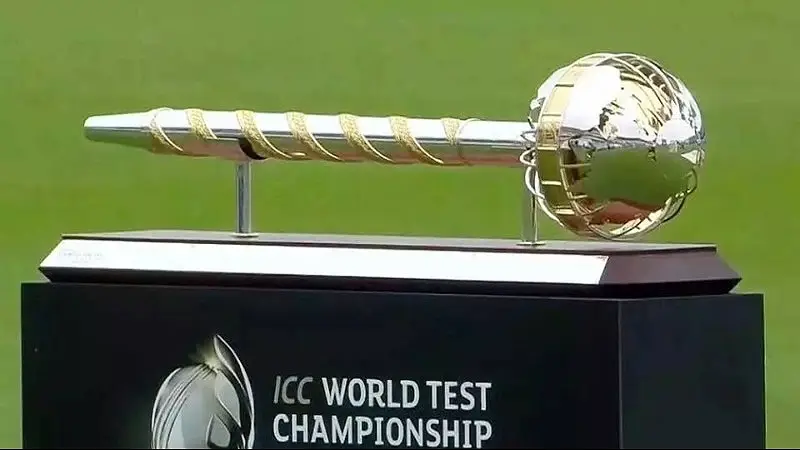
New Zealand won the 2019-21 edition, and Australia took the 2021-23 edition. South Africa took the 2023-25 final by five wickets against Australia, who had held the trophy since 2023.
How many Tests are in a typical series this cycle?
Two-match series are the most common, 17 of the 27. Six series run to three matches, one to four, and three to five, which shows how uneven the schedule is.