

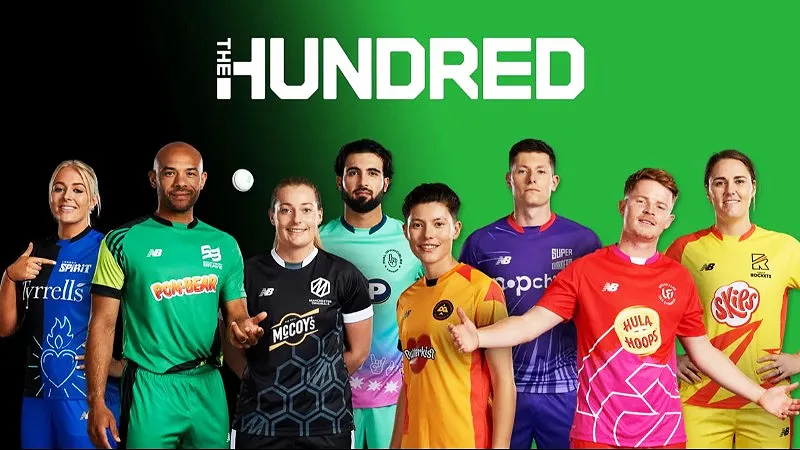

Because every single franchise managed to find a non-gambling partner before it ever needed the fallback option at all. The Hundred’s board had actually voted in May to allow betting companies as a strict, closely conditioned last resort, but a late scramble for front-of-shirt deals meant all eight teams signed non-gambling sponsors before the tournament’s opening match on July 21. That outcome sets up a full visible ban on betting sponsorship across every kit position in the competition from 2027 onward.
What the ECB Decided for the Hundred
When the ECB sold stakes in all eight franchises in 2025, the new private owners inherited the right to negotiate their own commercial deals independently, replacing the old centralised KP Snacks arrangement that had covered every team across the Hundred’s first five seasons. By the time kits were unveiled on June 1, only three of the eight franchises had actually secured front-of-shirt sponsors, leaving the rest scrambling.
In May, the board voted to allow gambling companies as a strict last resort for 2026 only, with firm conditions: a minimum financial threshold, no gambling branding on children’s replica kits, and the option for players to wear sponsor-free shirts on religious or personal grounds.
By the opening match, all eight had signed non-gambling partners instead, from an online estate agent and a logistics firm to health insurers and financial services companies, making the emergency clause unnecessary.
The Hundred 2026 ECB Gambling Sponsors
Managing director Vikram Banerjee confirmed publicly that the board had agreed visible gambling sponsorship would be banned outright from 2027 onward, calling it a stronger and more powerful stand than any other cricket competition has taken.
The ECB framed the 2026 allowance as a concession to the scale of change happening at once: new private owners, new deal structures, and a market squeezed further by the Premier League’s own front-of-shirt betting ban starting the same season. Some kits still carried gambling logos on sleeves or trousers, positions the 2026 restrictions didn’t cover, but every primary shirt space stayed gambling-free.
How the ECB Protects Match Integrity
The Anti-Corruption Unit assigns dedicated officials to each franchise, supporting players directly and acting as the first point of contact whenever suspicious approaches happen during a season. It also runs a formal education programme warning every participant about the consequences of spot-fixing and match manipulation.
During matches, investigators monitor live betting markets alongside outside integrity firms, using an algorithm that flags unusual movement against the flow of play on a graduated one-to-five suspicion scale. English players also need a No Objection Certificate before playing overseas, and flagged tournaments trigger direct contact with the player and their agent.
League | Betting Policy |
|---|---|
The Hundred | Allowed as a last resort in 2026; banned from 2027 |
IPL | Banned under Indian law |
BBL | Previously declined, no formal ban |
PSL | Banned under Pakistani law |
Why the Stakes Go Beyond Branding
The ECB’s own Anti-Corruption Unit has explicitly flagged women’s competitions as a particular target for corruptors, partly because lower overall pay creates more vulnerability to approaches from bad actors. That underlying risk shapes why the gambling sponsorship question carries weight well beyond simple shirt branding decisions.
The Hundred was built to attract families and younger fans through free-to-air deals and matchday entertainment, and gambling logos cut against that identity with the exact audience the competition wants to grow. Banerjee has acknowledged the commercial reality that betting money is a huge part of sports sponsorship globally, while still choosing to draw a line few other leagues have drawn.
How the Hundred Compares Going Forward
The IPL and PSL don’t face this question directly, since gambling advertising is prohibited by law in both countries. Cricket Australia has previously declined betting partners for the BBL on similar family-friendly grounds, but without ever making that stance a formal binding commitment.
The Hundred’s 2027 ban covers every visible kit position, not just the front of the shirt, which goes further than anything else in major cricket. It also exceeds the Premier League’s own rule, which still allows gambling logos on sleeves, training kits and stadium advertising even after the shirt-front restriction, making the Hundred 2026 ECB gambling sponsors decision the toughest stance cricket has taken on the issue so far.
Do you think other cricket boards should follow the ECB’s lead and ban gambling sponsors outright? Let us know in the comments.
Frequently Asked Questions (FAQs)
Does the Hundred allow betting company logos on shirts?
Not for 2026, even though the board technically permitted it as a last resort. All eight franchises signed non-gambling front-of-shirt partners before the tournament’s opening match on July 21.
Why did the ECB stay away from betting company money this year?
It wanted to protect the competition’s family-friendly brand and its appeal to younger fans. The board also cited integrity risks from close financial ties between gambling operators and individual franchises.
How does the ECB guard against match-fixing in the competition?
Dedicated Anti-Corruption officials are assigned to monitor every single franchise during the season. Live betting markets get tracked through algorithms on a graduated one-to-five suspicion scale.
Which companies are actually on Hundred shirts this year?
Every team secured a non-gambling front-of-shirt partner before the season kicked off. Deals span online property services, logistics, health insurance and financial services companies across all eight franchises.
Do other major cricket leagues accept betting money at all?
The IPL and PSL cannot, since gambling advertising is illegal in both countries. Cricket Australia has previously declined betting partners for the BBL without ever making it a formal ban.