

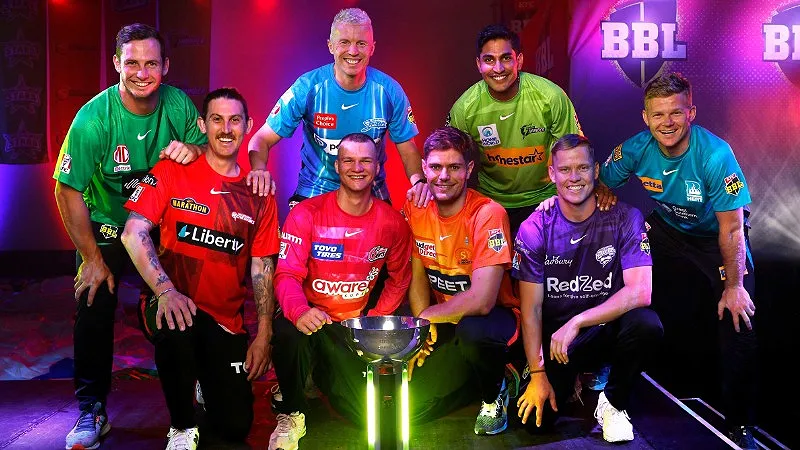

If the players walk away, the model doesn’t work. Cricket Australia’s self-determination framework only functions because every state assumed the Australian Cricketers’ Association would eventually sign off on a revised pay deal, and that assumption broke on the eve of the crucial June meeting. Six states agreed in principle to decide their own privatisation timelines, but the plan carries a built-in veto: no franchise can sell a stake until the players’ union approves a new Memorandum of Understanding. Reject that, and the entire structure stalls indefinitely.
What the New BBL Ownership Framework Proposes
On 15 June 2026, Cricket Australia chair Mike Baird and all six states signed off on a new framework. Each state can now choose whether and when to sell private stakes in its BBL franchise, replacing an all-in proposal NSW and Queensland had rejected in April.
The BBL would be spun out into a standalone taxable entity built to attract investors. Cricket Victoria moved first, merging the Melbourne Stars and Renegades and putting the Renegades’ licence up for sale near a $180 million valuation, with the UK’s Raine Group running the process. Four conditions remain: governance for the new entity, a restructured board, player agreement on the mechanics, and a funding formula every state accepts.
Why Cricket Australia and the States Agreed
Money drives the argument. Chief executive Todd Greenberg calls privatisation the most significant decision the sport will face in a generation. The BBL stayed state-run while SA20, ILT20 and the Hundred opened up to private capital and used it to push player salaries higher.
The gap is measurable. England’s board raised roughly AUD $1.846 billion selling Hundred franchise stakes, a tenth of it ring-fenced for grassroots cricket. Cricket Australia wants a similar windfall to close the pay gap between BBL regulars and the overseas stars they compete against.
Victoria, Western Australia and Tasmania pushed hardest, arguing reluctant states shouldn’t block everyone else’s investment. South Australia designed the eventual compromise. NSW and Queensland remain holdouts, insisting their four conditions are met first.
BBL Self-Determination Model Player Agreement
This condition actually decides whether the plan survives. Player sign-off is written into the mechanics of the deal, not layered on top as a formality, so no state can legally begin a sale without it.
On 14 June, the night before the chairs’ meeting, union chief Paul Marsh emailed players to say the union would not support the current proposal. He said it wasn’t aligned with the draft pay agreement, which runs through 2028 and would need renegotiating under any sale. By mid-August, Greenberg confirmed contracting for the coming season remained frozen while talks continued, with hopes of lifting the embargo by early September.
Stakeholder | Position | Key Demand |
|---|---|---|
Cricket Australia | Strongly in favour | Complete privatisation by 2027-28 |
Victoria, WA, Tasmania | In favour; want to opt in now | Market testing without NSW/QLD blocking |
NSW and Queensland | Opposed; want a pause | Four conditions met first |
ACA (Players) | Rejected current MOU | Higher revenue share; fairer pay |
What the ACA Wants Instead
Marsh’s rejection isn’t a closed door. The union says privatisation can work, just not on these terms: a bigger revenue share, guaranteed rises across every tier including domestic-only contracts, and a narrower gap between local and overseas BBL pay.
Trust is part of the problem too. Players learned about the Stars-Renegades merger through media reports rather than from Cricket Victoria directly, which hardened the union’s stance.
What Happens if the Deal Collapses
If the union won’t budge, privatisation cannot proceed, since player agreement is a formal precondition. Cricket Australia would then choose between shelving the project until the pay deal expires in 2028, or rebuilding an offer the union will actually sign.
Victoria has the most to lose. Its caretaker administration is already running, and staff already merged, so a stalled sale leaves the club restructured without the capital that was the point. NSW and Queensland get to keep citing the standoff as cover for their own resistance.
The comparison with England only goes so far, since the ECB owned all eight Hundred franchises outright. Australia’s path runs through six state boards and a pro-sale versus holdout split, which is exactly why the BBL self-determination model player agreement remains the hardest condition left to clear.
Do you think the players’ union is right to hold the line, or is it standing in the way of a deal Australian cricket badly needs? Share your take below.
Frequently Asked Questions (FAQs)
What is Cricket Australia’s plan to privatise the BBL?
Cricket Australia lets each state decide independently when to sell private stakes in its franchise. The framework was agreed in principle on 15 June 2026 by chair Mike Baird and all six states.
Why is Cricket Australia trying to sell stakes in the BBL?
It wants private capital to close the salary gap with rival T20 leagues. SA20, ILT20 and the Hundred have all attracted outside investment that pushed player pay above what the BBL currently offers.
Why did the players’ union reject the current BBL proposal?
The ACA says the draft deal doesn’t raise revenue share or guarantee rises for every contract tier. Union boss Paul Marsh told players on 14 June the proposal wasn’t aligned with what the union wanted.
How does the BBL sale compare with the Hundred’s privatisation?
It is more complicated, because six separate state boards are involved instead of one central owner. The ECB sold stakes in all eight Hundred franchises directly and raised roughly AUD $1.846 billion doing it.
Can BBL privatisation go ahead without the players’ agreement?
No, because union sign-off is one of four conditions written into the framework itself. Without a revised pay deal, no state can legally begin selling a stake in its franchise.