

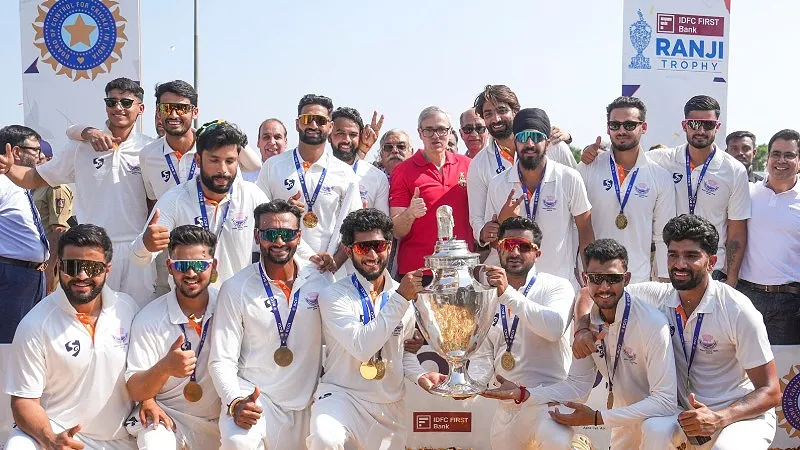

BCCI split the season because a block left players no recovery time and pushed first-class cricket into the harshest weeks of the northern winter. The 2026-27 domestic calendar carries 1,788 matches across age groups and formats, opening with the Duleep Trophy on August 23 and closing with the Ranji final on March 3. Between the two Ranji blocks sits a stretch of white-ball cricket that keeps state squads playing without repeating the same format for months. The shape isn’t new for 2026-27; it’s now the standard structure of the Indian domestic season.
A Domestic Calendar Built for Recovery
The BCCI confirmed the full 2026-27 domestic schedule in May 2026, and the scale explains why a single block could never work. Under-15 sides, women’s teams and senior men’s squads share the same window, moving through T20, one-day and first-class cricket without overlap. The season opener is the Duleep Trophy in its six-team zonal format from August 23 to September 10, followed by the Irani Cup from October 1 to 5, with a transition window before the first-class programme begins.
Ranji Trophy 2026-27 Season Structure Overview
Phase | Confirmed Dates | Actual Content | Break / Transition Window |
|---|---|---|---|
Season Opener | Aug 23 – Oct 5 | Duleep Trophy (6 teams, Aug 23-Sep 10) + Irani Cup (Oct 1-5) | Oct 6 – Oct 10 (Transition to Ranji) |
Ranji Phase 1 | Oct 11 – Nov 5 | 5 league rounds; Elite Group (32 teams) + Plate Group (6 teams) | Syed Mushtaq Ali Trophy: Nov 14 – Dec 6 |
Mid-Season (White Ball) | Nov 14 – Jan 8 | Syed Mushtaq Ali Trophy (T20) followed by Vijay Hazare Trophy (One Day) | White-ball knockouts wrap up by Jan 8 in Vizag |
Ranji Phase 2 & Knockouts | Jan 17 – Mar 3 | Remaining 2 league rounds; Elite Knockouts held from Feb 9 – Mar 3 | Season concludes on March 3 |
Ranji Trophy 2026-27 Two-Phase Schedule
Phase 1 runs October 11 to November 5, covering the Elite Group’s 32 teams across four zones and the six-team Plate Group. Defending champions Mumbai sit in Elite Group D alongside Rajasthan, Haryana, Railways, Tamil Nadu and four others, a group as heavy as any in the country. Phase 2 resumes January 17, working through the remaining league rounds to February 4 before the Elite knockouts run February 9 to March 3, when the season closes.
The Logic Behind BCCI’s Season Split
The split was first proposed in 2024 after BCCI secretary Jay Shah consulted then-head coach Rahul Dravid, captain Rohit Sharma, chairman of selectors Ajit Agarkar and VVS Laxman. Their shared concern was recovery time.
Under the old calendar, first-class rounds followed each other with barely three days between matches, travel included, leaving bowlers short of turnaround. Northern India’s winter added a second problem, since fog and cold routinely disrupted quality cricket in November and December. Splitting the season around a white-ball window fixed both issues in one move, and the wider gaps are designed to let players hold form across a ten-month season instead of burning out early.
The Gap Between the Two Ranji Blocks
The gap now hosts India’s two major white-ball tournaments back to back. The Syed Mushtaq Ali Trophy runs November 14 to December 6, with league fixtures split across Mumbai, Mohali, Vizag and Kolkata before the knockouts move to Nagpur. Its timing is deliberate, giving selectors a T20 body of work before the IPL auction. The Vijay Hazare Trophy follows immediately, its December 14 to January 8 window sending squads through Ahmedabad, Bangalore, Ranchi, Rajkot and Vizag, where the white-ball knockouts wrap up.
Players Have Already Adapted to the Split
Because the 2024-25 and 2025-26 seasons already ran this two-phase model, most squads entering 2026-27 used to it. The real gain sits in the gap itself: top-order batters, frontline pace bowlers and allrounders who used to carry niggles through a relentless block now get a genuine reset between Ranji rounds.
Rajasthan Royals players including Sooryavanshi, Jaiswal, Jurel and Parag are among those expected to turn out for their states across both phases, using the white-ball window as match practice rather than a break from red-ball rhythm. That balance, more than any single fixture change, is why the Ranji Trophy 2026-27 two-phase schedule now reads like settled BCCI policy rather than an experiment.
Which team finishes on top come March 3 will matter less to most observers than whether the format itself holds. Vote in the comments on whether the split season should become permanent beyond 2026-27.
Frequently Asked Questions (FAQs)
When does the Ranji Trophy 2026-27 season start?
Phase 1 of the Ranji Trophy begins on October 11, 2026. The wider domestic season actually opens six weeks earlier, on August 23, with the Duleep Trophy.
How many matches make up India’s 2026-27 domestic season?
The full calendar carries 1,788 matches. That figure spans men’s and women’s cricket from Under-15 level to the senior game, across T20, one-day and first-class formats.
When do the Ranji Trophy 2026-27 knockouts take place?
The knockout rounds run from February 9 to March 3, 2027. They follow the second league block, which closes out on February 4 after resuming on January 17.
What is the Syed Mushtaq Ali Trophy?
It’s India’s national T20 domestic tournament, played in the gap between the two Ranji blocks. The 2026-27 edition runs November 14 to December 6, with league games in Mumbai, Mohali, Vizag and Kolkata.
Which team won the Ranji Trophy last season?
Mumbai enter 2026-27 as defending Ranji champions. They’ve been placed in a stacked Elite Group D alongside Rajasthan, Haryana, Railways, Tamil Nadu and four other first-class sides.