

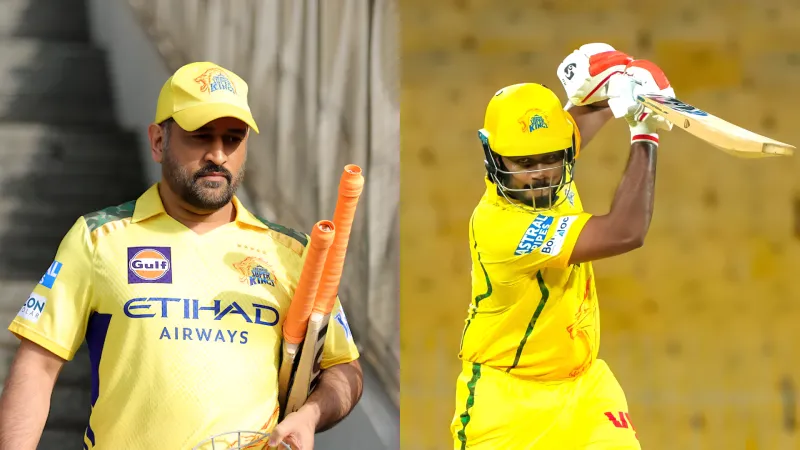

Two wicketkeepers. One XI. This sounds like a problem, but it isn’t. It’s actually the most interesting selection advantage CSK has heading into this season. Dhoni keeps wicket and bats at seven in a finishing role. Samson bats at three or four and doesn’t keep at all—both play. Neither compromises the other. The debate about who should keep wicket misses the point entirely. Dhoni should keep because his value behind the stumps goes far beyond what the gloves do, and Samson should bat because forcing him into a keeping role wastes the specific thing CSK signed him for.
Dhoni’s Keeping Gives CSK Something Unique
MS Dhoni’s wicketkeeping isn’t about catches and stumpings. It’s about everything that happens before the ball is bowled. He positions fielders from behind the stumps before the captain has finished thinking about it. He reads the batter’s grip and stance and tells the bowler what’s coming before the delivery. He manages DRS with a read-rate that has never been matched in IPL cricket. On a spinning Chepauk surface where referrals and field placements in the middle overs determine match outcomes, that intelligence is worth more than any statistic captures. You cannot replace it with a younger keeper. You lose it when he stops keeping.
Let Samson Bat and Nothing Else
Sanju Samson’s best cricket happens when keeping wicket isn’t at the back of his mind. His white-ball batting since the 2024 season confirmed what we always suspected: when he’s relaxed and focused purely on scoring, he’s one of the most complete T20 batters in the country. Aggressive against the pace in the power play. Calculated against spin in the middle overs. Capable of finishing from anywhere in the order. Making him keep wicket while fulfilling that batting role adds a mental load that serves no tactical purpose when Dhoni is already doing the job better. CSK signed him as a batter. Use him as one.
IPL 2026 Confirms Dhoni Keeps Wicket
The IPL 2026 context makes this decision clearer rather than harder. CSK’s powerplay problem from last season is being fixed by Samson’s presence at three or four. Their finishing problem is still Dhoni’s territory. Their keeping problem doesn’t exist because Dhoni’s glove work hasn’t declined at the level that would make replacing him logical. His batting strike rate in finishing roles remains functional. His keeping error rate remains low. Nothing about his actual performance last season suggested that the gloves should go to someone else. The debate was created by the availability of a second option, not by a performance reason to make a change.
Using Both Players Without Wasting Either
The only scenario where this setup creates a problem is injury. If Dhoni can’t keep or can’t play, Samson covers both roles without disrupting the XI structure. That backup option is genuinely valuable across a fourteen-match group stage where one injury at the wrong moment can derail a campaign. CSK have essentially insured their wicketkeeping position while upgrading their batting simultaneously. That’s not a selection dilemma. That’s smart squad construction.
- Should CSK stick with Dhoni as keeper all season, or does Samson earn the gloves? Drop your take and follow for IPL updates.
FAQs
What is MS Dhoni’s role for CSK?
He is expected to be a wicketkeeper and finisher, contributing in short bursts with the bat while managing the game behind the stumps.
Why did CSK bring Sanju Samson from the Rajasthan Royals?
CSK likely wanted a reliable top-order batter who can also serve as a backup wicketkeeper when needed.
Can Sanju Samson replace Dhoni as CSK wicketkeeper?
He can, in specific situations, especially if workload or fitness becomes a concern, but not as the primary choice initially.
How does this affect the CSK team’s 2025 strategy going forward?
It signals a gradual transition where experience and future planning coexist within the same playing XI.
Is this similar to MS Dhoni’s IPL career transition phase?
Yes, it reflects a late-career adjustment where Dhoni focuses more on impact roles rather than full-match involvement.
Disclaimer: This blog post reflects the author’s personal insights and analysis. Readers are encouraged to consider the perspectives shared and draw their own conclusions.