

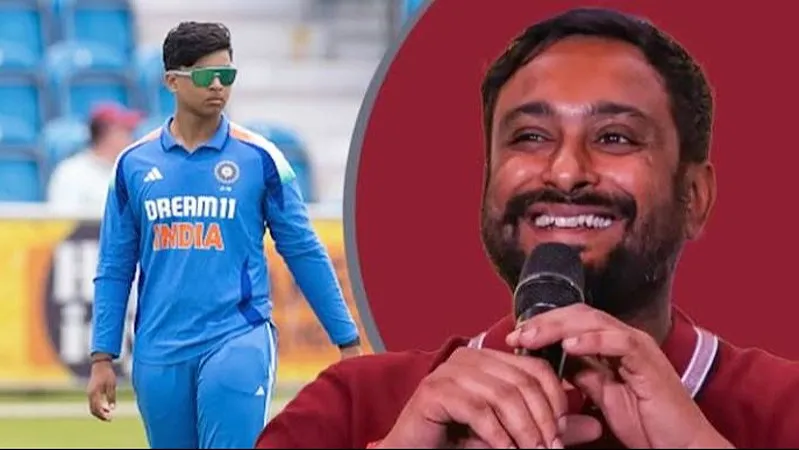

Ambati Rayudu’s advice to India’s selectors on Vaibhav Sooryavanshi was never about holding him back. It was about not overcoaching him. His view was simple: leave the technique alone, let him keep playing his natural game, and trust that English wickets will offer him a fairer examination than Ireland’s did. That’s a specific, testable claim about conditions, not a vague caution, and it comes from a former India batter who also argued for sticking with proven, World Cup-winning players rather than rushing a 15-year-old in purely on reputation.
Belfast Exposed a Real Technical Weakness
India lost 0-2 in Belfast, their first bilateral T20I series defeat in three years, with the batting unit repeatedly undone by seam movement they simply hadn’t prepared for. India’s assistant coach Ryan ten Doeschate and others described the pitch as offering considerable assistance to pace throughout that series, a description that lined up with how the results actually played out.
Sooryavanshi didn’t play either match. New India captain Shreyas Iyer instead handed debuts to Prince Yadav and Suryansh Shedge. Left-arm quick Jai Moondra, an Indian-born debutant playing his first international match for Ireland, dismissed Sanju Samson with the first ball of his career in the opener and repeated the trick in game two, reducing India to 19 for 3 inside three overs on his way to Player of the Series.
Vaibhav Sooryavanshi England T20I Debut Batting Conditions
Durham’s Riverside Ground won’t replicate that kind of examination. Historical first-innings T20I averages there sit somewhere between 138 and 163 depending on the sample, with a highest score of 195 and a lowest of 118, genuinely better batting conditions than Belfast, but still a pitch that consistently rewards seam and swing with the new ball before settling down for stroke play later in the innings.
Rayudu’s message to selectors has been consistent throughout: don’t tweak his shot-making, let learning happen naturally over time on the field rather than in the nets, and trust that the ball won’t misbehave here the way it did in Ireland.
An IPL Record Built on Flatter Decks
Sooryavanshi’s IPL 2026 numbers are extraordinary by any measure: 776 runs at a strike rate of 237.30 across 16 innings, a powerplay strike rate of 231.18 that actually rose to 245.38 in the middle overs, and 31 of the 44 bowlers he faced conceded at least one six across the season.
Split Context | Runs | Strike Rate | Sample | Seam/Swing Factor |
IPL 2026 Season Total | 776 | 237.30 | 16 innings | Low, flat batting tracks |
IPL 2026 Powerplay | 430 | 231.18 | Overs 1-6 | Low-medium, minimal movement |
IPL 2026 Middle Overs | 346 | 245.38 | Overs 7-16 | Low, spinners neutralised |
Chepauk | 145 | 188.31 | 3 innings | Medium, slower surface |
Wankhede | 212 | 258.53 | 4 innings | Medium, true bounce |
Eden Gardens | 189 | 242.30 | 3 innings | Low, flat deck |
Riverside Ground | n/a | n/a | Historical baseline | High, clear new-ball swing |
He won the Orange Cap, MVP and Emerging Player awards, and became the fastest player in IPL history to reach 1,000 career runs, all built overwhelmingly on decks that reward exactly the kind of hitting Durham won’t offer early on.
Personnel Changes Alter the Opening Test
There’s a correction worth making on personnel too. Jofra Archer and Josh Tongue, both rested after England’s Test series against New Zealand, aren’t playing this opener at all. Luke Wood and Saqib Mahmood take the new ball instead, a notably different attack to the one many expected.
Archer’s absence is a notable subplot in its own right. He and Sooryavanshi are Rajasthan Royals teammates, with Archer taking 25 wickets in RR’s 2026 IPL campaign, meaning the two already know each other’s games intimately from the nets. Whether Sooryavanshi faces Archer at all this series depends entirely on selection later in the five-match run.
The Selection Logic Behind His Chance
None of this settles the wider debate Rayudu was actually engaging with, whether India should persist with players who’ve already won global silverware over rushing in a 15-year-old prodigy too soon. His answer was clear: stick with proven performers, let Sooryavanshi absorb the dressing-room experience first.
Reports suggest his chance could come as soon as this Durham opener, with Samson making way. Vaibhav Sooryavanshi England T20I debut batting conditions will tell India’s selectors something no amount of IPL scoring ever could.
Do you think Sooryavanshi is ready for the swing and seam of an English new ball? Drop your view in the comments.
FAQs
Will Vaibhav Sooryavanshi play in the England vs India 1st T20I?
Reports suggest Sooryavanshi is set for India’s XI at the Durham opener. Sanju Samson looks likely to make way after a poor Ireland series, though it depends on the toss-day team sheet.
What did Ambati Rayudu say about Vaibhav Sooryavanshi ahead of the England series?
Rayudu said he wouldn’t change Sooryavanshi’s technique and wants him to play his natural game. He also advised selectors to persist with proven, World Cup-winning players rather than rushing the teenager in.
How did Vaibhav Sooryavanshi perform in IPL 2026?
Sooryavanshi scored 776 runs in 16 innings at a strike rate of 237.30 for Rajasthan Royals. He won the Orange Cap, MVP and Emerging Player awards, hit 72 sixes, and became IPL’s fastest player to 1,000 runs.
What are England’s conditions like for T20I batting?
Durham’s Riverside Ground, hosting the series opener, has historically offered new-ball swing before settling down for batting. First-innings T20I averages there range from roughly 138 to 163 depending on the sample used.
Is Vaibhav Sooryavanshi ready for international cricket?
His IPL numbers suggest exceptional talent, but he hasn’t yet faced international-standard swing bowling in English conditions. Rayudu’s view is that this series is a genuinely different technical test than subcontinental cricket offers.