

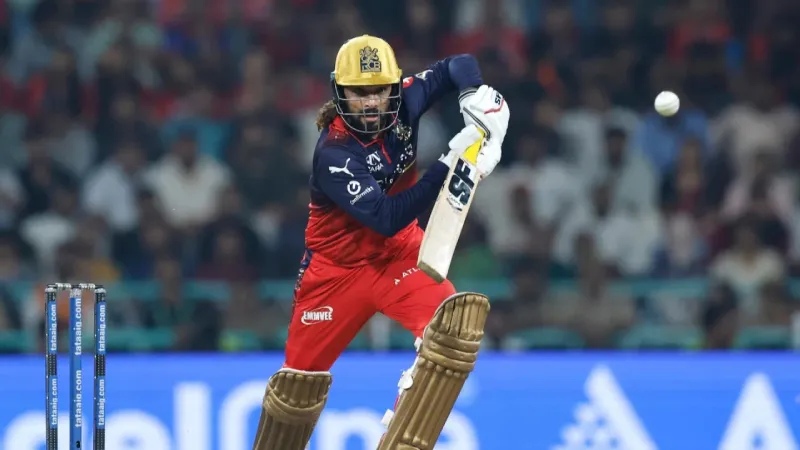

Two deliveries this season have already answered the question. Kartik Tyagi’s 141.4 km/h bouncer struck Patidar’s helmet grill against KKR. Arshad Khan’s short ball drew a top-edged pull that ended his innings at 19 against GT. RCB’s captain is averaging 33.70 at a 192.70 strike rate, elite numbers by any measure, but opposing camps have found the crack. With the playoffs approaching, that crack is about to be targeted with precision.
What Kaif Identified and Why It Matters
Mohammad Kaif’s public assessment of Patidar was blunt and specific. He flagged that Patidar was closing his eyes against short balls at high pace, a visual disconnect that eliminates any chance of adjusting to the delivery’s trajectory once it leaves the pitch.
Kaif went further, warning that opposing teams would be building short-ball plans around exactly this habit. That is not a general observation; it is a scouting bulletin delivered in public. When a former Indian batsman names your technical flaw on a digital platform with a few weeks left in the league stage, every opposition analyst with a laptop has heard it too.
The data behind Kaif’s concern is visible in Patidar’s dismissal pattern. His overall numbers are outstanding, but both times he has been seriously rattled this season, the delivery has been short and fast. Neither dismissal came from spin or swing; both came from pace aimed at his body and head.
The Two Dismissals That Exposed the Blueprint
The KKR match was the more alarming incident. Tyagi’s bouncer was clocked at 141.4 km/h, beat Patidar’s attempted pull completely, and made direct contact with his helmet grill. He required medical inspection and departed for 11. The ball did not beat him because it was unplayable; it beat him because his eyes had already closed before impact.
Against the Gujarat Titans, Arshad Khan targeted the same zone. Patidar’s pull was mistimed from the top of the bat, carrying to Jason Holder in a diving catch that cut his innings short at 19. Two different bowlers, two different matches, identical method. The blueprint was already being shared before Kaif said a word publicly.
Rajat Patidar’s IPL 2026 Short Ball Weakness: Bowlers Who Will Attack It
RCB’s remaining league fixtures deliver two of the most dangerous short-ball operators in this year’s competition directly into Patidar’s path.
Bowler | Team | Match | Venue | Short-Ball Threat |
Arshdeep Singh | PBKS | May 17 | Dharamshala | Left-arm angle at express pace on a bouncy surface |
Pat Cummins | SRH | May 22 | Hyderabad | Hard length into the ribcage, precision targeting |
Dharamshala is the more dangerous venue. The surface at that ground offers genuine pace and carry, conditions that amplify the effectiveness of a bouncer by giving it natural lift without the bowler needing to overpitch. Arshdeep’s left-arm angle creates an additional problem: the release point shifts position relative to a right-hander, making visual tracking harder for a batter who already struggles to keep his eyes open through the shot.
Cummins operates differently. He does not rely on raw speed alone; he uses weight and accuracy, hitting a hard length that rises into the body at an awkward height. Against a batter with Patidar’s flaw, that approach is arguably more dangerous than express pace because it forces a committed reaction rather than allowing a late leave.
Can Patidar Fix This Before the Playoffs?
Re-engineering a reflex under tournament pressure in a fortnight is not realistic. What Patidar can do is tactical, manage the short ball rather than conquer it.
The most practical adjustment is the deliberate leave. Rather than attempting to match aggression with aggression on every bouncer, he can duck or sway and deny the bowler the wicket entirely. A dot ball off a bouncer is not a failure; it removes the weapon from the bowler’s hands. He can also shift his guard deeper inside the crease to buy milliseconds of additional tracking time.
What he cannot afford is to keep attempting the pull shot with his eyes closed. Playoffs cricket at this pace, on these surfaces, against Arshdeep and Cummins, will punish that habit every time it appears.
Is Patidar’s short-ball flaw the most consequential technical vulnerability heading into the IPL business end? Drop your take in the comments.
FAQs
What is Patidar’s weakness in IPL 2026?
Patidar has been identified as closing his eyes against high-velocity short-pitched deliveries, eliminating his ability to adjust to the ball’s trajectory after it leaves the pitch. Mohammad Kaif flagged this publicly, warning that opposition teams would build bouncer-specific plans around the habit.
Who has already exploited Patidar with short balls?
Kartik Tyagi (KKR) and Arshad Khan (GT) have both dismissed Patidar using short-ball tactics this season. Tyagi’s 141.4 km/h bouncer struck his helmet grill, while Khan drew a top-edged pull caught by Jason Holder that ended his innings at 19.
What did Mohammad Kaif say about Rajat Patidar?
Kaif stated he was surprised to see Patidar closing his eyes against bouncers, and warned that opposing teams would have a short-ball plan ready. His assessment turned a technical observation into a public scouting note with several weeks of the league stage still remaining.
Which teams does RCB face in their remaining league matches?
RCB play Punjab Kings on May 17 at Dharamshala and Sunrisers Hyderabad on May 22 at Hyderabad. Both fixtures put Patidar directly against high-quality short-ball operators in Arshdeep Singh and Pat Cummins.
Disclaimer: This blog post reflects the author’s personal insights and analysis. Readers are encouraged to consider the perspectives shared and draw their own conclusions.