

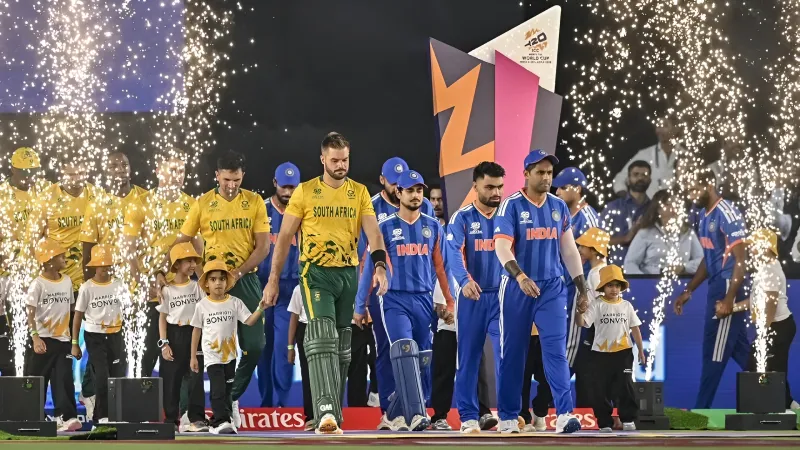

India vs South Africa T20WC 2026 loss analysis points to three clear cricketing reasons rather than a one-off bad day. The Indian Cricket Team was tactically outplayed, and execution let them down under pressure against South Africa Cricket. From a fragile powerplay to stalled middle-overs and poor adaptability, the warning signs were already visible before the Super 8 clash. Even leaders like Suryakumar Yadav could not counter South Africa’s plans, while the dip in form of Abhishek Sharma exposed a deeper structural issue.
Powerplay instability upfront
The first and most damaging reason for this loss was India’s inability to survive the powerplay. On Ahmedabad’s true surface, early wickets were the only way South Africa could dictate terms, and they did exactly that. India’s opening partnerships had already been underwhelming earlier in the tournament, but against a high-quality attack, there was no escape route. With Abhishek Sharma struggling to time the ball and his partner forced into damage control, India entered the middle overs behind the required tempo. On flat pitches, losing momentum early almost always leads to scoreboard pressure later, and that pattern repeated here.
Middle-order strike-rate pressure
The second reason was the middle order’s inability to shift gears once the powerplay damage was done. India relied heavily on stability from positions three to six, but South Africa’s off-pace and hard-length tactics slowed scoring significantly. Suryakumar Yadav and his partners were forced into low-percentage shots because singles dried up. When boundaries are delayed in T20 cricket, run rate pressure compounds rapidly. South Africa recognized this and protected the square boundaries, forcing India to hit straight where the bigger pockets were in play.
Batting output snapshot (tournament phase context)
Player | Innings | Runs | Average | Strike Rate |
Abhishek Sharma | 4 | 15 | 3.75 | 75.00 |
Suryakumar Yadav | 5 | 180 | 45.00 | 127.65 |
Shivam Dube | 5 | 158 | 31.60 | 154.90 |
The numbers underline the issue. Individual strike rates were not poor in isolation, but the sequencing of dismissals ensured India never had sustained momentum.
Tactical rigidity under pressure in the T20 World Cup 2026
The third and most telling reason was India’s reluctance to adapt tactically. South Africa entered the game with a clear plan to attack India’s top order with spin and off-pace bowling early. India, however, persisted with the same combinations and intent despite repeated early setbacks in previous matches. On a venue like the Narendra Modi Stadium, adaptability often decides outcomes. South Africa adjusted lengths and pace as conditions demanded, while India reacted too late, both with bat and ball.
This India vs South Africa T20 World Cup 2026 loss analysis shows that India did not lose because of one bad session but due to three interconnected failures: unstable powerplay batting, middle-order run-rate stagnation, and tactical rigidity. South Africa identified these weaknesses and executed their plans with clarity. Looking ahead, India’s tournament survival depends on correcting the opening combination and embracing situational flexibility rather than reputation-driven selection. If adjustments are made quickly, India still has the quality to recover, but repeating the same approach will likely produce the same result against elite opposition.
Key Takeaway
India’s defeat was a consequence of structural and tactical issues, not a surprise upset.
FAQs
Why did India struggle against South Africa’s bowling in the T20WC 2026?
South Africa used off-pace and spin early to slow scoring, forcing risky shots under pressure.
How important was the powerplay in India’s loss?
It was decisive, as early wickets removed momentum and increased run-rate pressure for the rest of the innings.
What role did Suryakumar Yadav play in the match?
He tried to stabilize the innings but was restricted by tight matchups and a lack of strike rotation.
Can India still qualify after this Super 8 defeat?
Qualification remains possible, but only if India addresses top-order issues and adapts tactically.
Which team looked more prepared tactically in this match?
South Africa appeared better prepared, with clearer plans tailored to Indian batting weaknesses.
Disclaimer: This blog post reflects the author’s personal insights and analysis. Readers are encouraged to consider the perspectives shared and draw their own conclusions.