
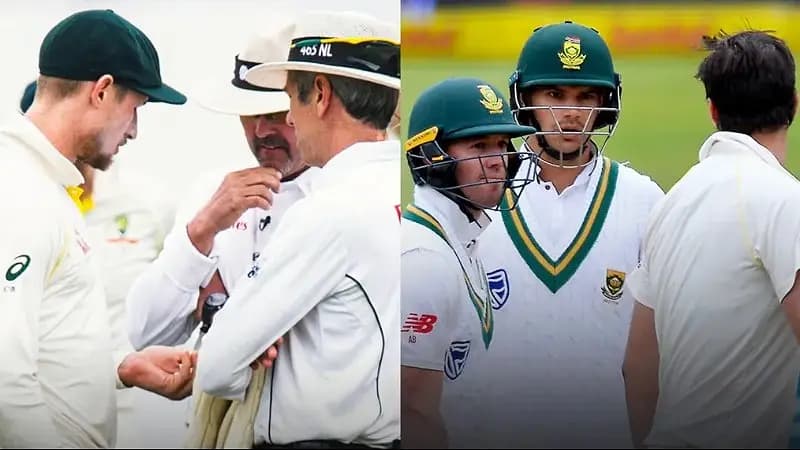
On its own, very little that would stand up in a hearing. Starc’s reverse swing at Kingsmead in the first Test of the 2018 series was striking, but swing is a skill, and the scorecards from that tour cannot prove tampering in either direction. What they do show is the pattern de Villiers keeps coming back to: a ball moving late for Australia and far less for South Africa. He believes the cheating started one Test before Port Elizabeth, and nobody has produced evidence for that yet.
The Allegation Made on ABD360
De Villiers went public on Monday 23 November through his YouTube channel, ABD360. His point was simple: the tampering began in Durban, and Port Elizabeth was the second Test of it. He went further and said he had no doubt whatsoever that every member of that Australian side knew what was going on.
He also drew a line around his own habits in the field. Bouncing return throws off the pitch, he argued, sat inside the laws, and he put everything he did as a player in that legal bracket. The comments arrived more than eight years after Newlands, where the scandal broke on 24 March 2018 during the third Test.
AB de Villiers Sandpapergate Durban Claim
Every first-hand account so far puts the sandpaper at Port Elizabeth. Cameron Bancroft, Usman Khawaja and Chadd Sayers all date its first use to the second Test, which leaves de Villiers alone in moving it back to Durban. His case rests on how much the ball reversed for Australia, with no footage and no admission behind it.
That keeps it in the allegation column for now. Cricket Australia’s own inquiry concluded that only Steve Smith, David Warner and Bancroft knew about the plan. Smith and Warner each served 12-month bans, while Bancroft was out for nine months. Nothing in the new comments changes those numbers on paper.
Starc at Kingsmead and the Ball That Reversed
Mitchell Starc ripped through South Africa on day two in Durban, taking 5 for 34 as they were bowled out for 162. His second-innings return was 4 for 75, and Australia won by 118 runs. Those nine wickets for 109 runs sit at the centre of what de Villiers is hinting at.
Faf du Plessis later changed his tune. In 2018 he put the gap down to skill, but in 2022 he wrote that some of those deliveries were close to unplayable and that his own side’s ball barely reversed by comparison. Reverse swing proves nothing by itself, though. At Port Elizabeth, where the sandpaper is alleged, Starc went for 125 and took a single wicket.
Test | Venue | Australia Pace Wickets | Starc Figures | When Reverse Swing Was Noted |
|---|---|---|---|---|
1st | Durban | 16 | 9/109 | Day 2, SA 1st innings, over unclear |
2nd | Port Elizabeth | 11 | 1/125 | Day 2, SA 1st innings, over unclear |
3rd | Cape Town | 15 | 3/179 | Day 1, SA 1st innings, around over 82 |
4th | Johannesburg | 11 | Did not play (injured) | Not recorded |
Khawaja and Bancroft Disagree on the Start
Both men accept that the sandpaper first came out at Port Elizabeth and that knowledge spread beyond three players. On the core facts of that Test, then, the two accounts line up. Where they part is on who began it. In Sabr, his autobiography, Khawaja writes that Bancroft offered to use sandpaper during South Africa’s first innings in that Test.
Bancroft tells it another way. His column names Warner as the source of the idea and says it was talked about across the wider group. Sayers adds that the sandpaper was given to him to carry off the field, and Pat Cummins has rejected the version Khawaja put forward.
The Findings That Banned Three Players
The bans were built on one conclusion, that three men knew. That is why the timing question matters. Proof of earlier use, or of a wider circle, would undercut that finding directly. The board has backed its investigation throughout, though it has said it will look at what Bancroft wrote.
Starc’s figures make for a lively debate, but they are numbers and nothing more. Until footage or a first-hand account from Kingsmead appears, the AB de Villiers Sandpapergate Durban claim stays an accusation from the opposing dressing room with no evidence attached.
Do Starc’s Kingsmead figures convince you that something was wrong in Durban, or was it just great reverse swing? Tell us in the comments.
Frequently Asked Questions (FAQs)
What has AB de Villiers alleged about the 2018 ball tampering?
He said Australia’s tampering started in Durban during the first Test, earlier than Port Elizabeth. He also told his YouTube viewers that he had no doubt the entire Australian squad knew.
When did the Sandpapergate scandal happen?
It broke on 24 March 2018, during the third Test at Newlands in Cape Town. The fallout ended with bans for Steve Smith, David Warner and Cameron Bancroft after Cricket Australia completed its own investigation.
Who was banned after the 2018 ball tampering scandal?
Steve Smith and David Warner got 12-month bans, and Cameron Bancroft was banned for nine months. Cricket Australia’s inquiry found those three were the only players who knew about the plan.
Is there proof Australia tampered with the ball in Durban?
No official finding says the ball was tampered with in Durban. Bancroft, Khawaja and Sayers each place the first sandpaper use at Port Elizabeth, and the official inquiry dealt with Cape Town.
What has Usman Khawaja said about the 2018 scandal?
Khawaja says the whole team knew and that the sandpaper came out at Port Elizabeth, one Test ahead of Cape Town. Pat Cummins has rejected those claims, and Cricket Australia continues to back its original findings.