

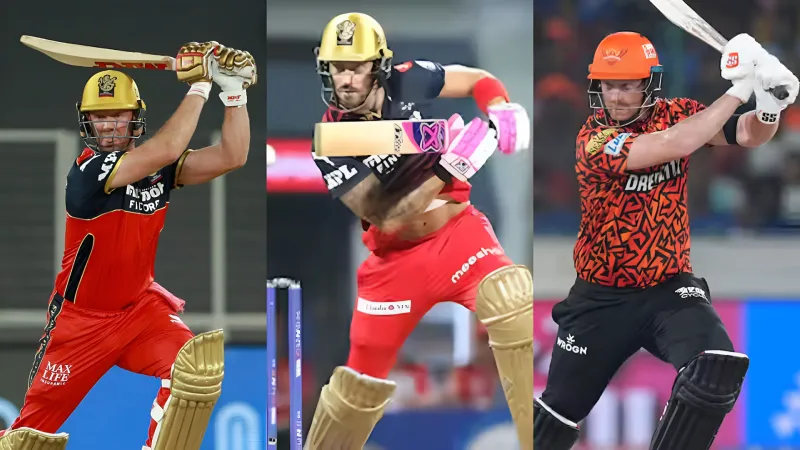

Six players. More than 20,000 runs combined. Across every franchise combination, pitch condition, and format pressure the IPL has produced since 2008, South African batters have reached the top of the scoring charts with a consistency no other overseas nation matches. AB de Villiers built 5,162 runs in the middle order by solving problems that other batters walked away from. Faf du Plessis constructed 4,700 through top-order patience that outlasted multiple generational shifts. Heinrich Klaasen is already extending both legacies at a strike rate the current bowling generation is still learning to plan around.
De Villiers Creates the All-Time Benchmark
The 5,162 runs de Villiers accumulated don’t reflect a batter who arrived in ideal conditions and maximised them. They reflect a batter who created scoring opportunities from positions where none existed. Slow Chennai surfaces that forced orthodox middle-order batters into accumulation became accelerating phases because he read spin bowling matchups faster than bowlers could adjust their plans. He attacked in overs where the captains placed fields expecting containment. He defended when pitch conditions made aggression expensive, then attacked again before the bowling side recognised the switch had happened. That tactical unpredictability across 184 innings, against every quality of bowling and in every pressure situation the tournament produces, is what separates his tally from every number a skilled batter might otherwise accumulate.
Faf and De Kock Build Platforms
The most underrated quality in du Plessis’s 4,700 runs and de Kock’s 3,400 is that both were built against attacks specifically designed to stop what each player does best. Du Plessis’s top-order role demanded constructing platforms on Chennai surfaces where timing mattered more than power, against bowling plans that understood his preferences across seasons of exposure. His ability to pace an innings through those conditions without surrendering initiative produced consistency that outlasted multiple franchise rebuilds around him. De Kock operated from the opposite tactical position: powerplay aggression against field restrictions before the bowling captain could introduce specialist variations.
Miller Finishes Where Others Collapse
David Miller’s 3,100 runs carry the strongest argument for South African batting intelligence across the tournament’s history. Finishers accumulate runs in the highest-pressure phase of any T20 innings, when required rates have peaked, quality bowlers are back for their final overs, and one false shot ends the chase entirely. Miller identifies which bowlers in a death-over rotation carry exploitable patterns and targets those bowlers specifically rather than attacking indiscriminately. That adaptability across many seasons in a role most batters occupy briefly before declining output forces positional changes, which explains 3,100 runs in the most demanding batting environment, T20 cricket consistently produces. JP Duminy’s 2,029 runs confirmed South African production doesn’t require superstars at every position to remain collectively dominant.
South African IPL Records Keep Growing
South African IPL records now extend into the tournament’s current era through Klaasen’s 1,800-plus runs at a strike rate consistently exceeding 150. His specific tactical contribution is refusing to treat the middle overs as a phase to survive. He attacks spin bowling in overs seven to fifteen rather than waiting for pace bowlers to return and conditions to improve. That instinct mirrors precisely what de Villiers applied from the same batting position across a different generation, against different bowling attacks, on different surfaces.
Player | IPL Runs | Role | Defining Quality |
AB de Villiers | 5,162 | Middle Order | Spin domination, shot innovation |
Faf du Plessis | 4,700+ | Top Order | Platform building, slow pitch mastery |
Quinton de Kock | 3,400+ | Opener | Powerplay aggression |
David Miller | 3,100+ | Finisher | Pressure chase management |
JP Duminy | 2,029 | Middle Order | Strike rotation, stability |
Heinrich Klaasen | 1,800+ | Middle Order | Middle-over attack, spin targeting |
- Does AB de Villiers’s 5,162 runs make him the benchmark no South African IPL batter can realistically surpass, or does Klaasen’s current strike rate position him as the most dangerous version of this batting tradition yet? Drop your pick in the comments and follow for IPL updates.
FAQs
Q: What is the all-time South African IPL runs record?
AB de Villiers holds it with 5,162 runs, making him the highest-scoring South African in IPL history.
Q: Why do South African batters consistently top IPL scoring charts across eras?
Their classical technique, tactical intelligence, and adaptability to Indian pitch conditions produce reliable output regardless of generation or franchise.
Q: What makes Klaasen’s IPL batting different from earlier South African batters?
He attacks the middle overs against spin, targeting the phase where previous South African batters historically chose consolidation over aggression.
Q: Who is the most consistent South African top-order batter in IPL history?
Faf du Plessis built 4,700 runs through patient platform building, making him the most reliable top-order South African IPL performer.
Disclaimer: This blog post reflects the author’s personal insights and analysis. Readers are encouraged to consider the perspectives shared and draw their own conclusions.