

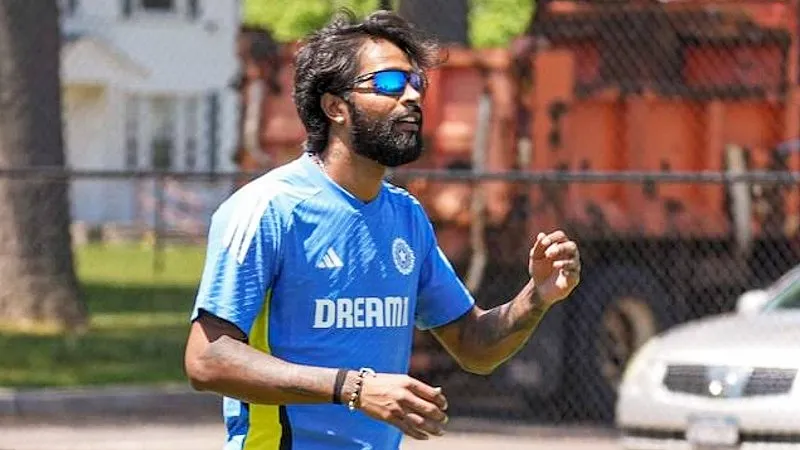

Pandya’s body has become the biggest variable in India’s white-ball planning, and selectors have stopped pretending otherwise. Each fresh setback, from a 2018 back spasm to a 2026 quadriceps strain, has forced captains to ration his bowling overs rather than assume them. That shift now shapes World Cup contingency planning and who gets picked as the long-term all-rounder solution. With the 2027 World Cup approaching, India can no longer build a team around him bowling a full quota, and the search for genuine cover has turned urgent.
The Back Problem That Never Fully Healed
The lower back issue surfaced during the 2018 Asia Cup, when Pandya was stretchered off in Dubai after an acute spasm against Pakistan. It had appeared months earlier, in the 2018 England Test series. Conservative treatment failed, and in October 2019 he had back surgery in the United Kingdom.
That operation fixed the crisis but left a weakness that keeps resurfacing. A grade one ankle tear struck during the 2023 World Cup against Bangladesh, and a muscle issue ruled him out of the 2025 Asia Cup final. Back spasms returned during IPL 2026, then a quadriceps strain hit in June 2026 while bowling ten overs at the BCCI Centre of Excellence ahead of the Afghanistan series.
Hardik Pandya Injury History India Selection
BCCI secretary Devajit Saikia confirmed Pandya was dropped from the New Zealand ODI squad because he could not convince selectors he was ready to bowl ten overs at full intensity. The plan is six or seven overs in an ODI rather than his full quota, with more only if the captain needs it.
By September 2026, selectors were working with a tighter ceiling, treating him as a bowler who cannot manage more than five or six overs in ODIs. His last ODI came in the 2025 Champions Trophy final against New Zealand, and his last T20I was the 2026 T20 World Cup final against the same opponent.
Workload Management Now Shapes His Overs
The Champions Trophy in 2025 captured both the problem and the fix. Pandya bowled sixteen overs across three matches, an average of 5.3 per game, and took three wickets at an economy of 4.56. He was carefully managed throughout and never asked for a full quota.
The Afghanistan breakdown told a different story. The injury did not happen in a match; it happened during a fitness assessment at the Centre of Excellence, when he pushed to bowl at full intensity. A practice spell broke him before a ball was bowled in the series itself.
Series / Event | Bowling Details | Avg Overs / Match |
|---|---|---|
CT 2025 (ODI) | 16 overs / 3 matches | 5.3 |
T20 WC 2024 | 11 wickets across 8 matches | ~3 to 4 (T20 max 4) |
Asia Cup 2025 (T20) | 4 wickets, 6 matches; missed final | Reduced/managed |
IPL 2026 (MI) | Back spasms; 2 overs in Qualifier 2 | ~1.5 |
Afghanistan ODI 2026 | Ruled out (quad strain at CoE) | 0 |
The Long-Standing Red-Ball All-Rounder Vacancy
His last Test came on August 30, 2018, against England at Southampton. In the eight years since, India have cycled through Shardul Thakur, Washington Sundar and Nitish Kumar Reddy, and none has nailed the vacancy down permanently.
Reddy debuted in Tests in November 2024 against Australia, scored 114 at the MCG, and delivered seventeen overs at 3.64 economy across two Tests on the 2025 England tour. He then suffered a knee injury in Manchester mid-series, followed by a quadriceps injury in 2026, leaving the slot unsettled.
Grooming the Next All-Rounder Generation
Three names are in contention for the 2027 World Cup in South Africa. Reddy remains the primary plan, with the board confirming he is raising his bowling workload, his pace climbing from 120 kph to the mid-130s under coach Steffan Jones.
Shivam Dube, who entered the England ODI squad in July 2026 after Reddy’s injury, is a batting first option with limited overs. Suryansh Shedge, the Mumbai all-rounder, served as emergency T20I cover on that trip. Fourteen months out, the seam bowling puzzle has no settled answer.
Every conversation about Reddy, Dube or Shedge returns to the same file. Hardik Pandya’s injury history and India selection remain the lens through which every future all-rounder pick gets judged, until someone proves durable enough to bowl a full quota without breaking down. That is the real target for 2027, not just runs and wickets.
Is Nitish Kumar Reddy India’s long-term all-rounder answer, or should selectors look elsewhere entirely? Tell us your pick in the comments.
Frequently Asked Questions (FAQs)
What was Hardik Pandya’s 2018 back injury?
He suffered an acute lower back spasm during India’s 2018 Asia Cup match against Pakistan in Dubai. The issue had appeared in the 2018 England Test series, and he had back surgery in the UK in October 2019.
Has Hardik Pandya retired from Test cricket?
No, he has not announced a Test retirement. His last Test appearance came on August 30, 2018, against England at Southampton, and workload concerns have kept him out since then.
How many overs is Hardik Pandya bowling in ODIs now?
Selectors are working with a realistic cap of five to six overs per match. In the 2025 Champions Trophy, he averaged 5.3 overs across three games and picked up three wickets.
Who could replace Hardik Pandya as India’s all-rounder?
Nitish Kumar Reddy is the leading candidate across formats. Shivam Dube and Suryansh Shedge cover white-ball options, while Washington Sundar and Shardul Thakur remain in the frame for Tests.
Is Hardik Pandya fit for India’s next series?
He is currently out with a quadriceps injury and was left out of the Afghanistan T20I squad. That series begins September 13 in New Delhi, and he has not played since IPL 2026.