

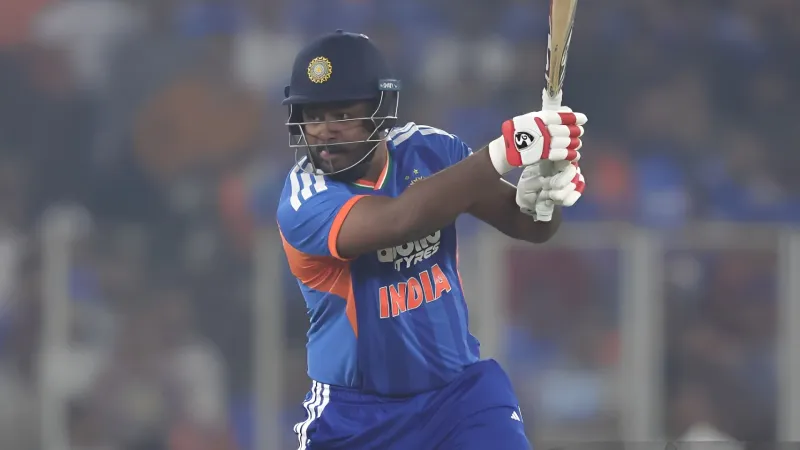

The India playing 11 vs Zimbabwe T20 World Cup 2026 is likely to feature one key tactical adjustment: strengthening the middle order against spin. Ahead of this Super 8 clash, former India spinner Ravichandran Ashwin has backed the inclusion of Sanju Samson in a non-traditional role. Instead of opening or batting at No.3, Ashwin believes India should use Samson as a spin-hitter in the middle overs, addressing a visible imbalance in the Indian Cricket Team’s current combination against quality spin bowling from Zimbabwe Cricket.
Likely Batting Order Adjustment
India’s top order currently leans heavily left-handed, which can simplify bowling matchups. Ashwin’s suggestion focuses on inserting a right-hander without disrupting the opening pair. The proposed structure pushes Suryakumar Yadav to No.3, allowing flexibility based on bowling changes, while Samson slots in later to attack spin. This preserves stability while fixing a matchup issue rather than forcing wholesale changes.
Sanju Samson as Spin Enforcer
Ashwin’s idea isn’t about raw power but about clear role definition within the team. Samson’s strength lies in precise and technically sound strokeplay against slower bowlers, rather than hitting big shots in the powerplay. By batting at No.5, he can enter the game during the middle overs when spin dominates, allowing him to maximise scoring opportunities against spinners without being exposed early in the innings. This placement also ensures India maintains balance in the top order while addressing a key tactical weakness. Samson’s ability to rotate strike, pick gaps, and punish loose deliveries makes him ideal for this specialised role, adding both stability and impact in the crucial middle overs.
Spin-Friendly Conditions in Chennai
Chennai conditions traditionally reward spin, especially as matches progress. Slower surfaces increase the value of batters who can rotate strike and attack selectively. Using Samson later rather than early reduces exposure to swing and maximises his effectiveness when the ball grips. This tactical thinking aligns with Ashwin’s emphasis on condition-driven selection, not reputation-based picks.
Axar–Sundar All-Round Balance in the T20WC
Another key element of India’s Playing 11 vs Zimbabwe T20WC 2026 discussion is bowling depth. Ashwin has advocated playing both Axar Patel and Washington Sundar, strengthening spin control while extending batting depth. This combination allows India to attack with spin from both ends without sacrificing lower-order stability, an important factor in must-win Super 8 matches.
India’s Playing 11 vs Zimbabwe is shaping up to be less about star names and more about matchup efficiency. Ashwin’s push to use Sanju Samson as a middle-order spin hitter, combined with reinforcing India’s spin all-rounder depth, directly addresses conditions and opposition strengths. If implemented, this approach gives India greater control through the middle overs, historically their weakest phase in T20 World Cups. Expect India to prioritize balance and adaptability over experimentation, with Samson’s role potentially becoming the tactical difference in a high-pressure Super 8 contest.
Key Takeaway
India’s best XI vs Zimbabwe is likely to hinge on middle-order spin resistance, not top-order reshuffling.
FAQs
What is India’s biggest concern against Zimbabwe in the T20WC 2026?
Handling spin during the middle overs on slower surfaces remains the primary challenge.
Why is Sanju Samson not being considered as an opener?
The focus is on using him against spin later in the innings rather than disrupting the powerplay setup.
How important are all-rounders in India’s T20 World Cup plans?
Spin-bowling all-rounders add control and batting depth, especially on turning tracks.
Which players could miss out if Samson is included?
One middle-order batter or an opener may be rotated based on matchup requirements.
Disclaimer: This blog post reflects the author’s personal insights and analysis. Readers are encouraged to consider the perspectives shared and draw their own conclusions.