

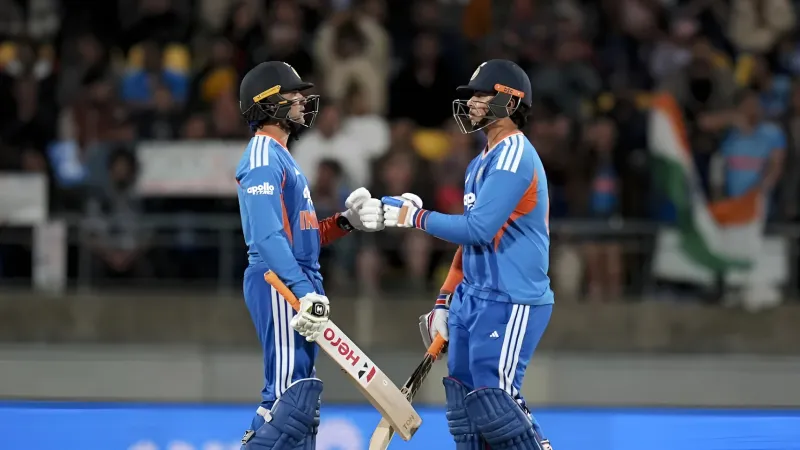

The turnaround shows up both in the scorebook and in India’s batting order. India hold a 3-0 advantage in the New Zealand T20I series, with Eden Park hosting the fourth game on 30 October, and the two openers sit at the centre of that lead. A 4-0 series defeat in England and a wretched Zimbabwe trip for Sharma had pointed to trouble earlier in the year. Wellington changed the picture, with a century and a rapid 45 setting up a chase of 199.
A Bruising Start to the Year
India lost the England series 4-0 after the opening match was washed out. Sharma’s 59 in the abandoned opener was followed by 43, 10, 16 and 3 in the games that counted. Suryavanshi, who made his debut at Old Trafford on 4 July, collected 14, 13 and 15 before Sanju Samson took his place for the fifth T20I.
Zimbabwe told a split story. Sharma made 1, 8 and 2 while India still won 3-0, with Blessing Muzarabani removing him three innings in a row. Sooryavanshi thrived in the same series, posting 50, 20 and 81 to win the player of the series award, which means his struggles belonged to England alone.
A Reported Warning and What Followed
With India 2-0 down in the England series, a remark from within the BCCI surfaced on 9 July. It said the six-hitting of both openers was excellent but needed to be controlled. That was an informal comment rather than an official statement, and it carried no targets for either batter.
Both men then scored heavily at the Asian Games, Sooryavanshi hitting 38 from 21 deliveries versus Sri Lanka and Sharma’s 61 coming from 28 balls in the final versus Pakistan. No evidence ties the recovery to that remark, so any explanation is guesswork. The tactical shift in New Zealand is easier to see: Samson and Sharma opened the first match, but by the third he opened while Samson slid down to number three.
Sooryavanshi & Abhishek T20I form NZ vs IND 2026
In Christchurch, Sharma raced to 29 from 12 deliveries as India took game one, and he then added 27 from 21 in the follow-up. Sooryavanshi sat out that opener and managed only 4 from 8 balls in game two. Neither innings hinted at what Wellington would bring, and the early signs were mixed rather than alarming.
Chasing 199 in the third game, India got home with six wickets in hand after 13.2 overs. Sharma struck 113 off 38 balls for his fourth T20I century, while Sooryavanshi supplied 45 off 19. Their stand was worth 133 from 43 deliveries, with 118 of it coming inside the powerplay.
Series | Player | Innings | Runs | Strike Rate |
England | Abhishek Sharma | 5 | 131 | 177.0 |
England | Vaibhav Sooryavanshi | 3 | 42 | 168.0 |
Zimbabwe | Abhishek Sharma | 3 | 11 | 157.0 |
Zimbabwe | Vaibhav Sooryavanshi | 3 | 151 | 196.1 |
New Zealand | Abhishek Sharma | 3 | 169 | 238.0 |
New Zealand | Vaibhav Sooryavanshi | 2 | 49 | 181.5 |
Ten Innings Side by Side
Sooryavanshi has batted ten times in T20Is for 295 runs at an average of 29.50. His strike rate is 185.5, since those runs came off 159 balls, and his best is 81. He owns two fifties and no hundred, a record that reflects consistency more than one-off spikes.
Take Sharma’s innings across the same ten matches and he has 288 runs, averaging 28.8 an innings, one fifty and one century with a best of 113. The output is almost identical, though Sharma’s runs arrived in taller peaks. His strike rate for that span cannot be stated because balls faced remain unconfirmed for three innings.
Verdict on the Openers’ Revival
The evidence points to a pair who have solved different problems. Sooryavanshi found form quickly after England, and Sharma needed a big Wellington night to erase the Zimbabwe numbers. Moving him to open and Samson down to three has given India a more aggressive start, and the powerplay haul of 118 shows how quickly that can pay off.
Eden Park will test whether the Sooryavanshi & Abhishek T20I form NZ vs IND 2026 revival can last, with captain Shreyas Iyer likely to keep faith in the same opening pair. One fluent powerplay again would answer most questions and silence the doubts that followed the England defeat.
Is Sharma’s Wellington century proof that the slump is behind him, or will the Zimbabwe-style droughts return? Tell us what you think in the comments.
Frequently Asked Questions (FAQs)
What caused Abhishek Sharma’s slump in Zimbabwe?
No source offers one single reason. He made 1, 8 and 2 across the three matches, and Blessing Muzarabani removed him in every one of them, which pinned the blame on bowling rather than technique.
Did the BCCI criticise the openers for hitting too many sixes?
A board source reportedly called the six-hitting excellent but in need of control. That informal remark came during the England series and was not an official statement or a set of targets.
How many T20I runs does Vaibhav Sooryavanshi have so far?
He has 295 runs from ten innings. That total includes 45 off 19 balls in Wellington, and his strike rate stands at 185.5 across all of those innings.
How many T20I hundreds has Abhishek Sharma scored?
He has scored four. His latest came in Wellington on 27 October, 113 from 38 deliveries, the knock that sealed a six-wicket chase for India in the third match.
Which batters open for India against New Zealand?
The pairing has changed during the series. Samson and Sharma began the first match, while Sharma and Sooryavanshi opened the third in Wellington under captain Shreyas Iyer.
Disclaimer: This blog post reflects the author’s personal insights and analysis. Readers are encouraged to consider the perspectives shared and draw their own conclusions.