


Not as a group. This season produced the fastest scoring in the tournament’s history, and both pace and spin recorded their most expensive campaigns ever. A few individuals, led by Sunil Narine, Jason Holder and Bhuvneshwar Kumar, kept their economy rates far below the pace average of 9.94. Their efforts prove that resistance genuinely exists, even though the broader trend still favours the batting side by a comfortable margin, and the evidence below shows exactly how wide that margin has become.
A Season Tilted Towards the Bat
The prevailing view holds that hitters have developed more quickly than bowlers, and the pre-playoff figures back it up. The scoring rate reached 9.85 an over, the highest on record, while the average first-innings total touched 192.04. Sides crossed 200 on 61 occasions, compared with 52 last year. Chases of 220-plus happened nine times, whereas the previous 18 seasons combined produced only five.
The cost to bowlers was just as clear. Pace attacks averaged 32.31 and conceded 9.94 an over, the weakest numbers they have posted. Spinners leaked 9.26 an over, also the most expensive season they have endured, so neither discipline escaped punishment in a campaign dominated by big hitting and fearless intent from the first ball. The statistics describe a league where huge scoring has become routine.
IPL 2026 bowlers catching up with modern batters
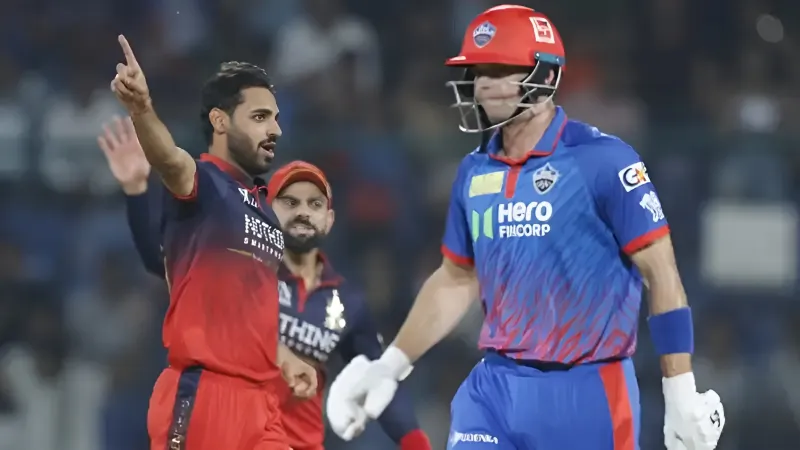
So is the gap closing? Not for the group as a whole, yet a few individual bowlers have bucked it. Narine finished at 6.65 across 51 overs and Holder at 7.57 across 38.2, while Bhuvneshwar sent down 63 overs at 7.95 and took 28 wickets, which makes his season the most complete of the three. All of them sit comfortably beneath the pace average.
Team numbers point the same way. Royal Challengers Bengaluru owned the best powerplay economy at 9.28, together with 38 wickets in that phase, the most of any side, while Sunrisers Hyderabad topped the death-overs table at 9.92. Punjab Kings were the weakest there at 11.86. Bumrah (8.37), Ngidi (8.23) and Axar Patel (8.18) were next in line among bowlers who delivered 30 overs or more as of 1 June.
Scoring Rates Climbing Since 2020
Powerplay data shows a steady upward climb. Starting at 7.71 for both 2020 and 2021, the rate crept to 7.82 in 2022. Bigger jumps followed: 8.43 in 2023, then 9.49 for 2024 and 9.61 last year. This season opened at 10.47 on 12 April, and the opening six overs later cleared 10 for the first time in the league’s history.
First-innings scores tell a similar story. Teams averaged 183 in 2023, 190 a year later and roughly 191 in 2025, before this year’s 192.04 set a new high. Averages for the seasons from 2020 through 2022 remain unverified, so the comparison starts at 2023 rather than guessing at earlier seasons.
A Wellington Case Study From India
India’s third T20I against New Zealand, played in Wellington, gives a partial illustration of bowlers fighting back. Finn Allen fell to Nitish Kumar Reddy with the hosts on 88/1 after eight overs. A total of 198/3 followed, 110 of those runs coming in the last 12 overs, while Daryl Mitchell managed just 35 from his final 26 deliveries.
Arshdeep Singh returned 1/33 over his four overs, and Axar finished with 1/36. Those numbers suggest controlled bowling late on, though full figures for the rest of the attack could not be confirmed. The innings shows how a team can stay competitive even when the scoreboard looks threatening.
Gaps That Still Remain
Age-based bowling splits are not available, so nobody can say whether younger bowlers are coping better or worse. League-wide, pace remains the costlier department. Spinners delivered only 2.64 balls for every pace over, the third-lowest ratio ever, and fielders put down 169 catches across the season. Both problems point to a league where the margin for error has all but vanished.
Rabada’s Purple Cap came from 29 wickets, though they cost 9.68 an over, a sign of how expensive success has become. A reader judging the IPL 2026 bowlers catching up with modern batters question should weigh that price carefully, because trophies alone no longer prove a bowling unit is winning the contest.
Do you think a few elite bowlers can genuinely shift the balance, or is the batting era here to stay? Share your view in the comments.
Frequently Asked Questions (FAQs)
Is bowling getting worse in modern T20 cricket?
In IPL 2026, the numbers say yes. Pace economy reached 9.94 and spin economy 9.26, both the worst recorded, although Narine, Holder and Bhuvneshwar bucked the trend.
How much has the IPL powerplay scoring rate risen?
It has risen by more than two and a half runs an over since 2020. The rate began at 7.71 then, and the opening six overs topped 10 for the first time this season.
What was the typical first-innings score this season?
It averaged 192.04 across the league stage. That is the highest figure of any season on record, and sides passed 200 on 61 occasions versus 52 a year earlier.
Which bowler ranks top in T20 cricket right now?
No verified current ranking settles that. Narine owned the tightest economy among those with 30 or more overs this season, while Kagiso Rabada collected the Purple Cap.
Why does scoring surge so early in an innings?
Batters go hard from the first delivery. Across 2026, the first three overs cost 9.52 apiece, a league record, and the full powerplay topped 10 an over.
Disclaimer: This blog post reflects the author’s personal insights and analysis. Readers are encouraged to consider the perspectives shared and draw their own conclusions.