

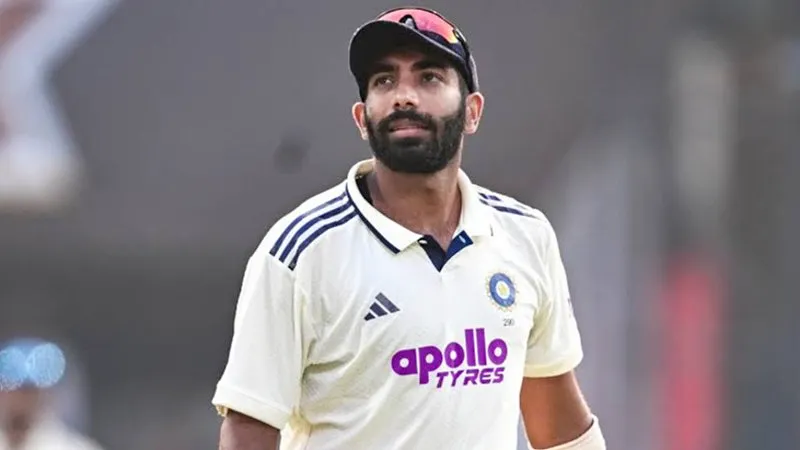

A senior BCCI official confirmed on July 31 that Bumrah has recovered from his impact injury and cleared every fitness test the COE mandated, with both Sri Lanka Tests now firmly in his sights. That’s the reassuring part of the story. What the headline conveniently skips is what clearance actually required him to prove physically, and why a bowler carrying his particular injury history doesn’t get signed off lightly by anyone involved. The real answer sits inside a staged process most fans never get to see in any real detail.
A Reassurance That Skips the Real Process
The BCCI’s confirmation was short and direct: recovered from the impact injury, cleared the mandated tests, hopefully available for both matches because he remains central to the team’s plans. Good news, delivered in a single line.
But that line says almost nothing about what clearance involved or what it confirms about his ability to bowl at full tilt across two five-day Tests back to back. Fans have heard versions of this reassurance before, sometimes right before a bowler breaks down again mid-series. The gap between a headline saying cleared and a body holding up for ten sessions is exactly what the COE process exists to close.
Jasprit Bumrah Fitness Test Sri Lanka Tests
Clearance for a fast bowler returning from injury isn’t a single pass or fail. It runs through separate stages, each measuring something different about his readiness to bowl a full workload again.
Test Component | What It Measures | Bumrah’s Result |
|---|---|---|
Medical evaluation (imaging plus clinical) | Healing of impact injury, swelling, structural damage | Cleared, recovered from his impact injury |
Sport-specific movement | Pain-free bowling action off full run-up | Cleared, expected to bowl in both Tests |
Bowling load tolerance | Ability to sustain match-level spell volume | Cleared, available for both games |
General fitness (Yo-Yo, 2km run) | Cardiovascular and physical readiness | Cleared, COE gave green light to travel |
Specific protocols aren’t officially disclosed, and these components are inferred from standard COE return-to-play methodology for pace bowlers, with clearance confirmed July 31 through the BCCI.
The Injury That Ruled Him Out of Lord’s
Bumrah suffered the impact injury during India’s ODI series against England in July, severe enough to keep him out of the third ODI at Lord’s entirely. That match went on to decide the series outcome without him.
He was still named in India’s Sri Lanka Test squad, listed subject to fitness, the standard BCCI mechanism for including a player before formal BCCI Centre of Excellence clearance arrives. It’s a vote of confidence with a built-in caveat attached. That caveat matters more for a bowler than almost any other position. A batter carrying a niggle can bat around it. A fast bowler either has the body to sustain full pace across a spell, or he doesn’t.
Inside the BCCI’s Staged Clearance Process
The COE in Bengaluru is the mandatory rehabilitation centre for senior India players coming back from injury. For a pace bowler, that means medical imaging confirming structural healing first, then sport-specific assessment once that clears. The bowler has to complete match-level spells without pain, without compensatory movement, and without swelling returning afterward. Only then does clearance get signed off across every stage.
Bumrah’s history adds extra weight to that process. A 2022 back stress fracture and a 2025 recurrence during the Border-Gavaskar series in Sydney both mean the COE will have factored in cumulative load, not just this single impact injury in isolation. That’s the part a one-line BCCI statement can’t capture. Clearing him now is one thing; managing his overs so the pattern doesn’t repeat later in the season is a separate, ongoing conversation.
His Real Workload Begins in Galle
India need to win seven of their remaining nine World Test Championship matches to stay in contention, and Bumrah is central to how realistic that target is. Losing him for extended stretches changes the calculation significantly.
Galle’s pitch on August 15 and Colombo’s on August 23 both offer consistent turn, which reduces pace demands somewhat but doesn’t eliminate them entirely across ten sessions of cricket. New-ball overs still fall to Bumrah early in both matches regardless of how much the surface later helps the spinners.
The real Jasprit Bumrah fitness test Sri Lanka Tests scenario starts the moment he takes the new ball in Galle, not the moment the BCCI issued its statement on July 31.
Does Bumrah’s workload hold up across both Tests, or does India need a contingency plan already? Tell us what you think.
Frequently Asked Questions (FAQs)
What injury did Jasprit Bumrah suffer against England?
Bumrah suffered an impact injury during India’s ODI series against England in July 2026. It completely ruled him out of the series-deciding third ODI played at Lord’s.
Has Jasprit Bumrah been cleared to play against Sri Lanka?
Yes, a senior BCCI official confirmed his clearance on July 31. He is expected to be available for both Tests after passing every COE-mandated fitness stage.
When does the India vs Sri Lanka Test series start?
The series begins August 15 at Galle International Stadium. The second Test follows at P. Sara Oval in Colombo, starting August 23, as India chase crucial WTC points.
What is the BCCI Centre of Excellence?
It is India’s mandatory rehabilitation and fitness clearance facility, based in Bengaluru. Formerly the National Cricket Academy, every returning player must pass through it before rejoining the squad.
Did Jasprit Bumrah play the Lord’s ODI against England?
No, he missed the third ODI at Lord’s due to the impact injury. That match ultimately decided the series result in India’s absence of their strike bowler.