

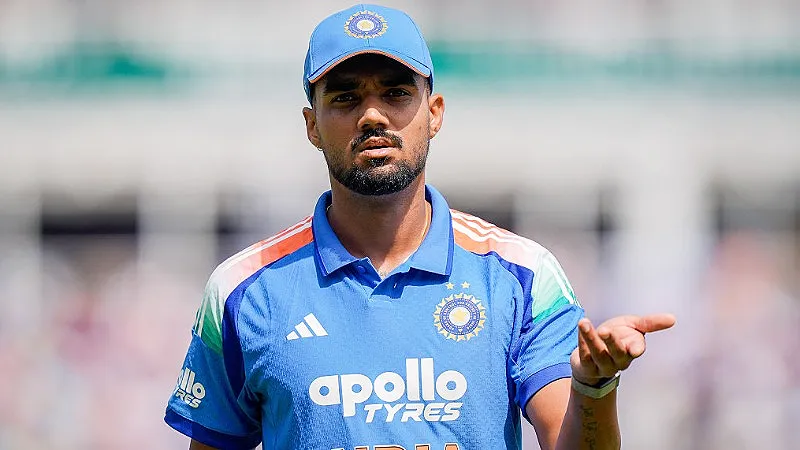

Rohit Sharma scored 138. Gurnoor Brar conceded 97 without taking a wicket. Both numbers sat on the same scorecard at Lord’s on July 19, and only one of them decided how England’s total held up. Brar’s ten overs undid what should have been a series-defining innings, turning a match India could have controlled into a 27-run defeat. Centuries don’t win games on their own when the bowling unit gives back everything the batting built. It’s a reminder that one bowler’s off day can outweigh almost anything a batter manages alone.
Gurnoor Brar India ODI 2026 Expensive Figures
Brar bowled all ten overs and finished with figures of 0 for 97, an economy of 9.70 that stands as India’s third-most expensive ODI return in history. Only two spells have cost more: Bhuvneshwar Kumar’s 0 for 106 against South Africa in 2015, and Vinay Kumar’s 0 for 102 against Australia in 2013. Both of those, like this one, came from a seamer holding a full quota on a surface offering nothing back.
He had been India’s leading wicket-taker through the first two matches, picking up seven wickets on surfaces offering seam movement early on. Lord’s, flat and true under clear skies, offered nothing of the sort, and without genuine pace or a reliable change-up, he was targeted from the first ball and never found a way back into the contest.
England’s Record Total at Lord’s
England posted 387 for 3, the highest total ever recorded in an ODI at Lord’s, built on Ben Duckett’s 141 and Jacob Bethell’s 91 inside a 192-run opening stand that set the tone for everything that followed. Joe Root added an unbeaten 74, and Jos Buttler struck 41 not out off just 13 balls in the final five overs, turning a big total into a target that felt out of reach before India had even walked out to bat.
Rohit’s 138, Shubman Gill’s 77 and Virat Kohli’s 74 gave India a genuine platform in reply, a total that on most days at this ground would have been more than competitive. But Sam Curran’s four wickets and a bowling unit that leaked runs everywhere else meant the chase always stayed just out of reach, no matter how well the top order batted.
The Bowling Card From Lord’s
Bowler | Overs | Runs | Wickets | Economy |
|---|---|---|---|---|
Gurnoor Brar | 10 | 97 | 0 | 9.70 |
Prince Yadav | 10 | 79 | 1 | 7.90 |
Arshdeep Singh | 10 | 72 | 0 | 7.20 |
Prasidh Krishna | 10 | 69 | 2 | 6.90 |
Axar Patel | 10 | 61 | 0 | 6.10 |
Every specialist bowler India used went at more than six an over, but the gap between Brar’s economy and the next-most expensive spell on that card is the number that decides how this innings gets remembered.
The Middle Overs That Decided It
England’s powerplay produced a controlled 58 in ten overs, nothing that suggested a total in the high 380s was coming. Between overs eleven and thirty, Duckett and Bethell added 134 more with only one wicket falling, dragging the game away from India during the exact phase bowlers are supposed to apply the squeeze, and it was in that stretch that Brar’s economy climbed highest of any Indian bowler on the day.
The damage was made worse by Jasprit Bumrah’s absence. India’s first-choice seamer failed a pre-match fitness test on his knee, leaving a pace attack that shared just 51 combined ODI caps between its four members walking into a series decider.
A Costly Day, Not a Career Verdict
India’s three most expensive ODI bowling returns are now all wicketless: Bhuvneshwar Kumar’s 0 for 106 at Wankhede in 2015, Vinay Kumar’s 0 for 102 in Bengaluru in 2013, and Brar’s 0 for 97 at Lord’s. All three came from pace bowlers holding their full quota on flat surfaces built for batting. Brar is 26 and has played just nine ODIs, young enough for this to become a lesson rather than a defining mark against his name.
The bigger issue sits above any one bowler. Axar Patel was India’s only specialist spinner in the XI, and Kuldeep Yadav has featured in just 38 of 103 matches since Gautam Gambhir’s appointment in 2024. Reading the Gurnoor Brar India ODI 2026 expensive figures scorecard alongside that spin shortage tells the real story of why England’s total got so far out of reach.
Was Brar’s day the difference, or would this attack have struggled against Duckett and Bethell regardless of who bowled the tenth over? Drop your take below.
Frequently Asked Questions (FAQs)
What were Gurnoor Brar’s bowling figures in the third ODI?
He finished with 0 for 97 from his full ten overs. That is an economy of 9.70, India’s third-most expensive bowling return in ODI history.
Who has India’s most expensive bowling figures in ODI history?
Bhuvneshwar Kumar, with 0 for 106 against South Africa at Wankhede in 2015. Vinay Kumar’s 0 for 102 against Australia in 2013 ranks second, with Brar’s 0 for 97 now third.
Did England win the third ODI and the series?
Yes, England won the third ODI by 27 runs to seal the series 2-1. It was their first ODI series win over India since 2018, ending a long wait for a home victory.
What was England’s total in the third ODI at Lord’s?
England posted 387 for 3, the highest ODI total ever recorded at Lord’s. Ben Duckett’s 141 and Jacob Bethell’s 91 anchored a 192-run opening partnership.
Why did India lose despite Rohit Sharma’s century?
India’s bowling, without the injured Jasprit Bumrah, conceded 387 runs. Brar alone gave away 97, and the 192-run opening stand set a total that even Rohit’s 138 could not chase down.