

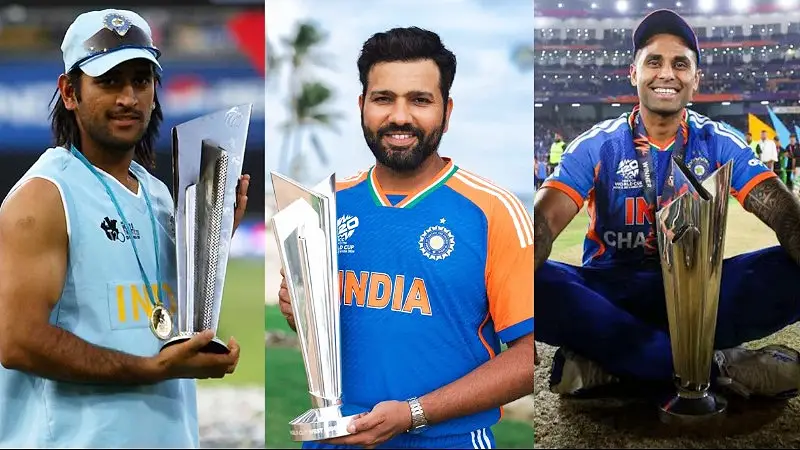

India won the T20WC in 2024. Then they won it again in 2026. Back-to-back titles, an achievement no team had produced before, and the reaction was noticeably different from 2007, 2024, or even the ODI World Cup win in 2011. The question Aakash Chopra asked publicly after the 2026 final is the one Indian cricket fans were quietly asking themselves: Does winning feel the same when the opportunity comes around every two years instead of every four? His answer was no. The evidence from comparable global tournaments suggests he has a point worth taking seriously.
Why Tournament Frequency Directly Affects How Much Winning Means
The FIFA World Cup generates the largest single sporting event audience on the planet, not because football is the only popular sport, but because a four-year cycle creates genuine scarcity. Four years of qualifying campaigns, near-misses, generational transitions, and national expectations accumulate into a tournament where the stakes feel existential rather than routine.
The ODI World Cup operates on the same principle. India’s 2011 victory in Mumbai, 28 years after the 1983 triumph, carried cultural weight that no two-year cycle tournament can replicate. When Dhoni hit the six at Wankhede, the weight of 28 years was present at that moment. India’s back-to-back T20 wins are genuinely impressive achievements. But the emotional register is different when the next opportunity is two years away rather than four.
What the T20 World Cup 2026 Back-to-Back Titles Tell Us About Saturation
India’s T20 World Cup 2026 defence was dominant across every measurable dimension: nine matches, eight wins, 96-run final margin, five tournament records in one night. The performance deserved a larger emotional response than it received. The relative muting of that response compared to 2007 or 2011 isn’t ingratitude; it’s the mathematical consequence of frequency. When something happens every two years, the anticipation cycle is too short to build to the same pitch.
Chopra’s argument isn’t that the T20WC should become less important. It’s that the ICC is inadvertently making it less important by scheduling it too frequently. The solution, moving to a four-year cycle aligned with the ODI World Cup, would immediately restore scarcity and with it the emotional stakes that make tournament victories genuinely historic rather than impressive.
Why the ICC’s Commercial Argument Doesn’t Hold Against the Long-Term Evidence
The ICC’s counter-argument is straightforward: biannual tournaments generate broadcasting revenue, sponsorship deals, and global viewership that a four-year cycle would reduce by approximately half. That argument is financially correct in the short term and strategically wrong over a longer horizon.
The ODI World Cup consistently outperforms T20WC finals in global viewership despite being half as frequent, specifically because its scarcity makes each edition a cultural event rather than a scheduled fixture. The ICC risks a slow erosion of the premium status by treating frequency as a revenue strategy rather than a product quality decision. Chopra’s proposed rule changes, extra runs for 100-metre sixes, and additional overs for bowlers taking wickets are separate proposals, but they reflect the same underlying concern: the format needs recalibration to maintain its hold on audiences who currently have too many cricket events competing for their attention.
What a Four-Year Cycle Would Actually Change
A four-year T20WC cycle would force players to treat the tournament differently, as the pinnacle of their format career rather than a regular appointment. It would force ICC member boards to prioritise T20 International cricket more seriously between editions. It would give associate nations a longer runway to develop competitive squads. And it would ensure that the next team to win back-to-back titles, if India or anyone else achieves it on a four-year cycle, produces a reaction proportional to the actual difficulty of the achievement.
- Do you think the T20 World Cup should move to a four-year cycle, or does the current schedule work well enough? Drop your view in the comments and follow for cricket coverage.
FAQs
How does tournament frequency affect the Indian Cricket Team?
Frequent T20 events can increase player workload, impact performance, and require tactical rotation during busy calendars.
Which ICC events are held annually versus every four years?
T20WCs occur every two years, ODI World Cups every four years, while the Champions Trophy has varied historically.
Can rule changes like extra runs for 100-meter sixes be implemented soon?
Currently, such changes are debated but unlikely in the immediate future; they would affect tactics if adopted.
What impact does frequent T20 scheduling have on viewership?
While annual tournaments generate consistent revenue, over-saturation can reduce fan anticipation for finals and championship matches.