

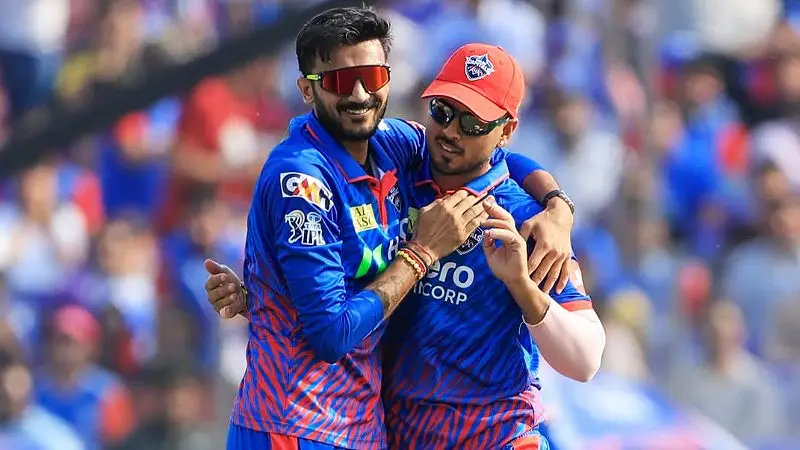

Delhi Capitals had their best bowler available, a ground that suits spin, and two set right-handers at the crease. Most T20 captains would see that as a moment to act. Instead, Delhi’s captain held Axar Patel back, waited for a perfect scenario that never materialised, and ended up with their most dangerous bowling option completing fewer overs than the situation demanded. That single decision thread ran through Delhi’s entire performance and explains why a bowling attack with genuine quality produced a result that didn’t reflect it.
Delhi’s IPL 2026 Captain Froze Early
The first and most damaging error arrived before the spin attack had even been considered. The most successful bowling sides have used their best options when the game demands it, rather than when a prepared plan allows it. Delhi did the opposite.
By the time Axar Patel was introduced in the tenth over, the batting side had built a rhythm that should never have been allowed to develop that far. Two set right-handers at the crease is close to the ideal scenario for a left-arm orthodox spinner at most Indian venues. The pitch offered enough grip to make spin a genuine wicket-taking threat through those middle overs. The matchup was there. The conditions were there. The decision to bowl Axar wasn’t.
.
Padikkal’s Arrival Broke Delhi’s Spin Plans
What made the tactical situation worse was how a single batter changed the entire approach. When Devdutt Padikkal walked out, Delhi’s captain appeared to shelve the spin option completely, pushing Axar’s introduction back even further. That reaction, changing a plan based on one batter’s handedness rather than the overall game state, is the definition of reactive captaincy.
Elite spinners at this level are not simply matchup bowlers. Axar Patel has dismissed left-handed batters consistently across multiple formats and conditions. The idea that Padikkal’s arrival made Axar suddenly unplayable is not supported by his record or by anything the conditions produced that day. Delhi’s captain let an imagined threat override a real tactical advantage, and the batting side gained free overs as a direct result of that hesitation.
Too Many Options Paralysed DC’s Attack
When a captain has six or seven genuine bowling options, the temptation is to rotate through all of them rather than commit to the best ones at the right moments. That temptation surfaced clearly for Delhi in this match.
The seamers were used early and used heavily. When the initial burst produced no wickets, Delhi had no clear second plan. The attack became fragmented and spread across too many bowlers, none of them allowed to build pressure across consecutive phases, and Axar sat unused while less threatening options bled runs. A captain with five bowling options is often forced to be decisive. A captain with seven can afford to hesitate, and hesitation in T20 cricket costs runs at a rate that is very difficult to reverse.
Why Axar Had to Bowl Sooner
The clearest measure of how wrong the bowling management went is this Axar Patel did not complete his four-over quota. In a format where every specialist bowler’s full allocation is precious, leaving your best option with overs undelivered is not a tactical decision. It is a planning failure.
There is no scenario in a tight T20 match where your premier spinner finishing short of four overs represents a successful bowling plan. Axar’s wicket-taking record in the middle overs across this format is not a secret. The opposition knows it, which is exactly why getting him in early and finishing his overs while the game is most alive is the correct call every time.
When the perfect moment is always one over away, it never arrives. Delhi waited for the perfect, got nothing close to it, and lost control of a match their bowling attack should have been good enough to win.
- Is the DC captain overthinking his bowling rotations, or is there a bigger selection problem that needs solving before more games slip away? Drop your pick in the comments and follow for IPL updates.
FAQs
Why did Axar Patel not bowl his full four overs for the Delhi Capitals?
Axar Patel was held back due to a rigid tactical focus on matchups and the late arrival of left-handed batsmen, which confused the captain’s rotation plan.
How does having too many bowling options affect IPL captaincies?
Having excessive options can lead to decision paralysis, where a captain feels obligated to rotate everyone rather than sticking to their most effective match-winners.
Was the Delhi Capitals’ bowling strategy in IPL 2026 a failure of planning?
Yes, the strategy lacked a backup plan, meaning that once the initial “front-ended” bowling attack failed to take wickets, the team had no way to recover.
Can a left-arm spinner bowl to a left-handed batsman in the IPL?
While traditional matchups favor right-handers, elite spinners like Axar Patel are often successful against any batter, and avoiding them based on handedness can be a tactical mistake.