

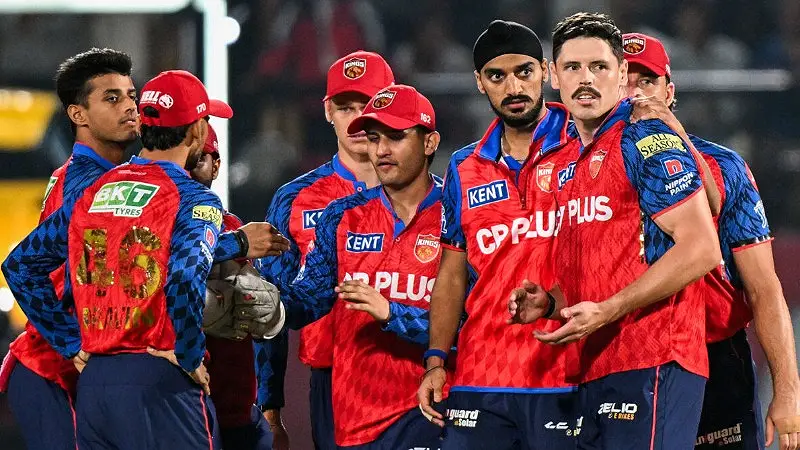

Punjab Kings posted 211 at Dharamsala against Delhi Capitals and still lost. That result, their fourth consecutive defeat, confirms the problem isn’t runs. It’s what happens after the batting finishes. PBKS sit on 13 points, stuck, while CSK and SRH surge past them. Under Shreyas Iyer, a campaign that looked like a genuine title challenge is now a desperate attempt to survive the final stretch without slipping out of the top four entirely.
Bowling Fails When It Matters Most
Defending 211 at a high-altitude venue is difficult. Defending it with predictable lengths and no execution under pressure is impossible. PBKS’s bowlers allowed DC to chase the target without facing a single sustained phase of genuine bowling pressure. Flat surfaces at Dharamsala accelerate the problem because bowlers who miss their yorker lengths get cleared over short boundaries with minimal margin for error. Wide yorkers and hard-length variations are specifically what this venue demands in defence.
Punjab’s attack offered neither consistently enough. This wasn’t a one-match execution failure. It was the fourth consecutive match where the bowling unit conceded control in exactly the phase that decides results. A pattern across four matches reflects a structural problem, not a form slump.
Points Table Math Turns Dangerous
Thirteen points from eleven matches looked comfortable when it arrived. It doesn’t anymore. CSK sits directly behind PBKS with the momentum that PBKS no longer carries. SRH is moving in the same direction from below. Remaining fixtures against Mumbai Indians, RCB, and LSG offer PBKS three chances to arrest the decline, but the NRR damage from four consecutive defeats means narrow wins won’t be enough.
The points table rewards margins as much as results when multiple teams finish level. PBKS needs wins by significant margins in their final fixtures, which requires bowling performances the last four matches haven’t delivered and batting performances under pressure they haven’t needed to demonstrate yet.
IPL 2026 Momentum Gap Grows Fast
IPL 2026 has repeatedly confirmed that four-match losing runs don’t just damage points totals. They damage the squad’s confidence in a way that tactical adjustments alone can’t fully reverse before the remaining matches arrive.
Arshdeep Singh remains Punjab’s most reliable bowler, but one performer doesn’t defend totals across 20 overs. Vijaykumar Vyshak has provided support, but the death-over combination hasn’t functioned as a unit under sustained pressure. The contrast between the bowling performances that built PBKS’s early-season points tally and the performances across their current losing run suggests the team’s bowling plans aren’t adapting as opponents have identified their default lengths. Once batting sides read a bowling attack’s preferred lengths inside two overs, adjusting fields becomes reactive rather than controlled.
Iyer and Ponting Must Respond Now
Ricky Ponting’s coaching experience in pressure situations is PBKS’s most underused resource during this run. His record in IPL coaching includes rebuilding squads from difficult positions through role clarity and specific preparation plans rather than general confidence-boosting.
Shreyas Iyer’s captaincy challenge is equally specific. Maintaining field placement aggression while managing bowlers who have lost rhythm across four matches requires tactical patience and decisive in-match responses. The dressing room atmosphere after four consecutive defeats is the environment where leadership either stabilises a campaign or accelerates its collapse. PBKS have enough batting depth and bowling talent to end this run. Translating that talent into execution when the pressure is highest is the problem Iyer and Ponting must solve before the next match begins, rather than during it.
- Can Iyer and Ponting fix PBKS’s bowling before the final three matches, or has this four-match collapse already decided their playoff fate? Drop your pick in the comments and follow for the latest updates.
FAQs
Q: Why are PBKS’s playoff chances under threat after four straight losses?
They’re stuck on 13 points while rivals gain ground, and NRR damage means narrow wins in remaining fixtures won’t be sufficient.
Q: How did PBKS lose to DC despite posting 211 at Dharamsala?
Their bowlers failed to execute yorkers and hard lengths consistently, allowing DC to chase without facing sustained pressure across the defence.
Q: What does NRR mean for PBKS’s remaining playoff qualification chances?
NRR becomes the tiebreaker if PBKS finish level on points with rivals, meaning they need to win remaining matches by large margins.
Q: How does the Dharamsala pitch affect bowling teams’ defending totals?
High altitude and flat surfaces demand precise yorkers and hard lengths in defence, leaving no margin for predictable bowling under pressure.