

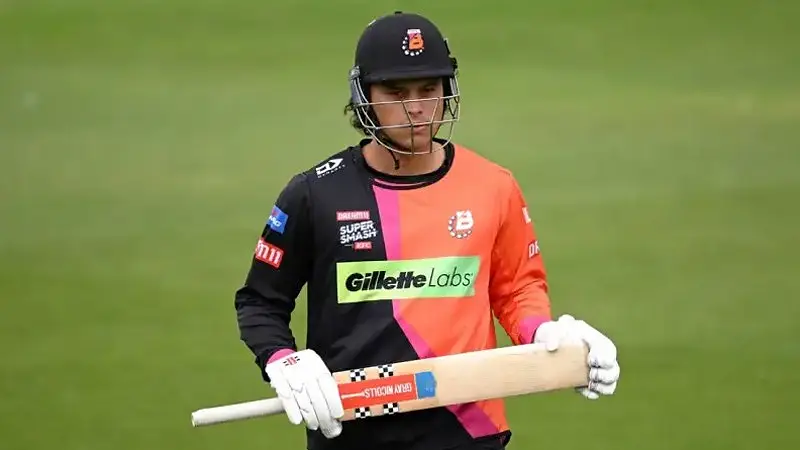

New Zealand has produced aggressive T20 openers before. Brendon McCullum redefined the template, Finn Allen carried it forward. The line of succession is clear, and the standard is high. The case for the next name in that line is built on 616 runs across 15 Super Smash innings at a strike rate near 150, an unbeaten century off 54 balls, and a spin strike rate that climbed to 170 in the most recent domestic season. Those are not numbers that suggest potential. They are numbers that confirm readiness. New Zealand’s selection for the South Africa series is a calculated decision based on that evidence, not an experiment.
What 616 Runs Actually Confirm
The volume and rate of Clarke’s Super Smash output is the foundation of his selection case. Six hundred and sixteen runs from 15 innings means he averaged over 40 per innings in a format where averages above 30 indicate genuine quality. A strike rate near 150 alongside that average means he is not sacrificing consistency for aggression or aggression for consistency; he is producing both simultaneously, which is the combination that T20 batting coaches spend entire careers trying to develop in players. His domestic record does not show one extraordinary season against average bowling.
The Century That Turned Heads
An unbeaten century off 54 balls in domestic T20 cricket is not a statistical milestone. It is a statement about a player’s ceiling. Most aggressive T20 batters produce strike rates that look impressive across short innings; the difficulty is maintaining that rate when you are set, when the match situation demands more boundaries rather than fewer, and when the opposition captain is making field adjustments specifically to contain you. Clarke’s century came in conditions where all three of those pressures applied simultaneously.
Katene Clarke and the Spin Evolution
The most significant development in Katene Clarke’s game ahead of the South Africa series is his record against spin bowling. His strike rate against spin has climbed to 170 in the most recent Super Smash season, which represents a fundamental shift in his batting profile rather than a statistical fluctuation. Earlier in his career, his scoring was pace-dependent; he hit hard lengths for four and straight deliveries over the rope, but spin asked different questions and produced lower returns. The improvement in his spin numbers reflects specific technical work, better crease use, clearer scoring zone identification, and the patience to wait for the right ball rather than manufacturing a boundary from the wrong one.
Clarke Fills a Specific NZ Gap
New Zealand’s T20 lineup has occasionally lacked a batter who combines powerplay aggression with the adaptability to either anchor or accelerate based on match situation. Tim Robinson provides the anchor. Finn Allen provides the aggression. Clarke provides the capacity to do both from the same innings, which gives New Zealand’s captain a flexibility option at the top of the order that the current squad configuration does not always offer. His domestic record confirms he can shift between tempos; his Super Smash innings include both rapid acceleration from ball one and composed rebuilding after early wickets.
Clarke arrives at international cricket with the domestic record to justify the selection and the technical development to handle what comes next. The South Africa series will test his ability to read bowling attacks that have studied his game across multiple innings rather than encountering him for the first time. That is the examination every promising domestic player must pass. His numbers suggest he has already developed the answers.
- Will Clarke’s Super Smash dominance translate into T20I impact against South Africa, or does the step up in class expose a gap his domestic record conceals? Drop your take in the comments and follow for NZ vs SA updates.
FAQs
What is Clarke’s batting style?
He is an aggressive top-order batter who attacks in the powerplay and adapts his tempo based on match situations.
Why is Clarke selected for the New Zealand vs South Africa series?
His strong Super Smash performances and high strike rate made him a logical choice during squad rotation.
How good are Clarke’s recent stats?
He scored 616 runs in 15 innings across two seasons with a strike rate near 150, showing both impact and consistency.
Can Clarke succeed in international cricket?
His success will depend on handling pressure and adapting to stronger bowling attacks, especially in the middle overs.
Which role will he play in the New Zealand team?
He is expected to play as a top-order aggressor, setting the tone early in T20 matches.