

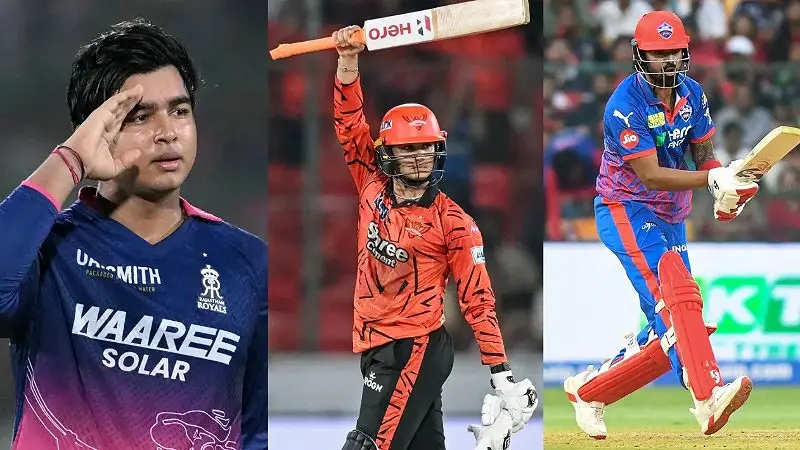

KL Rahul scored 152, and his team lost. Vaibhav Sooryavanshi scored a century at close to three runs per ball, and his team won comfortably. Both innings happened in the same IPL week, and the contrast tells you everything about what modern T20 batting actually requires. The match-losing hundred is not a statistical anomaly or bad luck. It is the predictable outcome of one batter consuming deliveries at a pace that doesn’t match what those deliveries need to produce. When individual milestones and team tempo diverge, the milestone loses.
One Batter Cannot Carry Twenty Overs
Rahul’s 152 was technically exceptional. His shot selection was precise, and his strike rate was well above what most IPL hundreds are built at. None of that compensated for what happened around him. When one batter consumes a significant proportion of deliveries in a T20 innings, they reduce the balls available to the batters positioned to accelerate in the final six overs. The maths of 20-over cricket doesn’t allow an anchor unless the anchor is scoring above the required rate throughout.
The structural problem isn’t that Rahul scored 152. It’s that the total underneath it wasn’t enough to make 152 matter. Flat pitches, shorter boundaries, and the impact player rule have raised what a competitive first-innings total looks like. A century in a team total of 220 is a correct contribution. A century in a total of 200 on a surface offering 230 has consumed innings without producing the outcome those deliveries needed.
Sooryavanshi Redefined the Expected Strike Rate
Vaibhav Sooryavanshi’s century changed the reference point for what an aggressive T20 hundred looks like from a player not yet established at the international level. Operating close to three runs per ball, he hit established international bowlers, including Bumrah and Cummins, with intent that removed any phase of the match from the category of safe overs.
When a batter is scoring at that rate, the bowling side can’t set conservative fields and wait for the mistake. They are forced to take attacking risks, which opens gaps for every batter who follows. Sooryavanshi’s innings produced conditions that made runs easier for every batter who followed.
IPL 2026 Tag-Team Model Wins Matches
The batting template for winning matches isn’t built around one exceptional innings. It’s built around two or three batters sustaining pressure across phases without any single batter needing to carry the whole innings. Abhishek Sharma and Ishan Kishan at Sunrisers Hyderabad, Prabhsimran Singh and Priyansh Arya at Punjab Kings: both combinations represent the tag-team model that has made single-batter dependence look structurally insufficient.
In the DC vs PBKS match, Prabhsimran and Arya’s combined powerplay assault produced the platform Punjab Kings needed. Neither scored a hundred. Neither needed to. Their combined scoring pressure achieved what a single hundred could not. Two batters pushing the required rate simultaneously is a harder problem for any bowling captain than one exceptional individual who can be surrounded by saving fielders.
900 Runs Changed the Match Context
Across the IPL matches highlighted this week, over 900 aggregate runs were scored. That volume confirms flat surfaces and shorter boundaries have changed what a competitive first-innings total looks like. 152 was the highest individual score any Indian batter has produced in IPL history. It was not enough. Not because Rahul failed. Because the environment had raised the bar beyond what one batter, however exceptional, could clear alone.
T20 centuries remain valuable, but their value is conditional on the strike rate at which they arrive and the total they sit inside. A century at 180 in a score of 230 is a match-winning contribution. A century at 160 in a score of 195 is a beautiful innings in a below-par total. It has made that distinction visible in the results column.
- Does 2026 prove that the era of the match-winning individual century is genuinely over, or is the problem specifically with anchor-style hundreds rather than aggressive ones like Sooryavanshi’s? Drop your pick in the comments and follow for IPL updates.
FAQs
Q: Why did KL Rahul’s 152 not lead to a Delhi Capitals win?
His innings left the team total below what conditions allowed the Punjab Kings to chase.
Q: How is Vaibhav Sooryavanshi changing T20 batting?
His near-three-runs-per-ball century removed any safe bowling phase and raised the benchmark for aggressive hundreds.
Q: Why does tag-team batting win more matches?
Two batters scoring simultaneously creates a problem that no single bowling plan can solve across 20 overs.
Q: Can individual centuries still win matches in IPL 2026?
Yes, but only at a high strike rate inside a team total matching current flat-surface scoring benchmarks.