

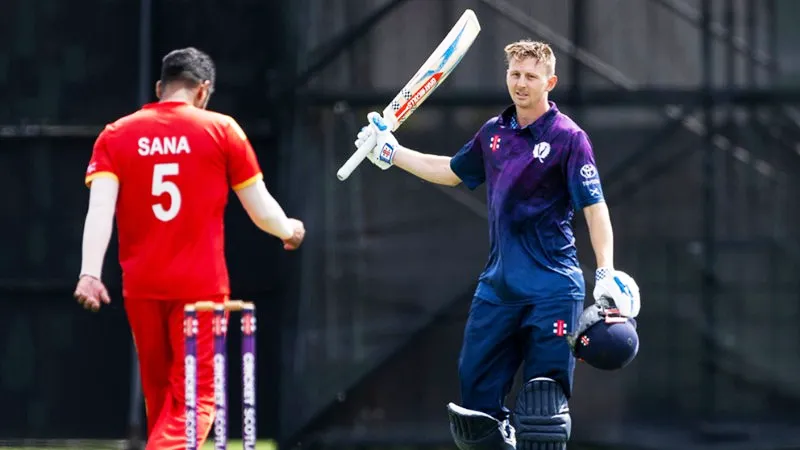

The 5000th ODI arrived as a lopsided World Cup League 2 qualifier between Scotland and Canada, not a fixture between two genuine giants of the sport. That mismatch is the real headline. Fifty-five years after the format’s 1971 debut, it survives on relevance borrowed from World Cups rather than any bilateral appeal of its own. Annual fixture counts spike only when a World Cup nears, then collapse again. Boards have already decided where the format sits in their priorities, and it isn’t near the top anymore.
Five Eras That Shaped One-Day Internationals
One-day cricket began in 1971, arriving nearly a century after the first Test match was played. Five distinct periods followed it. The 1970s were experimental, with boards testing a shorter format nobody fully understood yet. The 1980s turned it commercial once Kerry Packer’s influence reshaped broadcasting deals and player contracts across the sport.
The 1990s and 2000s belonged to the Indian market, with the format’s economics increasingly built around subcontinental broadcast rights and sponsorship money. Between 2008 and 2016, T20 cricket applied genuine competitive pressure for the first time in the format’s history. Since 2016, the format has existed inside a fragmented, franchise-heavy calendar where bilateral fixtures compete for space against domestic T20 leagues that most boards now protect instead.
Annual Fixture Volume Reveals a Pattern
The count of fixtures played each year tells its own story clearly. Roughly 150 were played in 2011, climbing toward 170 by 2015 as the bilateral calendar still held firm across most boards. World Cup years reliably spike the number, while non-World Cup years reliably shrink it back down again.
Year | Fixtures (approx) | Format Landscape |
|---|---|---|
2011 | ~150 | Pre-IPL expansion, bilateral series still dominant |
2015 | ~170 | World Cup year, bilateral calendar strong |
2019 | ~160 | World Cup year, Super League proposals circulating |
2023 | ~200+ | World Cup year in India, peak annual count |
2024 | ~120 | T20 World Cup year, bilateral fixtures reduced |
2025 | ~130 | Champions Trophy year, pre-World Cup bilaterals only |
2026 (proj.) | ~90 | T20 World Cup year, 5000th match milestone |
The 2026 projection sitting near 90 fixtures, barely half of 2015’s total, is the clearest evidence yet that bilateral cricket in this format keeps shrinking outside tournament windows.
ODI Cricket Format Decline 5000 Matches Milestone
A senior cricket writer at ESPNcricinfo summed up the anniversary bluntly: fifty-five years and 5000 games old, and still the most overlooked and unloved of the sport’s five formats, with nobody even worrying about its death the way they worry about Test cricket. That observation lands harder once you know how the 5000th fixture nearly went to a completely different match entirely.
Had rain not washed out Ireland’s fixtures against Afghanistan in Dundee that same week, a bilateral series between two Full Member nations would have carried the landmark number instead of two Associate sides. The milestone almost documented the format honestly, then quietly never did.
Commercial T20 Leagues Are Squeezing Bilateral Series
South Africa cancelled a three-match bilateral series in January 2023 specifically to launch its own domestic T20 competition, an explicit choice of a commercial product over an international fixture. Ravichandran Ashwin voiced a similar unease publicly, saying he wasn’t sure the format had much of a future left once the 2027 World Cup had come and gone.
Those aren’t isolated opinions from disconnected voices. They describe a format that boards increasingly schedule around rather than for, treating bilateral fixtures as filler between the T20 windows that actually generate revenue and audience interest for broadcasters.
Boards Now Prioritise World Cups Only
The sport’s own custodians have effectively confirmed the pattern themselves. The MCC World Cricket Committee recommended playing bilateral fixtures only in the year immediately preceding a World Cup, abandoning the rest of the calendar in practice. The qualification system introduced to give bilateral results extra meaning ahead of 2023 landed poorly with fans and administrators alike.
India’s 2026 calendar reflects the same drift, with just three fixtures in Bangladesh squeezed alongside several T20I series that clearly matter more to broadcasters now. The 2027 World Cup in South Africa now looks like the format’s next and possibly only defining moment, which is exactly what the ODI cricket format’s 5000-match milestone captures: a format alive at tournaments, fading everywhere else in between.
Does a format that only matters every four years still deserve its place on the international calendar? Tell us your case in the comments below.
Frequently Asked Questions (FAQs)
When did ODI cricket reach 5000 matches?
That milestone arrived in August 2026 during a World Cup League 2 qualifier. Scotland beat Canada by 9 runs in the qualifier, days after washed-out fixtures elsewhere nearly handed the landmark number to a different pair of teams.
Is ODI cricket dying because of T20 leagues?
Administrators increasingly treat it as the least valued of the sport’s three formats. The MCC now recommends playing bilateral fixtures only in the single year before each World Cup, effectively sidelining the rest of the calendar entirely.
Who has the most wickets in ODI history?
Muttiah Muralitharan holds the all-time record with 534 wickets for Sri Lanka. Sachin Tendulkar remains the format’s leading run-scorer by a wide margin, while Virat Kohli currently tops the century list among active batters.
How many ODI matches are played each year now?
Non-World Cup years now typically produce roughly 90 to 130 fixtures worldwide. A decade ago, the equivalent non-World Cup years regularly reached 150 to 170 fixtures, nearly double the projected 2026 total.
What are the five eras of one-day cricket?
Historians generally split the format into five distinct commercial and competitive periods. They run from the experimental 1970s through the Packer and Indian-market decades to today’s franchise-fragmented era that began around 2016.