

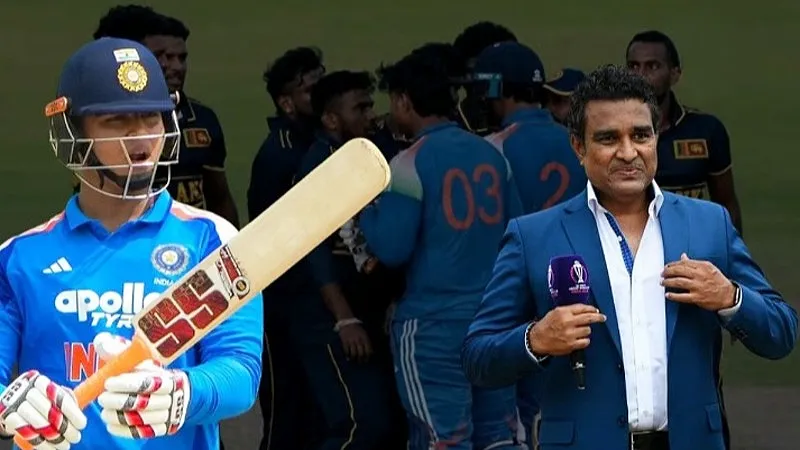

Suryavanshi’s 38 off 28 against Afghanistan A answers Manjrekar’s argument better than any rebuttal could. India A needed a result to reach the tri-series final, and the 15-year-old delivered a brisk opening stand that set up a 101-run win. Manjrekar wanted him benched as a disciplinary lesson after a Super Over confrontation two days earlier, but the match referee process had already fined both players involved. Removing Suryavanshi from a must-win game would have punished the team for an incident already addressed through the proper channel.
The Super Over Turned Physical
A tri-series ODI between India A and Sri Lanka A finished tied at 265 apiece on June 15 at Rangiri Dambulla, sending the match to a Super Over to decide it. Sri Lanka A scored 16 off their six balls, while India A, with Suryavanshi and Suryansh Shedge batting, managed only nine, handing the home side the win.
Sri Lanka A’s Vishen Halambage, who had reportedly been sledging Suryavanshi throughout the series, began clapping aggressively in front of the India A batters as soon as the over ended. Shedge pointed his bat toward him, Suryavanshi turned back, confronted Halambage, and the two players shoved each other before wicketkeeper Niroshan Dickwella stepped in to defuse the situation as it spread quickly across social media.
Match officials investigated afterward, and both players were reportedly fined 50 percent of their match fees, a penalty jointly administered by the BCCI and Sri Lanka Cricket since the series wasn’t ICC sanctioned.
Manjrekar’s Bench Suryavanshi Verdict
Sanjay Manjrekar posted his disciplinary stance on X two days after the incident, writing that he would have left Suryavanshi out of the next match purely to make the point that “it’s not OK to get physical on the field,” regardless of provocation.
The timing made the post stand out. Just six days earlier, Manjrekar had been openly excited about Suryavanshi’s range as a batter beyond T20 cricket, calling him a special talent capable of succeeding in one-day conditions too. He didn’t walk that praise back, but the contrast between the two posts was stark.
Vaibhav Suryavanshi Tri Series 2026 Controversy
India A’s team management didn’t follow Manjrekar’s prescription. Suryavanshi was retained and played the must-win fifth match against Afghanistan A on June 17, two days after the altercation.
Match | Date | Runs | Balls | Strike Rate | Context |
vs Sri Lanka A | Jun 9 | 14 | 17 | 82.35 | Pre-incident |
vs Afghanistan A | Jun 11 | 44 | 22 | 200.00 | Pre-incident |
vs Sri Lanka A | Jun 15 | 21 | 14 | 150.00 | Incident match |
vs Afghanistan A | Jun 17 | 38 | 28 | 135.71 | Post-incident |
The 38 off 28 against Afghanistan A came inside a 75 run opening stand with Priyansh Arya that helped India A post 319 for 9, before Nishant Sindhu’s 4 for 31 bowled the visitors out for 218 and sealed a 101 run win and a final berth.
Precedent Favours Coaching Over Benching
Indian cricket has rarely used punitive omissions as a developmental tool for teenagers in high-profile settings. Prithvi Shaw served a doping suspension in 2019 but returned straight back into the side once it expired, and was never dropped from state or A team cricket as an additional punitive measure layered on top of the ban.
Rishabh Pant’s combative early career was managed through coaching rather than omission, too, with selectors choosing to work on his temperament rather than leave him out. The usual approach has been to let the match referee process handle on-field incidents, exactly what happened here with the fine, while keeping continuity for young batters mid-series rather than adding a second punishment.
The Coaching Question That Remains
Nothing about the 38 off 28 makes the shove in Dambulla acceptable, and the fine was a proportionate response to a clear breach. What it does undermine is the specific idea that benching Suryavanshi would have taught the right lesson, since removing him from a must-win game would have punished the team alongside the player.
He’s 15, playing senior men’s cricket in a foreign country, getting sledged by opposition players, and reacted the way plenty of teenagers might. The Vaibhav Suryavanshi tri-series 2026 controversy was never really about whether he stays on the field; match officials already settled the disciplinary side. It’s about how India A coaches him through moments like this one.
Should young players ever be benched as a disciplinary lesson, or does that punish the team too? Drop your view below.
FAQs
What did Sanjay Manjrekar say about Suryavanshi?
Manjrekar said he would have left Suryavanshi out of the Afghanistan A match to send a message about physical conduct. He’d called Suryavanshi a special talent just six days earlier, before the on-field incident changed his tone.
Why did Suryavanshi and Halambage clash on the field?
The clash followed a tied Super Over that Sri Lanka A won on June 15. Halambage clapped aggressively at the India A batters, Shedge pointed his bat at him, and Suryavanshi shoved Halambage before Dickwella separated them.
Did India A drop Suryavanshi after the incident?
No, India A retained Suryavanshi for the next match against Afghanistan A. Both he and Halambage were instead fined 50 percent of their match fees following a referee investigation.
How did Suryavanshi perform against Afghanistan A after the incident?
Suryavanshi scored 38 off 28 balls in the very next match. His innings helped set up a 101-run win that secured India A’s place in the tri-series final.
Has Suryavanshi been involved in any controversies before this?
No, this was Suryavanshi’s first on-field disciplinary incident at any level. His reputation before Dambulla was built entirely on batting, including the 776 runs that won him the IPL 2026 Orange Cap.