

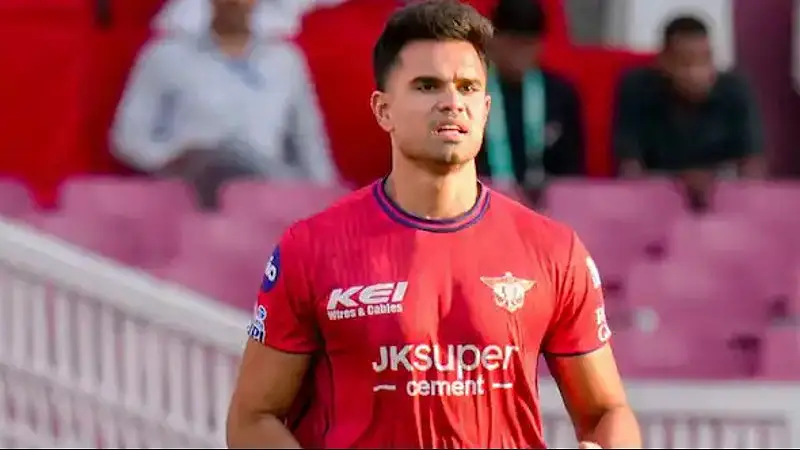

Five matches. Three wickets. An economy of 9.36. That’s the entire Mumbai Indians chapter of Arjun Tendulkar’s IPL career. Not because he’s not good enough to contribute more, but because he was never going to get the chance to find out at a franchise with Jasprit Bumrah, Trent Boult, and Hardik Pandya occupying the roles his development requires. Lucknow Super Giants isn’t just a transfer. It’s the first genuine opportunity Arjun has had to discover whether the talent is actually there when he gets consistent match time rather than occasional bench appearances in a team that doesn’t need him to develop on the job.
MI’s Depth Made Arjun’s Growth Impossible
The specific problem with the Mumbai Indians wasn’t that Arjun was mistreated or mismanaged. It was structural. When Bumrah is available, he bowls. When Boult is available, he bowls. When Hardik needs his four overs, they happen. The remaining bowling slots go to the most experienced available option because MI plays to win rather than to develop. That’s not a criticism of the franchise; it’s what five IPL titles look like in the selection policy. Arjun was always the fifth or sixth pace option in a squad that only needed four.
LSG Gives Arjun What MI Couldn’t
Lucknow Super Giants’ selection approach actively rotates combination options based on conditions and opposition rather than locking in a fixed XI from match one. That rotation creates the space that developing players need, the opportunity to get two or three consecutive starts in similar conditions, develop rhythm, build match awareness, and demonstrate what they produce when the pressure is consistent rather than occasional. Arjun’s left arm seam angle is specifically useful at Ekana Stadium, where early movement assists seam bowlers. LSG didn’t sign him because of his name. They identified a specific function he can fill in a specific phase at their home ground.
The LSG IPL 2026 Coaching Difference
The specific coaching inputs Arjun receives at LSG in IPL 2026 represent the most significant upgrade in his development environment since he began the MI journey. Bharat Arun’s bowling discipline work, applying the specific principles that produced consistent performances from India’s international pace attack across multiple formats, addresses the control issues that produced the 9.36 economy at MI. Carl Crowe’s bowling coaching covers technical consistency under match pressure. Lance Klusener and Justin Langer’s input on power hitting develops the lower order batting dimension that makes an all-rounder genuinely impactful rather than merely functional.
His Stats Miss the Point Completely
Three wickets at 9.36 from five matches. That number gets cited as evidence about Arjun’s ability, and it shouldn’t be. A sample of five matches, most of which came in high-pressure situations for a team that didn’t specifically need him to succeed, tells you almost nothing about a player’s ceiling. It tells you what happened in five specific games under specific conditions with specific tactical expectations. What it doesn’t tell you is what happens when the same player gets eight consecutive matches, bowls in conditions that suit his style, and receives coaching that addresses the specific technical issues producing the high economy. LSG is conducting that experiment. The five-match MI sample is not the verdict.
Whether LSG Finally Unlocks Arjun’s Potential
The honest answer is we don’t know yet , which is exactly why this move is interesting rather than predictable. If Arjun gets six or seven matches at LSG, bowls in conditions that reward left-arm seam, and receives the specific coaching interventions the franchise has invested in, the question of his genuine T20 ability gets answered properly. At MI, it never did. A player can’t demonstrate IPL-level quality in a role that prevents him from playing at the IPL level consistently. LSG’s environment is the first one where the answer to “is Arjun Tendulkar good enough?” becomes discoverable rather than speculative.
- Does LSG’s environment finally unlock Arjun Tendulkar’s IPL potential, or does consistent opportunity reveal the same performance ceiling that MI’s limited chances couldn’t confirm? Drop your take and follow for IPL updates.
FAQs
What is the reason behind Arjun Tendulkar’s move?
He moved primarily to gain more playing opportunities after limited chances with the Mumbai Indians.
Will Arjun Tendulkar play regularly for Lucknow Super Giants in?
His chances are higher than before, but selection will still depend on team balance and performance.
How did Arjun Tendulkar perform for the Mumbai Indians?
He played five matches, taking three wickets, but lacked consistent opportunities to build momentum.
Why is Lucknow Super Giants a better fit for Arjun Tendulkar?
LSG offers more flexible roles and rotation, which suits developing all-rounders.