

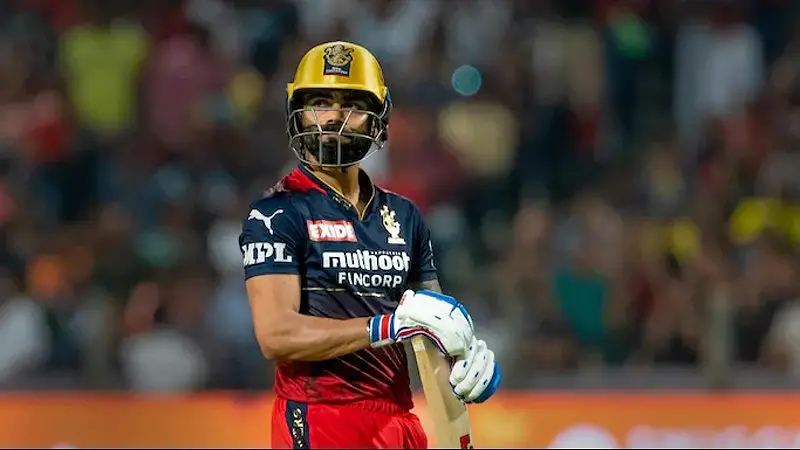

Virat Kohli’s most dangerous batting phase in his current form is the one that looks like it isn’t working. The first eight to twelve deliveries, assessed, blocked, rotated, and occasionally deflected, appear to be the innings of someone finding their timing. They’re not. They’re the innings of someone who has spent fifteen years of T20 cricket understanding exactly when the switch from control to attack produces the most runs and the least risk. The slow start is the method. Everything after it is the result.
The Slow Start Is Not a Problem
The first-over Kohli that defensive coaches prepare for and the sixth-over Kohli that bowlers dread are the same innings at different stages. He begins by reading the pitch, not guessing it, reading it. Which bowler has movement? Which length generates false shots? Which side of the ground is available against which angle? By over six, that information is processed and applied. His strike rate from over seven onwards in his current form consistently exceeds 160. His strike rate in overs one to six is deliberately lower because he’s acquiring the information that drives those later overs. Opposition captains who see the low powerplay strike rate and assume Kohli is struggling have misread what he’s doing.
Strike Rate Above 150 Without Recklessness
The specific evolution in Kohli’s T20 batting that explains his current output is his willingness to take aerial risks against specific bowlers in specific situations without applying that intent indiscriminately. He doesn’t aerial-slog every spinner from over seven. He identifies which spinner has been bowling straight, notes the fielder who is stationed at long-on, and hits the ball 20 metres to their left over long-off. That’s not aggression. That’s a calculation that looks like aggression. The result is a strike rate above 150 maintained without the soft dismissal risk that accompanies true recklessness because every boundary attempt comes from a pre-identified opportunity rather than a generalised intent to attack.
IPL 2026 Rewards Kohli’s Approach Most
The specific conditions suit Kohli’s current batting method more than any previous T20 environment has. Flat surfaces where the ball comes onto the bat consistently reward batters who are set and have processed what the bowling is doing. Conditions that produce above-par scoring rates mean a batter who reaches over ten with twelve balls of information about the pitch, the bowlers, and the field placements is operating with an advantage that early-overs aggression doesn’t generate. Kohli’s approach, gathering information in overs one to six, deploying it in overs seven to sixteen, maps almost perfectly onto what Chinnaswamy and the other high-scoring IPL venues reward most.
Kohli Finishes Chases Better Than Anyone
The best expression of Kohli’s current form is in T20 chases where the required rate climbs across the middle overs. His ability to judge what the required rate needs to be at each over, not what it is on the scoreboard, but what it needs to be to remain achievable across the remaining deliveries, allows him to pace the acceleration perfectly. He doesn’t panic when the required rate reaches eleven. He identifies the over where it needs to come down from eleven to nine and produces it specifically in that over rather than scrambling across the final three.
RCB have a batter at the top of their order who is simultaneously their most consistent performer and the player opposition bowlers find hardest to dismiss cleanly. That combination isn’t a coincidence. It’s what fifteen years of continuous refinement looks like.
- Does Virat Kohli’s refined batting approach make him the most valuable top-order batter, or does his slow start pattern cost RCB runs in matches where they need fast powerplay scoring? Drop your take and follow for IPL updates.
FAQs
What has changed in Virat Kohli’s batting approach recently?
He now focuses more on pacing innings and accelerating later instead of attacking from the start.
Why is Virat Kohli’s strike rate improving in T20 cricket?
Better shot selection and calculated risk-taking have helped him score faster without losing consistency.
How does Virat Kohli maintain consistency in IPL matches?
He adapts to match situations, adjusting his role based on team needs and game context.
Is Virat Kohli still an anchor or an aggressor in T20s?
He plays a hybrid role, starting as an anchor and transitioning into an aggressor when needed.
Can Virat Kohli sustain this form throughout IPL 2026?
If his current approach continues, he is well-positioned to maintain high performance levels across the season.