

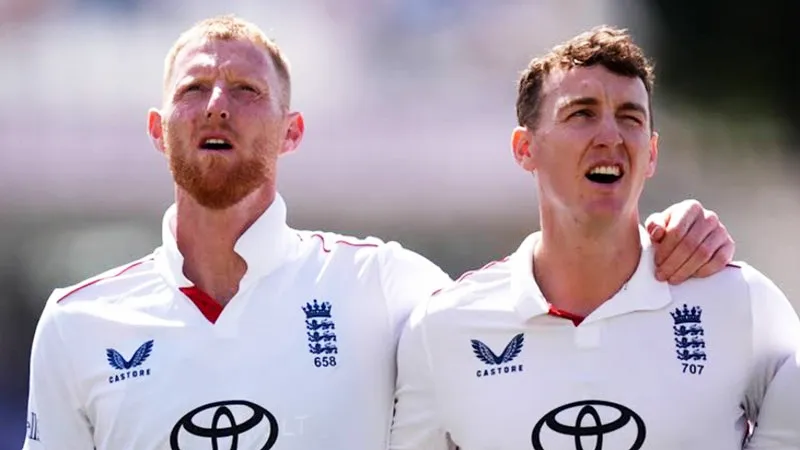

Brook’s aggressive default and his calm under pressure are the two traits built for Test cricket, since Bazball already runs on exactly that mindset. What won’t transfer automatically is the five-day patience Test captaincy demands, things like declarations, protecting a bowler across a fourth-innings spell, and reading a pitch on day four. Brook has never captained a Test, and he inherits the vacancy after Ben Stokes’ shock retirement mid-series against New Zealand. The gap between white-ball instinct and five-day judgment is the real story here.
The White-Ball Start: West Indies Whitewash
Harry Brook’s appointment as England’s white-ball captain on April 7, 2025, came with a ready-made test: three ODIs and three T20Is against the West Indies within weeks. Brook passed it emphatically, winning both series 3-0. England executed their bowling plans crisply, Brook led from the front with the bat, and the side absorbed pressure without panic. It set the tone for a record that now reads roughly 55 per cent in ODIs, with series wins including the West Indies and Sri Lanka, and losses to South Africa and New Zealand, and around 75 per cent in T20Is, including a run to the T20 World Cup 2026 semi-final before losing to India by seven runs in Mumbai.
Format Record at a Glance
Here is how his record breaks down by format.
Format | Matches as Captain | Win % | Notable Trait |
|---|---|---|---|
ODI | ~9-12 | ~60% | Stand-in debut against Australia (Sept 2024); led series win against Sri Lanka (2026); known for flexible middle-order usage and calm leadership |
T20I | ~22 | 86.36% | Lost only 3 out of his first 22 matches; led a 3-0 clean sweep against India (July 2026); led England to the T20 World Cup 2026 semi-final; bats in the middle order/No.3 |
Test (VC) | 0* | N/A | Serving as vice-captain to Ben Stokes; has not captained a Test match yet |
*Approximate match counts include all official series from April 2025 to July 2026.
Which Leadership Traits Define His Early Days
Three traits define Brook’s early captaincy. First, buy-in: he has declined IPL and PSL invitations to focus entirely on England, an unusual commitment at his age. Second, calm under pressure: when England were losing in Australia last winter during the 4-1 Ashes defeat, his batting stayed authoritative even as the captaincy talk around Stokes grew turbulent. Third, an attacking default aligning perfectly with the Bazball philosophy McCullum built under Stokes.
He was praised for tactical awareness before his official appointment, earning credit for handling a five-match ODI series against Australia in September 2024, a series England lost 3-2 but one where his decision-making impressed selectors. He has spoken openly about wanting to play fearless cricket and pressure the opposition straight back.
Harry Brook England Test Captaincy 2026
Ben Stokes announced his shock retirement on June 29, 2026, on the fourth day of the third Test against New Zealand at Trent Bridge. England lost that match by 160 runs and the series 2-1. Within hours, Stokes made clear he wanted Brook as his successor, giving him full public backing. Brook, England’s Test vice-captain, called the prospect a great honour and said he would happily take the job if offered it. One wrinkle: Brook was passed over for the second Test at The Oval, with Joe Root deputising, following an ECB investigation into an off-field incident. Rob Key suggested Brook still had learning to do, though Stokes insisted that decision was not his to make.
What Test Cricket Demands That White-Ball Doesn’t
White-ball captaincy is episodic, twenty overs then done, with a short horizon where a wrong call is undone inside five deliveries. Test captaincy is a five-day narrative with no undo button, covering declarations, follow-on decisions, managing a bowler through 30-over spells, and reading a deteriorating pitch on day four. Eoin Morgan, architect of England’s white-ball revolution, never captained Tests, and the leap from 120-ball to 450-over thinking is substantial. Brook’s aggressive intent should translate well, since Bazball already demands attack as default and faster run rates than any Test era before.
His Test average of 53.9 and highest score of 317 give him authority, but the sharpest adjustment will be endurance management, knowing when to ease off and protect a series over chasing a collapse. However, the Harry Brook England Test captaincy 2026 decision lands, this adjustment will define his legacy.
Can a captain built entirely on white-ball instincts really master the patience that Test cricket demands? Tell us what you think in the comments.
Frequently Asked Questions (FAQs)
Is Harry Brook England’s ODI and T20I captain?
Yes, Brook was officially appointed England’s white-ball captain across both formats on April 7, 2025, succeeding Jos Buttler, who stepped down after an early Champions Trophy exit. Brook had previously served as Buttler’s vice-captain.
What is Harry Brook’s captaincy record so far?
As of July 2026, Brook has won roughly 55 per cent of the ODIs he has captained and around 75 per cent of his T20Is, including a run to the T20 World Cup 2026 semi-final in Mumbai.
Who is England’s current Test vice-captain?
Harry Brook was Ben Stokes’ Test vice-captain for the summer 2026 series against New Zealand. Following Stokes’ retirement on June 29, 2026, the Test captaincy is vacant and no formal appointment has been made yet.
Could Harry Brook replace Ben Stokes as Test captain?
Brook is the clear frontrunner. Stokes gave him full public backing on his retirement, describing it as the natural next step from vice-captain, and Brook has confirmed he wants the role.
What has Harry Brook said about becoming Test captain?
Brook has called the prospect a huge privilege and the pinnacle of his career, adding that while the decision isn’t his to make, he would gladly accept the job if it were offered to him.