

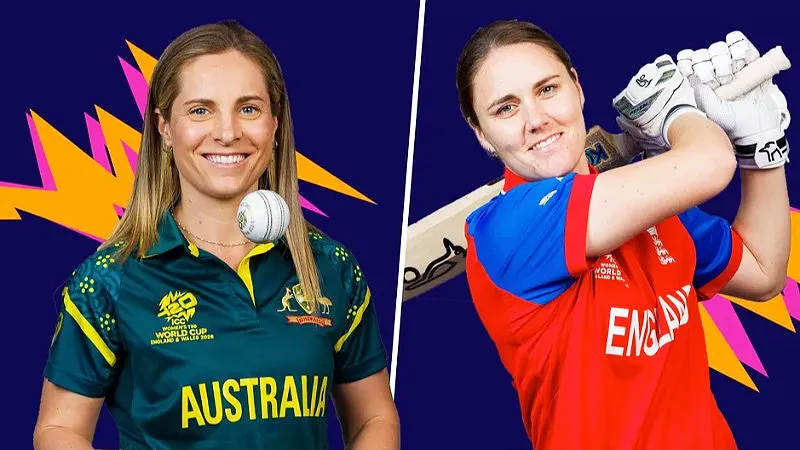

Both teams arrive at Lord’s with spin doing most of the damage, and the numbers are closer than almost any final in the competition’s history. Sophie Molineux leads every bowler at the tournament with 10 wickets, while England’s Charlie Dean and Sophie Ecclestone sit level on 9 apiece. Whichever side controls the middle overs with the ball is likely to decide who lifts the trophy on Sunday, given how tightly matched both attacks have been across the tournament so far, with little separating either side on paper.
The Tournament’s Leading Wicket-Takers So Far
Sophie Molineux leads the wicket-takers outright with 10 wickets from six games at an economy of 6.50, third on the tournament’s bowling list and the leading wicket-taker for Australia. She has taken 2 for 14 against Bangladesh, three wickets against Pakistan, and two more in the semi-final win over West Indies.
Bowler | Team | Economy | Wickets | Type |
Sophie Molineux (c) | Australia | 6.50 | 10 (6 games) | Left-arm spin |
Georgia Wareham | Australia | 4.50 | 7 (6 games) | Leg-spin |
Kim Garth | Australia | 5.35 | 5 (6 games) | Right-arm pace |
Charlie Dean | England | 5.12 | 9 (6 games) | Off-spin |
Sophie Ecclestone | England | 5.79 | 9 (6 games) | Left-arm spin |
Behind Molineux, Dean and Ecclestone are level on nine wickets apiece, so framing one as England’s outright leader is incomplete. Wareham sits fourth overall with seven wickets and the tournament’s second-lowest economy.
Australia vs England Women’s T20 World Cup Bowlers
The Dean-Ecclestone comparison is the closest individual battle either side has going. Ecclestone’s economy of 5.79 is comfortably better than Dean’s, and her semi-final economy of 5.25 was tighter than Dean’s 7.75 in that match. Dean has surpassed her combined wicket tally from the previous two editions, while Ecclestone carries the better career average of any bowler with 15-plus wickets.
For Australia, Molineux and Wareham form the settled pairing. Wareham’s economy of 4.50 is one of the tightest at this World Cup, and her batting strike rate of 182.22, the tournament’s highest, adds a dimension England’s spin pair cannot match.
Correcting The Record On Garth’s Role
Kim Garth is a right-arm medium-fast bowler, not a spinner, and any framing of a Molineux-Garth spin partnership is inaccurate. She took 2 for 18 from four overs against Bangladesh and featured in the semi-final attack, though her full tournament figures are unconfirmed. Australia’s actual spin quartet is Molineux, Wareham, Gardner and Alana King.
The middle overs have been telling all tournament. England have lost just one wicket in overs seven to ten, and ran at 8.25 an over against South Africa in that phase during the semi-final, with South Africa the most economical side against them at 5.96. Australia restricted West Indies to 125 for 7 in their own semi-final, Gardner, Molineux and Wareham each taking two wickets, though a specific overs 7-to-15 breakdown is unavailable. Both finalists have scored at the highest rate of any team in Women’s T20 World Cup history, Australia at 9.52 an over and England at 9.20.
The History Written By Past Finals
Spin has not always decided this fixture. Jonassen’s three wickets with left-arm spin were decisive when Australia beat England by four runs in 2012, but 2014 turned on pace, Coyte’s 3 for 16 restricting England to 105. Australia bowled England out for 105 again in 2018 through a collective effort, and 2020 was led by pace bowler Schutt as Australia beat India by 85 runs.
In 2023, Ecclestone topped the wicket charts with 11, but England did not reach that final, and Australia won it through collective bowling rather than one standout spinner. Spin figures within finals themselves are not consistently broken down in available records.
Everything You Need For Kickoff
The final starts at 3:30 pm BST Sunday, with a pre-match ceremony from 2:30 pm BST featuring a Rita Ora performance. That is 8:00 pm in India and 12:30 am AEST on July 6 in Australia. It is free on the Sky Sports app in the UK, Prime Video in Australia, and JioHotstar in India.
Whatever happens with the bat, the Australia vs England Women’s T20 World Cup bowlers on show at Lord’s carry at least as much of the storyline, and the tightest of those contests could easily decide it.
Does Molineux’s tally hold up, or do Dean and Ecclestone combine to swing it England’s way? Share your prediction below.
FAQs
Who has taken the most wickets at the Women’s T20 World Cup 2026?
Sophie Molineux leads outright with 10 wickets from six games. Charlie Dean and Sophie Ecclestone, both of England, sit level in second place with nine wickets each.
Is Sophie Ecclestone playing in the final?
Yes, she is confirmed in England’s starting eleven. She played the semi-final and is part of the predicted lineup alongside Danni Wyatt-Hodge, Amy Jones, Nat Sciver-Brunt, and Charlie Dean.
What is Charlie Dean’s economy rate at this tournament?
Her overall tournament economy has not been confirmed as a single published figure. Her semi-final economy was 7.75, and she went at just 2.75 an over against Ireland earlier in the competition.
Who is Australia’s best bowler at the Women’s T20 World Cup 2026?
Sophie Molineux, with 10 wickets from six games at an economy of 6.50. Georgia Wareham is close behind with seven wickets and the second-lowest economy of the entire tournament, at 4.50.
When does the Women’s T20 World Cup 2026 final start?
The final begins at 3:30 pm BST on Sunday, July 5, 2026, at Lord’s. A pre-match ceremony featuring a performance from Rita Ora starts an hour earlier, at 2:30 pm BST.