

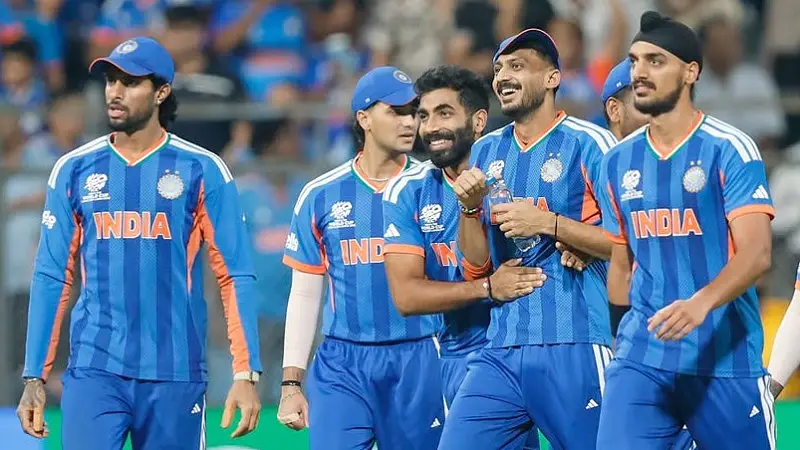

Jasprit Bumrah took 14 wickets at an average of 12.42 and an economy rate of 6.21. Sanju Samson scored an unbeaten 97 against West Indies and back-to-back 89s in the semifinal and final. Ishan Kishan accumulated 317 runs across nine innings at a strike rate above 190. Axar Patel took 11 wickets in seven matches and dismissed Finn Allen, Glenn Phillips, and Daryl Mitchell in the final. Shivam Dube scored 235 runs at a strike rate above 160, including 26 not out off eight balls in the final over. Five players, five different match-winning profiles, one dominant title defence.
Why Samson Was the Tournament’s Most Important Batter
Samson’s unbeaten 97 against West Indies in the group stage was the innings that secured India’s semifinal place when the pressure was at its highest. His return to the XI after missing earlier matches transformed India’s batting stability immediately. Within two innings, he had re-established himself as the most reliable high-impact batter in the squad.
His back-to-back 89s in the semifinal and final weren’t a coincidence. On Ahmedabad’s batting-friendly surface, Samson’s calculated aggression, targeting boundaries without exposing the middle order prematurely, created the platforms that allowed the rest of India’s batting order to operate with freedom. His final innings at a strike rate above 190 helped India post 255, a total that made the result inevitable before New Zealand had faced a ball.
Why Bumrah Made India’s Bowling Unbeatable
Fourteen wickets at 12.42 across a nine-match tournament is the statistical profile of a bowler who dominated every phase he was asked to bowl in. Bumrah’s 6.21 economy rate in a competition where flat pitches and aggressive batting lineups routinely produce economy rates above nine tells you the conditions didn’t dictate his performance; he dictated the conditions.
His semifinal spell against England restricted their scoring surge when the match was most dangerous for India. His 4 for 15 in the final dismantled New Zealand’s chase before it could gain momentum. Yorkers, slower balls, seam movement, and Bumrah’s ability to produce the right variation at the right moment under maximum pressure are what separate elite bowling from merely good bowling.
The T20 World Cup 2026 Stats That Prove Each Player’s Impact
Ishan Kishan’s 317 runs at a strike rate above 190 across nine innings in the T20 World Cup 2026 gave India something no other team possessed: a powerplay batter who scored at T20 International rates against every bowling attack in the competition, regardless of conditions or opposition quality. His adaptability across different batting positions, opening or number three, depending on the match situation, gave India tactical flexibility that opponents couldn’t fully plan for.
Axar Patel’s 11 wickets in seven matches at an economy rate of around eight represent the best middle-overs bowling performance by an Indian spinner in the tournament. His dismissals of Allen, Phillips, and Mitchell in the final weren’t random breakthroughs; they were the targeted execution of a bowling plan designed specifically to remove New Zealand’s most dangerous players during the phase of their innings when the chase was theoretically most possible.
Why Dube’s Late-Innings Contribution Completed the Picture
Shivam Dube’s 235 runs at a strike rate above 160 were mostly invisible until they weren’t. His 43 in the semifinal against England stabilised India’s innings at the moment when the batting order needed composure rather than aggression. His unbeaten 26 off eight balls in the final pushed India’s total from a strong score to an unreachable one.
Finals are often decided by contributions that don’t make the highlight reel. Dube’s finishing bursts, turning 229 into 255, turning a competitive total into an unassailable one, represent the most underappreciated contribution in India’s title defence. Without those late overs, India post 229. With them, they post 255 and win by 96 runs.
- Which of the five was India’s most important player across the entire tournament: Bumrah, Samson, or someone else? Drop your pick in the comments and follow for cricket coverage.
FAQs
What made Sanju Samson the standout player of the T20WC 2026 for India?
His unbeaten 97 against the West Indies and two strong knockout innings placed India in winning positions during the most important matches.
How many wickets did Jasprit Bumrah take in the T20WC 2026?
Bumrah finished the tournament with fourteen wickets while maintaining one of the best economy rates among fast bowlers.
Why was Axar Patel important to India’s bowling strategy?
His left-arm spin controlled the middle overs and broke partnerships, particularly in high-pressure matches.
Can this Indian core dominate future ICC tournaments?
If the same players maintain form and fitness, this group has the balance and experience to remain competitive in the upcoming ICC events.