

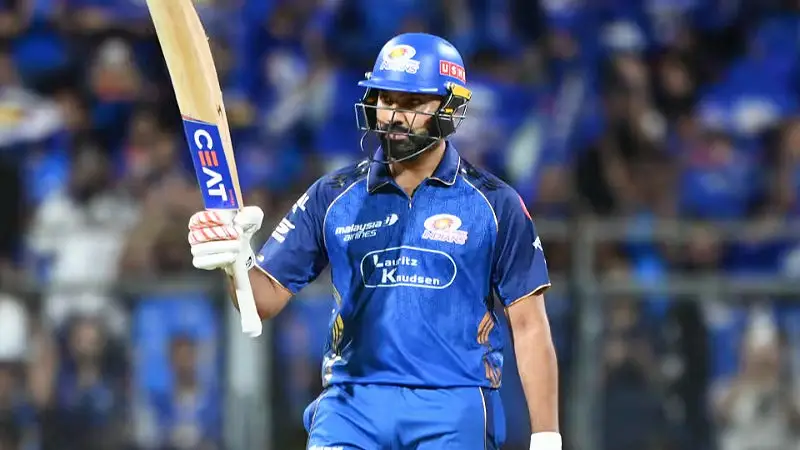

Rohit Sharma scored 78 off 38 balls in a chase of 220 against the Kolkata Knight Riders. Six fours. Six sixes. A strike rate that crossed 200 once he was set. It wasn’t a power hitter’s innings; it was a tactician’s innings executed with a power hitter’s results. Former cricketers watched it, and each noticed something different. Irfan Pathan saw role clarity. Zaheer Khan saw a warning. Harbhajan Singh saw an intent shift. Piyush Chawla saw efficiency. Taken together, their reactions describe not just one match-winning innings but a version of Rohit Sharma that has visibly evolved from the one that played the same format two years ago.
Pathan Said Role Clarity Decided Everything
Irfan Pathan’s observation is about the consistency of selection rather than individual talent. Rohit, as a permanent fixture in MI’s playing XI rather than a rotation option, gives him the innings rhythm that produces 78 from 38. A batter who knows they’re playing the next match and the one after reads the current pitch differently; they invest in the information-gathering phase of their innings because they know those patterns carry value across subsequent matches. The controlled aggression against KKR came partly from the confidence that his position is settled. Players whose selection is debated don’t play with the same assurance as players whose presence is assumed.
Zaheer Warned Every IPL 2026 Bowler
Zaheer Khan’s reaction framed Rohit’s innings as a structural problem for bowlers across IPL 2026 rather than an isolated performance. The specific pattern Zaheer identified, a cautious start that never looks genuinely restricted, then a strike rate above 200 once assessment is complete, is the most difficult blueprint to counter conventional bowling plans. Bowlers who attack early give away boundaries when the timing arrives. Bowlers who defend early let Rohit gather the information he needs for free. The innings against KKR confirmed that Rohit has found a tempo-control method that works regardless of the total being chased, and Zaheer’s warning was essentially that nobody in the competition has a reliable answer for it yet.
Harbhajan Spotted the Intent Shift Early
Harbhajan Singh’s focus was on what changed at the very beginning of the innings rather than the peak strike rate at the end. Rohit’s first-ball intent, attacking the length delivery that he previously might have pushed for a single while assessing, is the change that Harbhajan identified as the most significant evolution. It isn’t aggression for aggression’s sake. It’s a decision to apply pressure from the first over rather than the fourth, which forces field changes earlier, removes the bowler’s ability to settle into a rhythm, and compresses the assessment phase that benefits the bowling side. The intent shift is tactical before it’s physical.
Chawla Said Simplicity Won the Chase
Piyush Chawla’s reaction was the most technically specific. Six fours off full deliveries driven cleanly. Six sixes off short deliveries pulled through the leg side. No reverse sweeps, no ramps, no innovation for its own sake. Rohit’s 78 was built entirely on the shots that cricket coaching manuals recommend against specific lengths, full ball gets driven, short ball gets pulled, and everything else gets managed intelligently. The simplicity reduced risk because every boundary came from the highest-percentage shot against the delivery being bowled. In a 220 chase where one soft dismissal compresses the required rate beyond recovery, shot efficiency rather than shot variety is what wins the match.
- Does Rohit Sharma’s form against KKR confirm he’s the most dangerous opener in the competition this season, or does the 220 chase remain an exceptional performance rather than a new standard? Drop your take and follow for IPL updates.
FAQs
What made Rohit Sharma’s innings against KKR special?
It combined a high strike rate with controlled shot selection, showing tactical maturity rather than just aggression.
Why are experts praising Rohit Sharma’s performance?
They highlighted his fitness, intent, and ability to pace a difficult chase effectively.
How does this impact the Mumbai Indians?
It strengthens their top-order stability and increases their chances in high-scoring matches.
Is Rohit Sharma changing his T20 batting style?
Yes, he is playing more aggressively early while maintaining control throughout the innings.
What does this mean for Kolkata Knight Riders’ bowling plans?
They may need more disciplined powerplay strategies to counter Rohit’s early acceleration.