

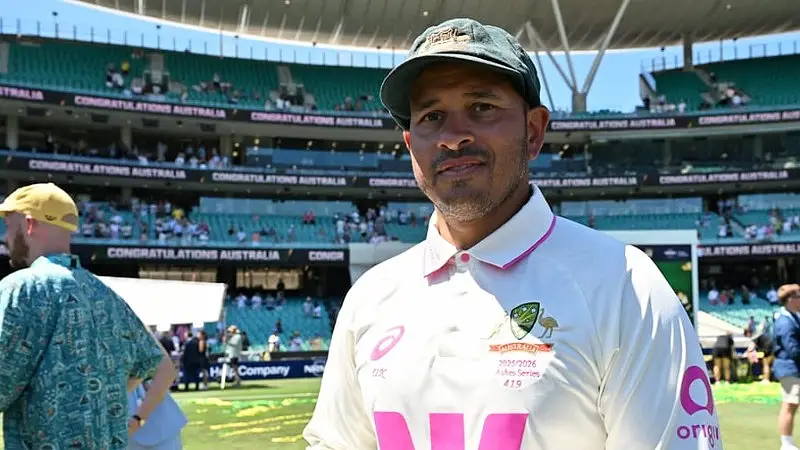

It widens the story of who knew, yet it has not shaken the verdicts so far. Usman Khawaja says the entire touring squad was aware of the sandpaper plan, which stretches the circle of knowledge well beyond Smith, Warner and Bancroft. The sanctions, though, rested on who planned, ordered and hid the act, and his account leaves those findings standing. His statement that investigators never spoke to him is the sharper problem, and the board has not answered it publicly yet, which leaves the verdicts exposed to doubt.
The Memoir’s Port Elizabeth and Cape Town Account
Khawaja’s memoir, Sabr, arrives from Penguin on 10 November, and Nine’s newspapers have already run extracts. The book is billed as an autobiography, yet the 2018 chapter is the part drawing attention. In it, he says the whole squad knew about the plan, not merely the three men who were punished, and that tampering with the ball came up at the Port Elizabeth Test, a match before the Cape Town incident.
He also says Bancroft volunteered to use sandpaper, while Smith walked out of the conversation because he wanted no part in it. Khawaja further says investigators never interviewed him, despite his seat next to Bancroft in Cape Town. Nobody has independently tested any of this, so each element remains an allegation rather than an established fact.
Khawaja sandpaper claim Cricket Australia 2018 verdicts
The claim puts two things under pressure: the sense behind the penalties and the reach of the inquiry. The original findings said Warner devised the plan and recruited Bancroft, while Smith was aware, did not intervene, and instructed Bancroft to conceal the sandpaper. A wider circle of awareness, if proven, would not on its own overturn who planned, instructed, or concealed.
The interview point bites harder. If investigators never questioned a player sitting next to the man holding the sandpaper, fans will ask whose evidence the findings really rested on. No reply from the board has surfaced on that question, and without one, the completeness issue hangs over the process however the planning evidence is read.
The Board and Players Respond
The board says it remains comfortable with its integrity findings, has weighed everything it received, and still welcomes anyone with relevant information. Pat Cummins says Khawaja warned him in advance, that the matter was looked into back then and the squad has since moved forward. Darren Lehmann, the coach back then, does not believe everyone would have known.
Back in 2021, Cummins, Starc, Hazlewood and Lyon jointly denied knowing that a foreign substance had been carried onto the field. Since the memoir extracts appeared, no fresh statements from Starc, Hazlewood or Lyon have emerged, and that silence matters because those four bowlers put their names to the earlier denial.
The Process Behind the Original Bans
Pat Howard and Iain Roy, the board’s head of integrity, led the inquiry, and James Sutherland, then chief executive, joined them in South Africa. Under the code, the head of integrity serves a charge notice carrying suggested penalties. Each of the three men accepted his, which meant nobody ever tested the evidence at a hearing. That speed suited a crisis, but it also meant the inquiry’s reach was never challenged.
Smith and Warner received 12-month bans, and Bancroft got nine. Warner’s leadership ban was permanent, while Smith’s ran for a minimum of two years. Separately, the ICC suspended Smith for a Test and took his whole match fee, while Bancroft was fined 75 per cent.
Possible Routes Back to the Findings
The code now contains a way to revisit long sanctions: an independent panel removed Warner’s lifetime captaincy ban on 24 October 2024 without any objection from the board. That route begins with the punished player asking for it, though, and no formal path appears to exist for reopening findings because an outsider disputes them. The board reportedly looked at the matter again in 2021 after Bancroft spoke, and he had nothing to add. Any new look would therefore depend on the board’s own willingness.
Three outcomes look realistic: the board asks to hear Khawaja’s evidence and restates its conclusions, fresh material triggers a limited review, or nothing moves because the bans were served years ago. Until stronger evidence appears, anything built on the Khawaja sandpaper claim Cricket Australia 2018 verdicts remains argument, not action.
Should the board reopen its 2018 findings if Khawaja’s account holds up? Tell us in the comments.
Frequently Asked Questions (FAQs)
What actually happened during the Cape Town ball tampering scandal?
Cameron Bancroft was caught on camera rubbing the ball with sandpaper in the Test against South Africa. The inquiry blamed Warner for the scheme and found Smith knew and ordered the evidence hidden.
Which Australian cricketers received bans over ball tampering?
Smith, Warner and Bancroft were the three players who received bans from the board. Lehmann, then the coach, was cleared of any involvement in the plan, although he still chose to resign from his post.
What length of ban did each of the three players get?
Smith and Warner received 12-month bans, while Bancroft was suspended for nine months. Warner was also barred from any leadership role for life, and Smith was barred for at least two years.
What has Usman Khawaja claimed about the ball tampering plan?
He claims the whole squad knew about the plan before Cape Town. He adds that ball-roughing came up at Port Elizabeth and that investigators never interviewed him during their inquiry.
What is Usman Khawaja’s autobiography Sabr about?
It is the autobiography Sabr, subtitled around finding his way in cricket and life. Penguin Books Australia publishes it on 10 November, and one chapter deals with the 2018 sandpaper scandal and its aftermath.