

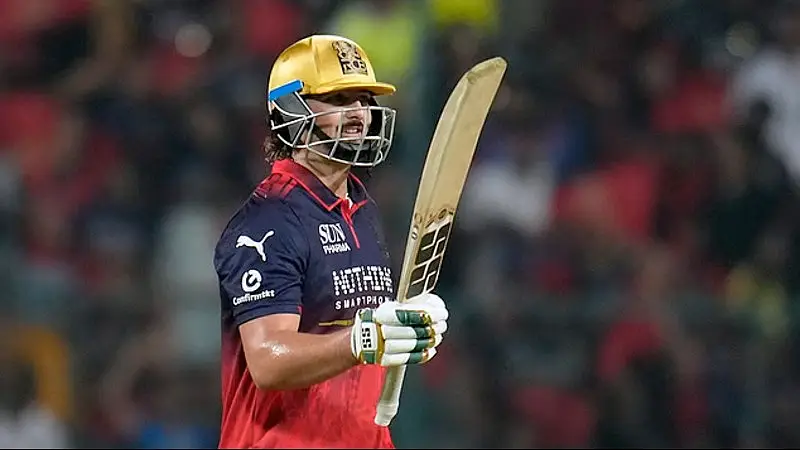

CSK’s death overs bowling plan survived for approximately two overs of the final phase. Then Tim David arrived. 70 not out from an innings that began when RCB already had momentum and needed someone to amplify rather than build it. Sarfaraz Khan’s aggressive 50 in the powerplay had already disrupted CSK’s early bowling plans. Tim David’s finishing assault, 97 runs in the last five overs between him and his batting partners, destroyed what remained.
The Death Overs That Decided Everything
97 runs in five overs at Chinnaswamy requires two things simultaneously: batters who can execute clean hitting and bowlers who miss their lengths consistently enough to give them deliveries to hit. RCB provided the former. CSK provided the latter. The specific failure wasn’t that CSK’s death over bowlers lacked quality; it was that the execution under pressure collapsed in the phase where execution under pressure is the only thing that matters. Yorkers became full tosses. Full tosses became boundaries. The planned delivery arrived at the wrong length with enough frequency that Tim David’s ability to clear the straight boundary became the match’s defining image rather than the exception to a tight bowling plan.
Tim David Made Finishing Look Unprecedented
70 not out from a late-innings entry is statistically exceptional regardless of the surface or the opposition’s bowling quality. Tim David’s specific skill, arriving at the crease with no assessment phase, no settling-in requirement, and no hesitation about which shot to play to the first delivery he faces, is the quality that makes his innings genuinely rare rather than frequently produced. Most T20 finishers require two or three deliveries to locate the scoring areas and calibrate their eye to match-intensity pace.
David doesn’t. He enters in full attack mode immediately, and the bowler must immediately defend rather than probe. Against a CSK death over unit that was already under pressure, that immediate aggression broke the bowling plan completely.
IPL 2026 Sarfaraz Made the Explosion Possible
The specific contribution that enabled Tim David’s explosion was Sarfaraz Khan’s powerplay 50, the innings that forced CSK into defensive field settings earlier than their bowling plan anticipated. In IPL 2026, powerplay aggression that forces the fielding captain to spread the field inside the first four overs removes the bowling options that create wicket-taking pressure. CSK’s plan was to take early wickets and contain in the middle overs from a position where RCB were fighting back rather than accelerating.
Sarfaraz disrupted that plan entirely. By the time Tim David arrived, CSK’s bowling plan was already in damage-limitation mode rather than match-controlling mode. The platform Sarfaraz built made David’s assault inevitable rather than exceptional.
CSK Had No Bowling Plan B
The structural bowling failure that Chinnaswamy exposed was CSK’s reliance on predictable pace and length when conditions demanded variation. Slower balls. Wide yorkers. Balls that arrive twenty kilometres per hour slower from the same action as the full pace delivery. These aren’t secret weapons; they’re standard T20 death over tools that teams deploy when the conventional yorker is being hit.
CSK’s bowlers either couldn’t execute these variations under pressure or didn’t commit to them consistently enough to disrupt Tim David’s timing. Experienced bowlers who know Chinnaswamy’s dimensions and have bowled in high-scoring IPL matches before were still producing the deliveries that the surface and the batter both rewarded.
- Does CSK find the death over bowling variation they were missing against RCB? Drop your take and follow for IPL updates.
FAQs
What made Tim David’s 70 in IPL so special?
He scored it after arriving very late in the innings, making it one of the rarest high-impact finishing knocks in T20 cricket.
Why did CSK struggle in the death overs against RCB?
Poor execution of yorkers and predictable bowling lengths allowed RCB batters to target boundaries consistently.
How important was Sarfaraz Khan’s powerplay performance?
It set the tone early, forcing CSK onto the defensive and enabling RCB’s later acceleration.
What does Bhuvneshwar Kumar’s 200-wicket milestone mean?
It highlights his long-term consistency and places him among the most successful bowlers in IPL history.