

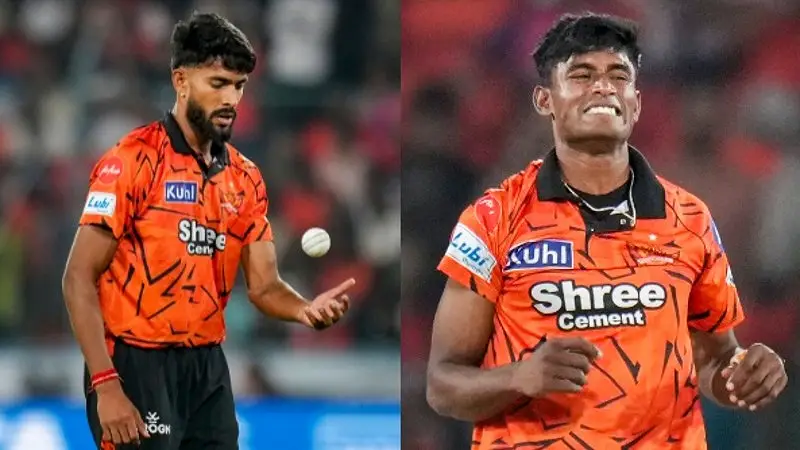

SRH’s bowling attack was predictable. Repetitive medium pace on flat surfaces. No genuine threat when the ball wasn’t swinging. No variation that batters couldn’t read with a few deliveries of information. Praful Hinge and Sakib Hussain changed that in their debut match against the Rajasthan Royals. Hinge’s skiddy pace combined with a late swing. Hussain’s slower ball dipped late and followed the batter. Two completely different mechanisms from two debutants addressing the same structural problem simultaneously. SRH’s bowling unit suddenly had unpredictability, the specific quality their campaign had been missing since match one.
Hinge Combines Pace and Late Swing
The specific quality that makes Praful Hinge genuinely threatening rather than merely quick is the late swing he generates while maintaining pace, a combination that young Indian fast bowlers rarely produce simultaneously because the grip and wrist position that generate swing typically reduce pace by reducing the arm-speed-to-release-point efficiency.
Hinge’s skiddy release point, lower than conventional upright action fast bowlers, generates the pace off the pitch that reduces batter reaction time, while his wrist position still allows the ball to move late. Against RR’s batting lineup, deliveries that arrived faster than expected while still moving away from the right-hander produced the rushed decision that forced the edge or the mistimed drive.
Hussain’s Slower Ball Beats Prepared Batters
The specific technical achievement in Sakib Hussain’s slower ball is that it beats batters who are anticipating it, which is the highest possible validation of a T20 variation delivery. Most slower balls produce wickets when batters don’t see them coming. A slower ball that produces wickets when batters have specifically loaded for it confirms that the execution quality, the dip, the late movement, and the delivery that follows the batter’s hands, exceed the batter’s ability to adjust, even from a forewarned position. His unusual action adds the release-point deception that makes the slower ball’s trajectory difficult to read, regardless of whether the batter expects the variation or not.
IPL 2026 Skiddy Pace Was the SRH Fix
The tactical shift that Hinge and Hussain’s introductions represent is the specific pace-type change from conventional high-arm medium pace to skiddy pace-off-the-pitch bowling, a delivery type that produces difficulty through reduced reaction time rather than through swing or seam assistance that flat surfaces don’t provide.
SRH’s previous bowling attack on batting-friendly surfaces was predictable because medium pace bowlers without swing or seam have one primary mechanism for creating difficulty, hitting the right length consistently. Skiddy pace removes the batter’s adjustment window regardless of length because the ball arrives sooner than the trigger movement anticipated. It’s a different problem from the same delivery category.
SRH Bowling Finally Looks Genuinely Threatening
The broader implication of Hinge and Hussain’s debut performance for SRH‘s remaining IPL 2026 campaign is the specific confidence their introduction provides to the bowling unit’s collective approach. A bowling attack that has one established threatening option and four containment options produces the specific match dynamic where batting teams attack the four containment overs and manage the one threatening over.
A bowling attack with three genuinely threatening options, Shivang Kumar, Hinge plus Hussain, produces the match dynamic where batting teams face genuine difficulty across multiple phases simultaneously. SRH’s campaign trajectory changes if both debutants maintain their debut quality across the next four to five appearances.
- Do Praful Hinge and Sakib Hussain maintain the debut-match quality that suggests SRH’s bowling problem is solved, or does opposition analysis between matches identify the specific adjustments that reduce their effectiveness before the tournament reaches its decisive phase? Drop your take and follow for IPL updates.
FAQs
How effective is Sakib Hussain’s slower ball?
His slower ball is difficult to pick due to late dip and deceptive release, making it effective even when expected.
Why did SRH change their bowling attack?
They needed more variation and unpredictability after struggling with a repetitive medium-pace attack.
How do skiddy fast bowlers impact T20 matches?
They reduce reaction time for batters, making stroke execution harder, especially on batting-friendly pitches.
Can Praful Hinge and Sakib Hussain sustain this performance?
Consistency and adaptability across different pitch conditions will determine their long-term success.