

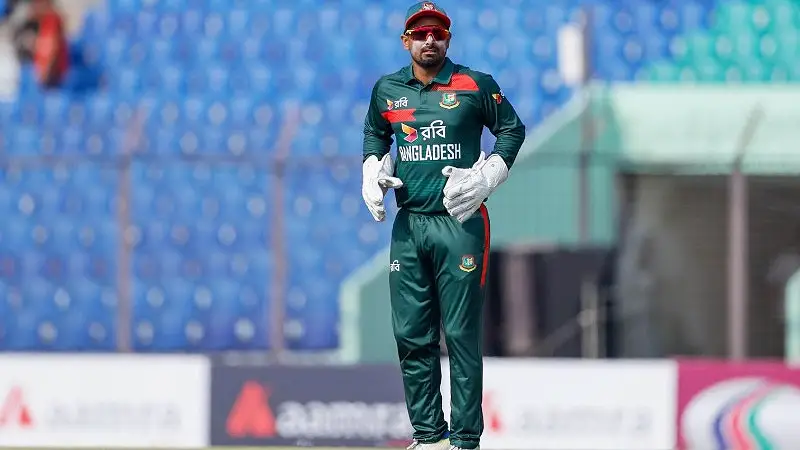

Litton isn’t captaining Bangladesh through this transitional period simply to win every match. He’s captaining them to ensure that by 2028, Bangladesh arrive at a T20 World Cup with the squad depth, non-Asian condition experience, and tactical flexibility that their previous preparations never delivered. The freedom he now holds over on-field decisions is being used deliberately to test combinations, rotate workloads, and build a backup system before it’s needed. The results column alone doesn’t tell the full story of what’s being constructed underneath it.
Litton Controls the On-Field Decisions Now
The most significant shift in this phase of Bangladesh’s T20 leadership is the level of authority Litton now holds. Previous captains operated within tight constraints set by selectors, often managing rather than leading. Litton’s current setup allows him to make bowling changes, adjust batting positions, and read match situations without waiting for external sign-off on every decision.
That autonomy changes what a captain can do with a developing squad. When Litton moves a batter up the order or introduces a young spinner in a high-pressure over, those are genuine learning experiments rather than forced decisions. The collaborative input from coaches and selectors still exists, but the final execution reflects Litton’s vision rather than a committee’s instruction.
Rotation Policy Builds the Backup System
Mustafizur Rahman’s absence from this series isn’t a problem being managed around. It’s an opportunity being deliberately used. Litton’s rotation philosophy is built around a single clear principle: if a senior player is unavailable for a World Cup, the replacement must already have international experience before the tournament begins.
Bangladesh’s T20 squad rotation policy has historically been reactive, with backup players thrown into major tournaments underprepared and exposed immediately. The current approach inverts that sequence entirely. Players who might be third or fourth choice in a fully fit squad are getting matches, specific roles, and real pressure situations now, during a home series against a weakened touring side, rather than in the knockout stages of a global event.
Litton Das’s Win Rate Reflects Transition
A captaincy record of 15 wins from 29 matches at just above 50 per cent is being read by some as moderate. Compared against Shakib Al Hasan or Mahmudullah at their peaks, the numbers look unremarkable. Compared against what Bangladesh is actually doing in these matches, developing combinations, testing non-specialist bowlers in death overs, and promoting young batters into unfamiliar positions, the numbers become context-dependent.
Teams in genuine rebuild phases don’t post dominant win rates. They post stable rates while absorbing the short-term cost of development decisions. If every match were optimised purely for result, the win percentage would rise. The 2028 squad depth would suffer. Litton has consciously chosen the harder path because the easier path has failed Bangladesh in previous World Cup cycles.
Non-Asian Conditions Define the Whole Strategy
The next T20 World Cup will not be played in subcontinental conditions. Litton has acknowledged this publicly, and it changes everything about how Bangladesh must prepare. Fast bowling depth, power-hitting range, and fielding standards that work on pacy surfaces become the primary development targets rather than spin-friendly home conditions.
This shift in focus is the most structurally important element of Bangladesh’s current rebuild. Previous World Cup preparations leaned on what Bangladesh did well at home and hoped it would transfer. That approach produced group-stage exits. The current strategy builds toward conditions where Bangladesh has historically struggled most.
Whether this approach produces a World Cup contender in 2028 depends on execution that hasn’t happened yet. What’s visible now is the structure: deliberate rotation, genuine on-field authority, and preparation aimed at conditions Bangladesh has always struggled to adjust to in the time pressure of a global event. That structure is more promising than anything Bangladesh has built in the two previous World Cup cycles.
- How Litton builds squad depth and non-Asian readiness through this rotation-heavy phase will define whether Bangladesh becomes a genuine T20 World Cup contender in 2028. Drop your pick in the comments and follow for cricket updates.
FAQs
Q: What is Litton Das’s T20 captaincy strategy for Bangladesh?
He focuses on squad rotation, developing backup players, and building non-Asian condition readiness for the 2028 World Cup.
Q: Why is Bangladesh rotating T20 players so heavily?
To give backup players international experience before a major tournament, rather than throwing them in unprepared.
Q: How is Bangladesh preparing for the 2028 T20 World Cup?
By targeting non-Asian conditions, building fast bowling depth, and developing a squad less reliant on core players.
Q: What is Das’s T20 captaincy win record?
He has won 15 of 29 matches, a rate just above 50 per cent across a deliberate squad-building phase.