

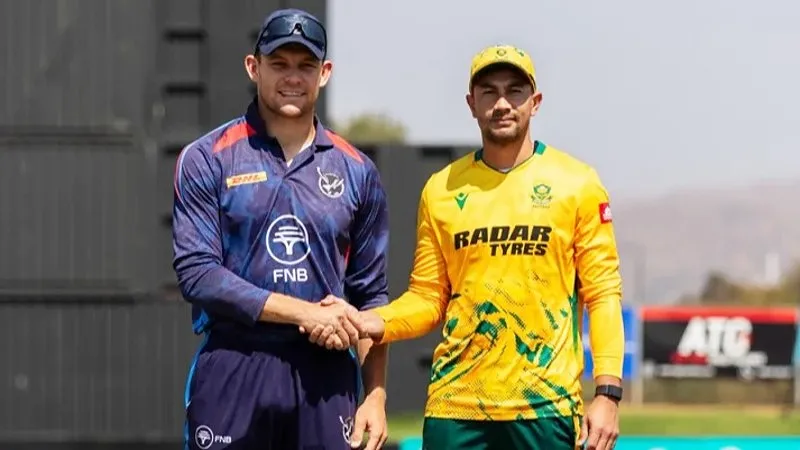

A teenager with one T20I hundred and a 24-year-old with five caps have just rewritten how this top order looks on paper. Lhuan-dre Pretorius, Connor Esterhuizen and Dewald Brevis have scored so heavily through the group stage that recalling any of the old guard now looks like a step backward. Selectors built this squad around fringe players and uncapped debutants on purpose, calling it an early audition for 2027. Four matches into the group stage, several of them have already made the strongest possible case for a longer look.
A New Top Order Finds Its Feet
Pretorius has been the standout, striking at 179.37 across four innings and following his unbeaten 101 against the hosts with a 94 against Zimbabwe from just 51 balls. Brevis has been almost as destructive, striking at 171.68 with twin fifties in his first two outings of the tournament.
Batter | Matches | Runs | Strike Rate |
|---|---|---|---|
Lhuan-dre Pretorius | 4 | 226 | 179.37 |
Dewald Brevis | 4 | 194 | 171.68 |
Connor Esterhuizen | 4 | 94 | 127.03 |
Jordan Hermann | 4 | 56 | 116.67 |
Esterhuizen’s numbers look modest until you factor in his career-best 88 off 40 balls in the most recent match, a knock that pushed his overall international total past 290 runs. Hermann’s 68-run opening stand alongside Pretorius earlier in the competition showed the depth building above him too. None of these three arrived with reputations built on franchise cricket alone; all three have now produced their best numbers exactly when selectors were watching closest.
South Africa vs Namibia tri-series white-ball batting
This tournament was never framed as a top-table assignment. It doubles as preparation for the next World Cup cycle, and the batting order reflects that: several places are occupied by players selectors are actively testing rather than simply protecting.
That approach only works if the results back it up, and so far they have. Four wins in the group stage, headlined by a chase against the hosts, have turned what could have been a developmental afterthought into genuine form guide reading for the years ahead. Selectors have been explicit that results matter here, not just minutes in the middle, and this group has delivered both in equal measure through four matches.
Uncapped Faces Getting Their Chance
Duan Jansen and Eathan Bosch both made their debuts during the tournament, arriving with zero prior appearances between them. Esterhuizen came in with only five caps to his name and Nqobani Mokoena with just one, both picked up during an earlier series against New Zealand in March.
Jason Smith, arguably the most experienced batter in the group with 11 caps, was ruled out through injury before a ball was bowled, which only deepened how inexperienced this touring party actually is. That gap has been filled by players performing well above their caps count. Selector Shukri Conrad pointed directly to an earlier series against New Zealand as the moment this depth first became apparent to the coaching staff.
Senior Voices Inside The Camp
Captain Bjorn Fortuin has been unusually open about what he is seeing, praising how quickly the younger batters read conditions and set a platform before their natural game takes over. He singled out Esterhuizen’s most recent innings as a source of real satisfaction for the wider group.
Pretorius, for his part, credited a conversation with Heinrich Klaasen about giving himself time at the crease rather than chasing the scoreboard early. Esterhuizen described leaning on humour and banter with his batting partner to settle his own nerves during pressure passages of play. That kind of dressing-room chemistry rarely shows up in a scorecard, yet senior players credit it directly for how calmly this group has performed.
The Road Ahead Gets Tougher Fast
None of this form comes with guarantees once fixtures get harder. A three-match one-day series against the same opponents follows immediately, running from September 9 to 13 in Windhoek, before the calendar turns considerably more serious. Namibia themselves will offer a different examination in the 50-over format, testing patience and shot selection rather than pure strike rate alone.
Australia arrive next, with three one-day internationals from September 24 followed by three Tests from October 9 through 31. That is when this South Africa vs Namibia tri-series white-ball batting audition either graduates into the senior side properly or gets quietly parked for another cycle.
Which of these breakout batters do you think keeps their place once the regulars return? Tell us in the comments.
Frequently Asked Questions (FAQs)
Who has been the standout batter in this tri-series?
Lhuan-Dre Pretorius, with 226 runs at a strike rate of 179.37 through four innings. His unbeaten 101 against the hosts is the tournament’s only century so far.
How many uncapped players are in this touring squad?
At least two: Duan Jansen and Eathan Bosch, who both made their debuts during the tournament. Two more, Esterhuizen and Mokoena, arrived with fewer than six caps each.
Why is South Africa fielding such an inexperienced batting lineup?
Selectors are deliberately using the tour as an early testing ground for the next World Cup cycle. Regulars like Quinton de Kock and Temba Bavuma were left out entirely.
What comes after this tournament for the squad?
A three-match one-day series against the same opponents, starting September 9 in Windhoek. That is followed by a much sterner test against Australia from September 24, with three Tests to come in October.
Who opened the batting alongside Lhuan-dre Pretorius in this competition?
Jordan Hermann, who shared a 68-run opening stand with him during the group stage. Hermann finished the tournament with 56 runs at a strike rate of 116.67.