

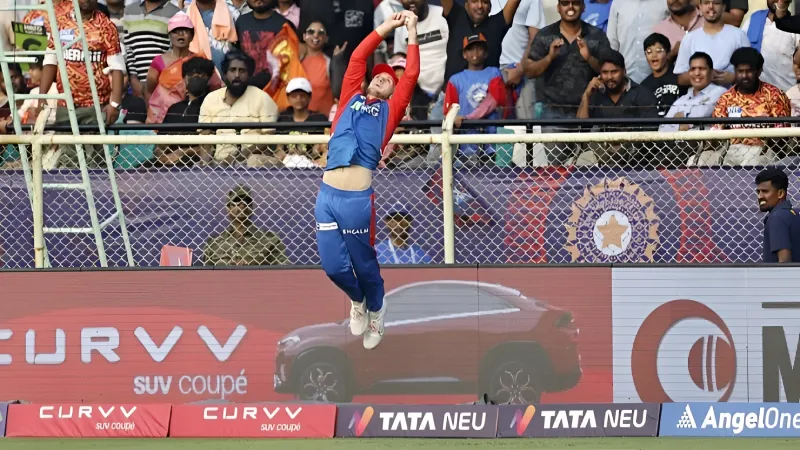

There’s a specific kind of controversy that appears in almost every IPL season, the boundary catch, where the fielder grabs the ball, throws it up, steps over the rope, comes back, and claims the dismissal. Half the stadium cheers. The other half argues. Third umpire reviews take three minutes. The batter doesn’t know whether to walk. Captains waste reviews. The clarification under Clause 33.3 of IPL playing conditions is designed to end exactly that scenario. Full control of the ball and full control of movement. Both required. Neither optional. The rule existed before. What changed is that captains and players have been formally reminded that it will be applied strictly this season.
What Full Control Actually Requires
The rule sounds simple, but the application is where disputes happen. Full control means the fielder isn’t still moving, hasn’t released the ball involuntarily, and has stabilised both their body and their grip before the catch is declared complete. Foot placement matters. Balance matters. The moment of release before jumping back from the boundary matters most. A fielder who grabs the ball cleanly, steps over the rope, throws it up, and re-enters the field has performed an athletic feat but not taken a legal catch under this clarification. The ball must be under control when they cross the boundary. Not after. Not during the throw. At the boundary.
The Stat Behind This Rule Change
Over 15 percent of catches near the boundary in recent IPL seasons were contested for control. That number justifies the emphasis. One in six boundary catches creating a review, a dispute, or an incorrect decision means teams are regularly losing wickets they shouldn’t or keeping batters at the crease who should have been dismissed. Across fourteen group stage matches per team, that percentage represents multiple match-defining moments decided incorrectly or inconsistently. Standardising the application of a rule that already existed is the correct response to that volume of disputed decisions.
IPL 2026 Demands Different Fielding Training
Fielding coaches in IPL 2026 now have a specific technical requirement to build into boundary practice. The catch isn’t complete until both ball control and body control are established, which means fielders rehearsing the grab and throw technique without confirming control are rehearsing the wrong thing. Training needs to emphasise landing with the ball secured, feet placed deliberately inside the boundary, and the body stable before any celebration or throw. Teams that integrate this into their fielding drills before the tournament starts will produce fewer disputed catches. Teams that treat it as a minor clarification rather than a training priority will find out the hard way in a close match.
The Impact Player Rule Connection Here
The catch clarification and the Impact Player rule discussion are connected in one specific way. Axar Patel’s criticism of the Impact Player rule, which reduces the value of all-rounders by allowing specialist substitutions, points to a broader trend of IPL rules pushing teams toward specialisation. A separate fielding standard that demands athletic precision near boundaries amplifies the value of specialist fielders in the same way the Impact Player rule amplifies specialist batters and bowlers. Teams selecting for IPL 2026 are increasingly rewarding excellence in one specific function over competence across several. The catch rule reinforces that trend in the fielding department.
This isn’t a new rule. It’s an existing rule being enforced properly. The clarification only creates problems for teams that weren’t following it correctly before.
- Does the IPL catch rule clarification change how your favourite team approaches boundary fielding, or is it too minor to affect match outcomes? Drop your take and follow for IPL updates.
FAQs
What is the IPL catch rule 2026?
It states that a catch is complete only when the fielder has full control of both the ball and their body movement.
How does the Impact Player rule affect all-rounders?
It encourages teams to pick specialists, potentially reducing opportunities for traditional all-rounders in match lineups.
Why was the catch control rule emphasised in 2026?
To reduce disputes, ensure fairness, and standardise fielding expectations across all matches.
Can these IPL playing conditions catch rule change match outcomes?
Yes, especially in tight finishes or death-over scenarios where a single catch can determine the result.
Disclaimer: This blog post reflects the author’s personal insights and analysis. Readers are encouraged to consider the perspectives shared and draw their own conclusions.